Feedback for teachers means giving specific, evidence-based observations that help educators understand their instructional practice, connect those observations to student learning, and identify a practical next step for improvement.
As a principal, assistant principal, or instructional coach, you need to help each teacher understand what happened during the lesson and decide what to do next. Classroom walkthroughs make this easier by giving you focused evidence to guide timely, specific conversations that support professional growth and stronger instruction.
In this guide, you’ll find how to give effective feedback, teacher feedback examples, a practical process you can follow, and ways to connect your observations to student learning.
You’ll also see how peer feedback, consistency across school leaders, and Education Walkthrough can help you document evidence, turn feedback into actionable growth, and support teachers while keeping your school’s existing frameworks, policies, and professional judgment at the center of the process.
Key Takeaways
- Describe observable behavior before interpreting what it means.
- Connect feedback to a school goal, student evidence, or instructional question.
- Balance recognition with one focused area for reflection or improvement.
- Revisit goals when another observation can answer a useful question.
What Makes Teacher Feedback Effective
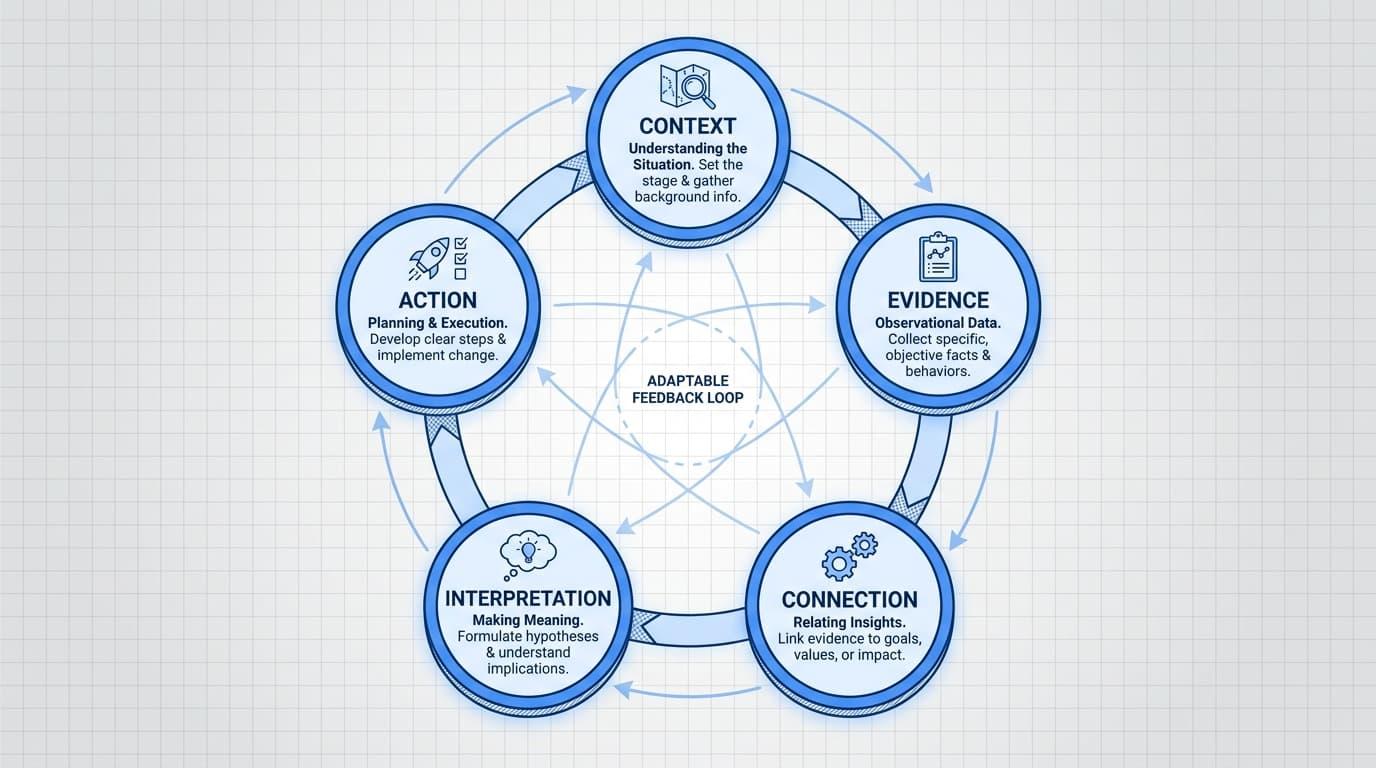
Effective feedback is specific, evidence-based, and proportionate to what the observer actually saw. It should focus on instructional practice rather than personality and invite the teacher to explain the lesson’s purpose, context, and student needs.
A 2025 performance-feedback review examined 24 experimental studies involving technology-delivered feedback to teachers. Because delivery methods, targets, and outcomes vary, the review supports careful implementation rather than a one-size-fits-all formula for every school.
A reliable feedback process includes five parts. Leaders can adapt the order to the conversation rather than forcing every observation into an identical script.
- Context: Identify the lesson segment, task, or transition.
- Evidence: Record actions, quotes, counts, student work, or response patterns.
- Connection: Relate the evidence to student learning, high expectations, or an agreed goal.
- Interpretation: Ask what the teacher noticed and intended.
- Action: Reinforce an effective move or agree on a manageable next step.
For example, a principal using Education Walkthrough could record a participation count during a mobile walkthrough, save the observation as a draft, and check the wording before submitting it. Automatic draft saving protects the notes, while the principal remains responsible for distinguishing evidence from interpretation.
Use the SBI Model Carefully
The Situation-Behavior-Impact model offers a useful drafting check. State when the event occurred, describe the observable behavior, and explain the immediate impact supported by evidence. Do not use one classroom moment to make a broad claim about educator effectiveness or student outcomes.
The SBI feedback model can also be used to structure positive feedback. A leader might say, “During the independent check, you asked every student to show their reasoning. Twenty-one of 24 responded, giving you a broader sample before reteaching.”

Teacher Feedback Examples Leaders Can Adapt
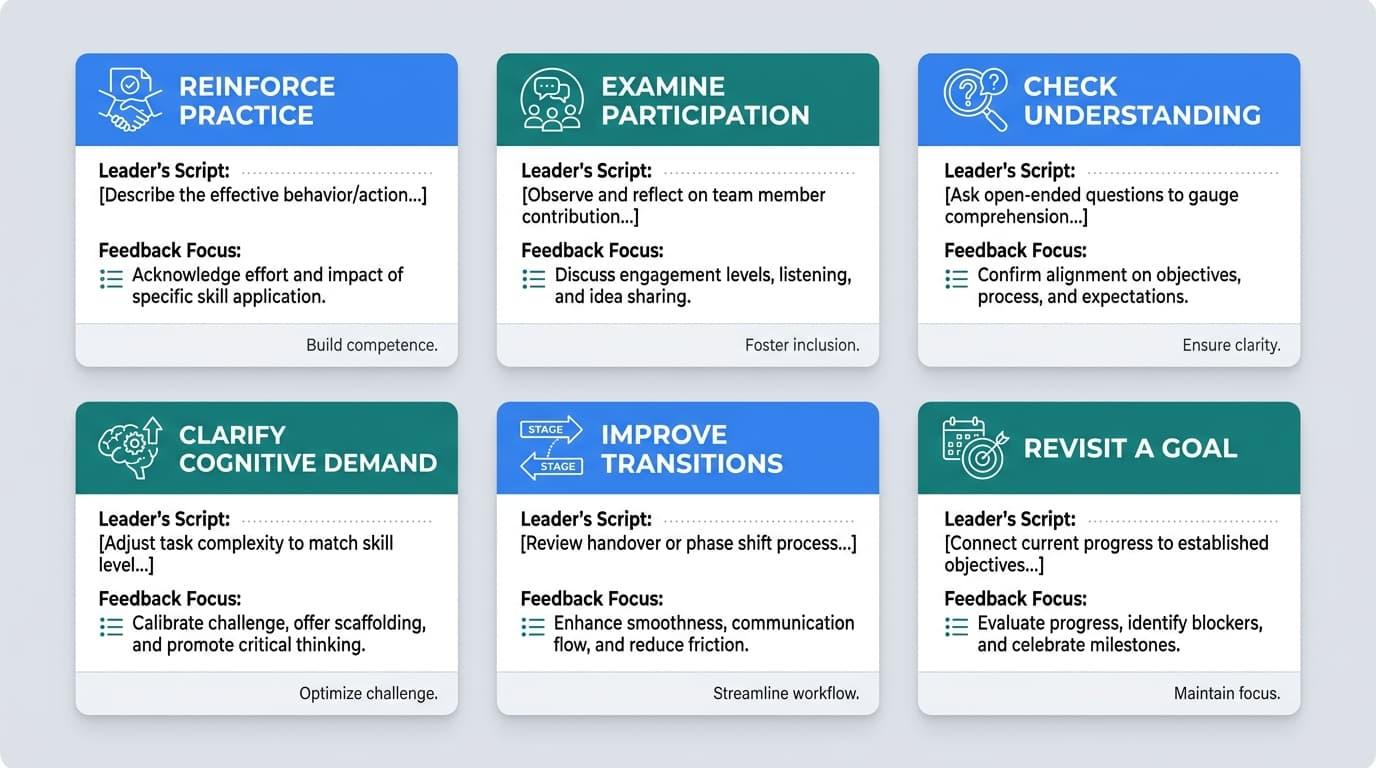
Use these examples as patterns, not scripts. Replace the brackets with evidence from the lesson and leave room for self-reflection.
- Reinforce practice: “During [task], you [observable action]. Students then [evidence]. What helped that move work?”
- Examine participation: “[Participation pattern] occurred during [discussion]. What did you notice about who contributed?”
- Check understanding: “You sampled [responses] before moving on. What did they tell you about understanding?”
- Clarify cognitive demand: “Students were asked to [task]. How closely did that match the thinking you intended?”
- Improve transitions: “The transition took [time], and [student actions] occurred. Which routine were students expected to use?”
- Revisit a goal: “We previously focused on [goal]. Today I recorded [evidence]. How does this compare with what you have seen?”
With Education Walkthrough, a school can add selected prompts to a shared template so they support actionable feedback with clear next steps. Observers begin with the same purpose, but their comments should still reflect the individual teacher, lesson, and students.
Connect Feedback to Student Learning
Meaningful feedback connects teaching methods with evidence from the learning process. A walkthrough can’t prove that one strategy caused an outcome, but it can help a teacher examine the opportunities students had to think, respond, and demonstrate understanding.
A leader might combine observation notes with formative assessments, sampled student work, or assessment results.
Student feedback can also inform the conversation; exit tickets prompt students for quick single-question feedback and provide immediate insight into student understanding. Small-group conversations can yield deeper insights into what students understood or experienced during instruction.
An anonymous feedback box lets students submit suggestions at any time. If students can name key concepts but struggle to explain them, the conversation could explore questioning, visual aids, real-world examples, scaffolding, or other instructional strategies.
Effective questioning techniques can reveal critical thinking and problem-solving skills when the questions match the lesson goal. Record what students said, wrote, or produced instead of simply stating that student engagement was high or low.
Turn Observation Notes Into Action
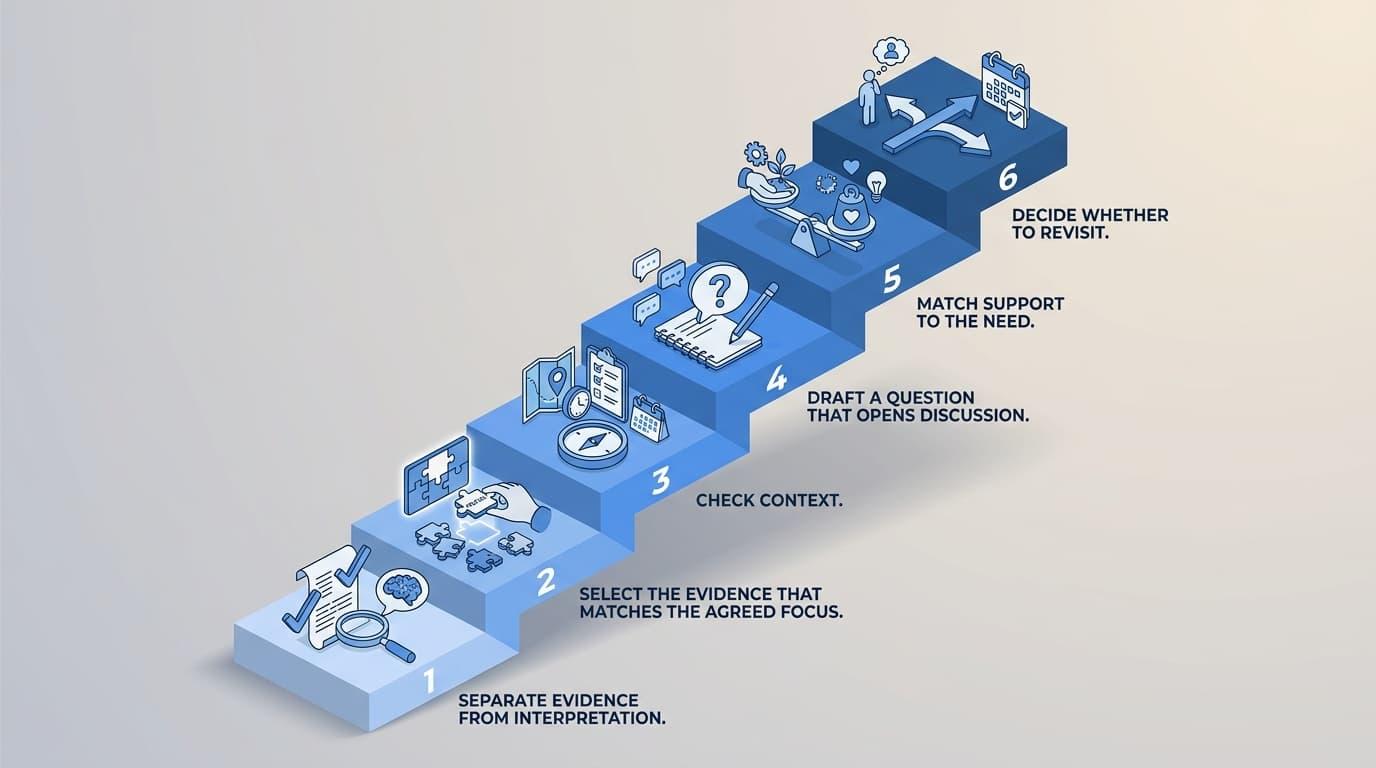
The following steps help leaders provide effective feedback after a walkthrough, coaching visit, or student-work review.
- Separate evidence from interpretation. Mark direct quotes, counts, sequences, and artifacts before drafting conclusions.
- Select the evidence that matches the agreed focus. Do not comment on every note from a short visit.
- Check context. Consider lesson timing, prior learning, student needs, and the teacher’s intended goal.
- Draft a question that opens discussion instead of treating one interpretation as final.
- Match support to the need. Options may include reinforcement, lesson planning, modeling, resources, or another evidence sample.
- Decide whether to revisit. Follow-up should answer a specific question, not create an observation for its own sake.
Education Walkthrough follows a similar practical sequence. Leaders choose a template, record comments, add reflective questions or next steps, and save or submit the walkthrough. Completed reports can then be emailed to the teacher, as explained in the platform’s August 2026 support guidance.
Balance Recognition and Constructive Feedback
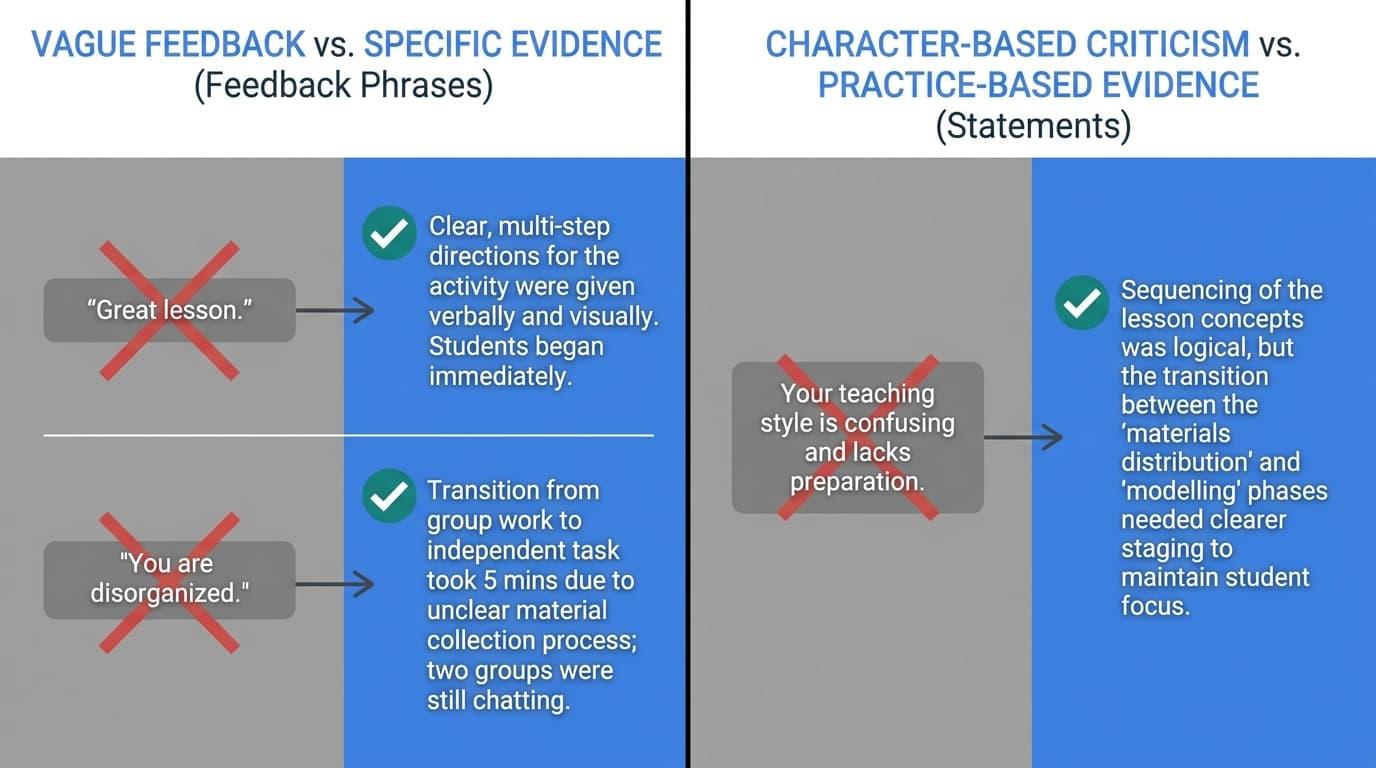
Positive feedback should be as specific as constructive feedback. “Great lesson” may feel encouraging, but it doesn’t tell the teacher which effective teaching practices produced a positive impact or should be repeated.
Constructive criticism should address a specific area for improvement, not the teacher’s character. Replace negative feedback such as “You are disorganized” with evidence about directions, materials, sequencing, or transitions. This keeps the conversation connected to practice and a possible adjustment.
There’s no defensible universal 5:1 ratio for feedback to teachers, and research doesn’t support a blanket rule requiring feedback within 24 hours. Timely feedback matters because the lesson remains easier to recall, but leaders also need enough time to verify notes, follow policy, and prepare for open communication.
Meaningful feedback may include a concise written record, a coaching conversation, or both. Written notes preserve the evidence and the agreed next step. Discussion allows the teacher to clarify intent, raise questions, and identify support that may not be obvious from the observation alone. Choose the format based on the purpose and local process rather than assuming every educator prefers the same approach.
Build a Feedback Loop Across Visits
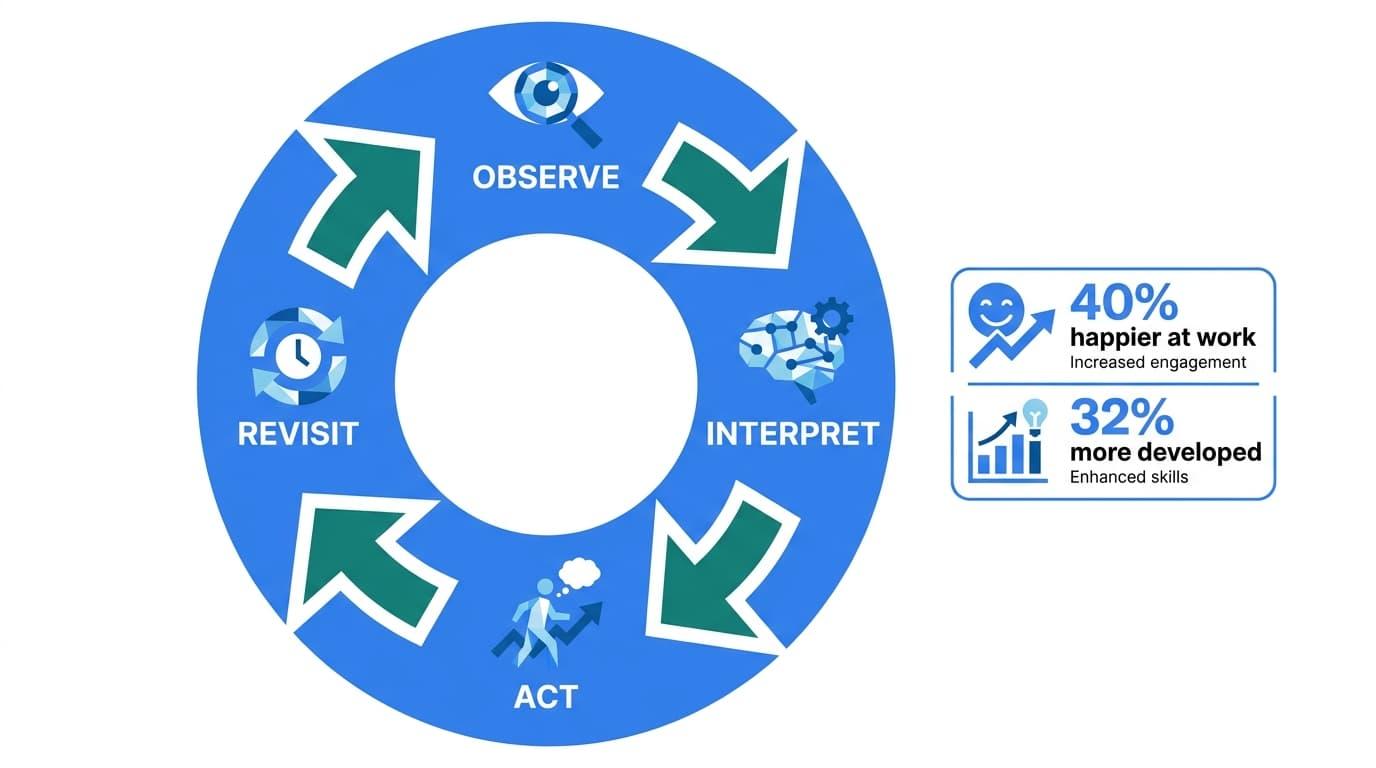
Regular check-ins can help teachers receive regular feedback across visits, test an idea, and reflect on new evidence over the school year. The goal is continuous improvement, not constant correction.
That rhythm can support a growth mindset and help teachers stay motivated during professional development. Teachers receiving regular feedback are 40% happier at work and feel 32% more developed with constructive input.
- Observe: Capture evidence tied to a defined look-for or teacher goal.
- Interpret: Compare the notes with the teacher’s intent and relevant student evidence.
- Act: Reinforce a practice or choose a focused adjustment and support.
- Revisit: Collect comparable evidence and decide whether to continue, adapt, or close the goal.
Education Walkthrough Teacher Growth Profiles place a teacher’s observation history, notes, and reports in one location. Leaders and teachers can use that record during reflective practice, but the profile does not establish causation or replace a coaching conversation.
Use Peer Feedback for Shared Learning
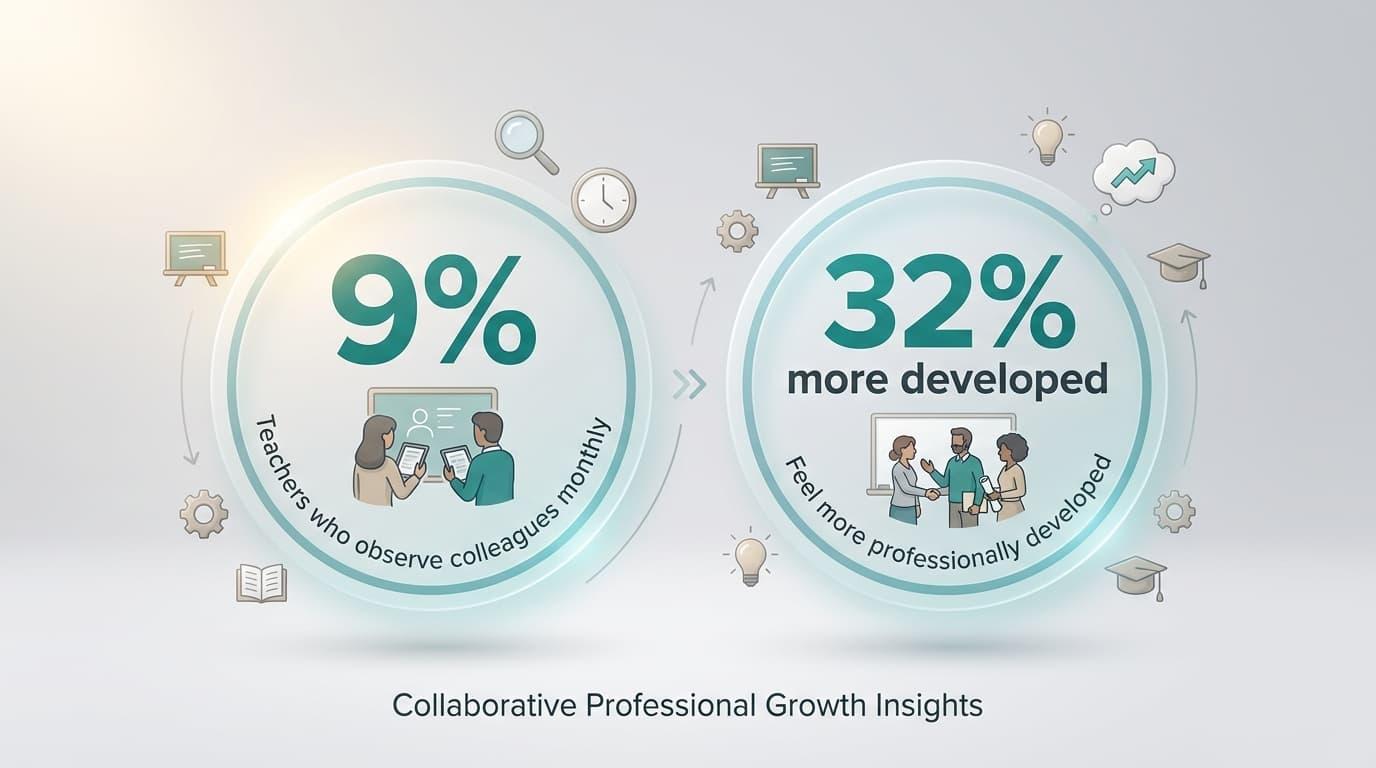
Peer feedback can bring subject expertise and real classroom context into professional development. Set the purpose, evidence focus, confidentiality expectations, and follow-up before the visit so the process does not quietly become an evaluation. When it stays developmental rather than evaluative, regular peer feedback can support personal development and reduce teacher burnout significantly.
The latest OECD teacher-collaboration findings report that 9% of teachers across participating systems observe colleagues and provide feedback at least once a month.
Teachers receiving peer feedback also often report feeling 32% more developed professionally. The report also identifies associations between deeper collaboration, self-efficacy, job satisfaction, and fulfillment of lesson aims. These findings do not prove that peer observation caused those outcomes.
A shared Education Walkthrough template can help keep a peer visit focused on a single question, such as checking for understanding. Teachers still own the discussion, ideas, and next steps, which helps build trust in the process and supports the wider school community.
Create Consistency Across School Leaders
Consistency doesn’t require identical comments or one preferred teaching style. It means leaders share expectations for evidence, distinguish observation from inference, align feedback with school goals, and know when a concern must enter a formal process.
A leadership team can calibrate by reviewing de-identified evidence samples with one approved template. School-wide analytics may then surface patterns worth investigating, but a dashboard pattern should begin a question or support a decision rather than produce an automatic conclusion about an individual teacher.
Leaders should also review who receives feedback, which goals receive attention, and whether some grade levels, subjects, or programs are underrepresented.
Providing feedback across a school is stronger when leaders recognize multiple pathways, including input from students, parents, and colleagues, to support educators.
That check helps the team distinguish a genuine instructional pattern from an observation pattern created by where leaders spent their time. It also supports fairer decisions about coaching, professional learning, resources, and follow-up across the school.
Put the Feedback Process Into Practice
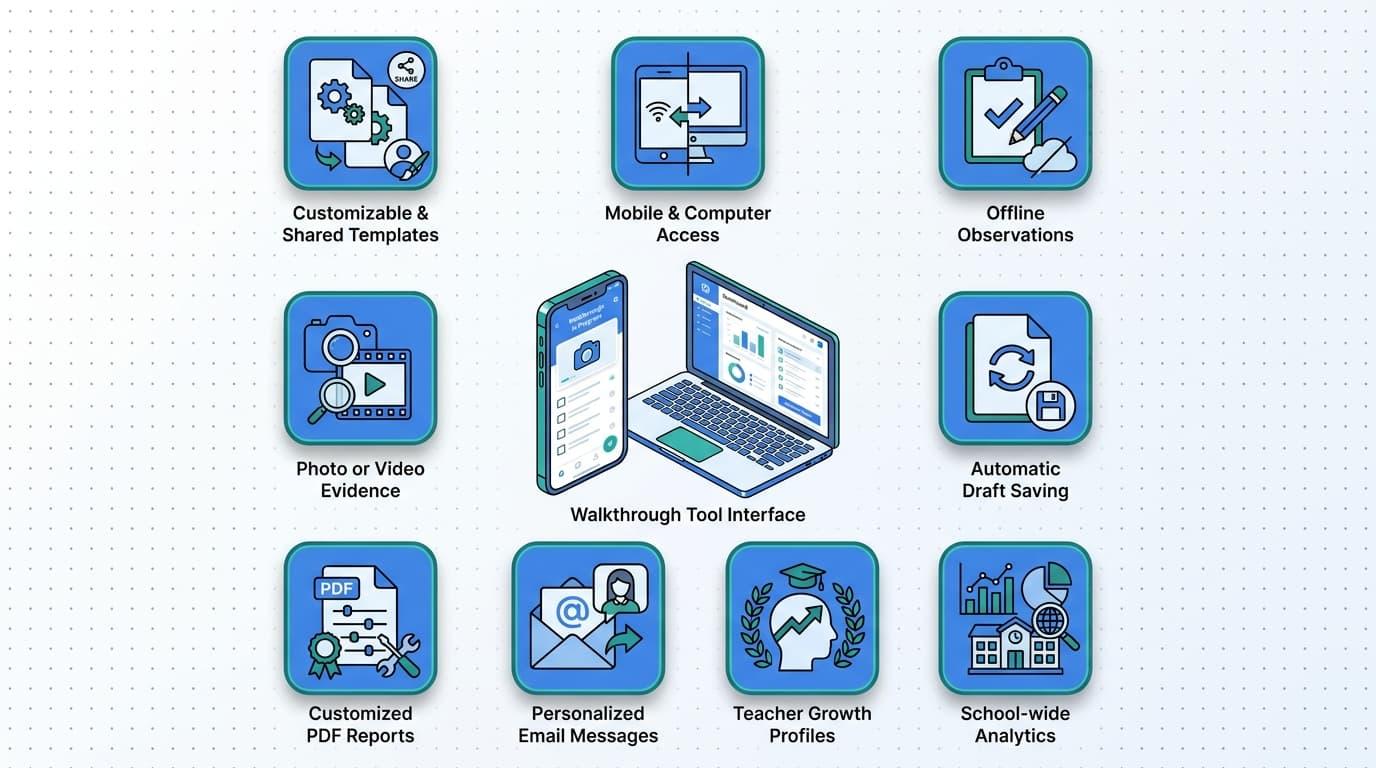
Education Walkthrough brings together the practical parts of an observation workflow. Verified capabilities include customizable and shared templates, mobile and computer access, offline observations, photo or video evidence, automatic draft saving, customized PDF reports, personalized email messages, Teacher Growth Profiles, and school-wide analytics.
Review the Education Walkthrough features to see how evidence capture, reporting, templates, and analytics work. The Instructional Growth Hub connects classroom observations with coaching and follow-through.
The platform does not decide whether evidence is sufficient or replace local evaluation requirements. School leaders remain responsible for interpretation, conversation, support, confidentiality, and official documentation.
Test a shared walkthrough template, capture evidence during classroom visits, and examine how the leadership team follows up on feedback over time.
Try Education Walkthrough Free
Conclusion
The strongest feedback for teachers is evidence-informed, connected to student learning, open to the teacher’s interpretation, and proportional to what the observation supports. When leaders revisit a clear question over time, teacher feedback becomes a powerful tool for professional growth instead of a collection of disconnected notes.
Frequently Asked Questions
These questions address practical issues school leaders may encounter while documenting and discussing feedback.
Should written feedback come before a conversation?
Either sequence can work. Written evidence can help people prepare, while an initial conversation may surface context before a permanent note is finalized. Follow local policy for formal processes.
What if a teacher disagrees with the notes?
Return to the record and separate a disputed fact from a different interpretation. Invite relevant context, use disagreement for self-reflection and a better shared sense of what the evidence shows, correct demonstrable errors, and use established response procedures for formal disputes.
Can leaders include student data?
Yes, when the information is relevant, appropriately protected, and interpreted within its limits. Avoid attributing a complex outcome to a single teacher action or a single visit.
How should sensitive feedback be documented?
Use factual language in classroom observation records tied to the teacher’s classroom, limit access to authorized roles, and follow privacy, retention, labor, and evaluation requirements. Do not store unnecessary personal details in informal notes, and keep documentation notice based and focused on instruction and teaching practice rather than personality to support stronger relationships and building teacher confidence.