
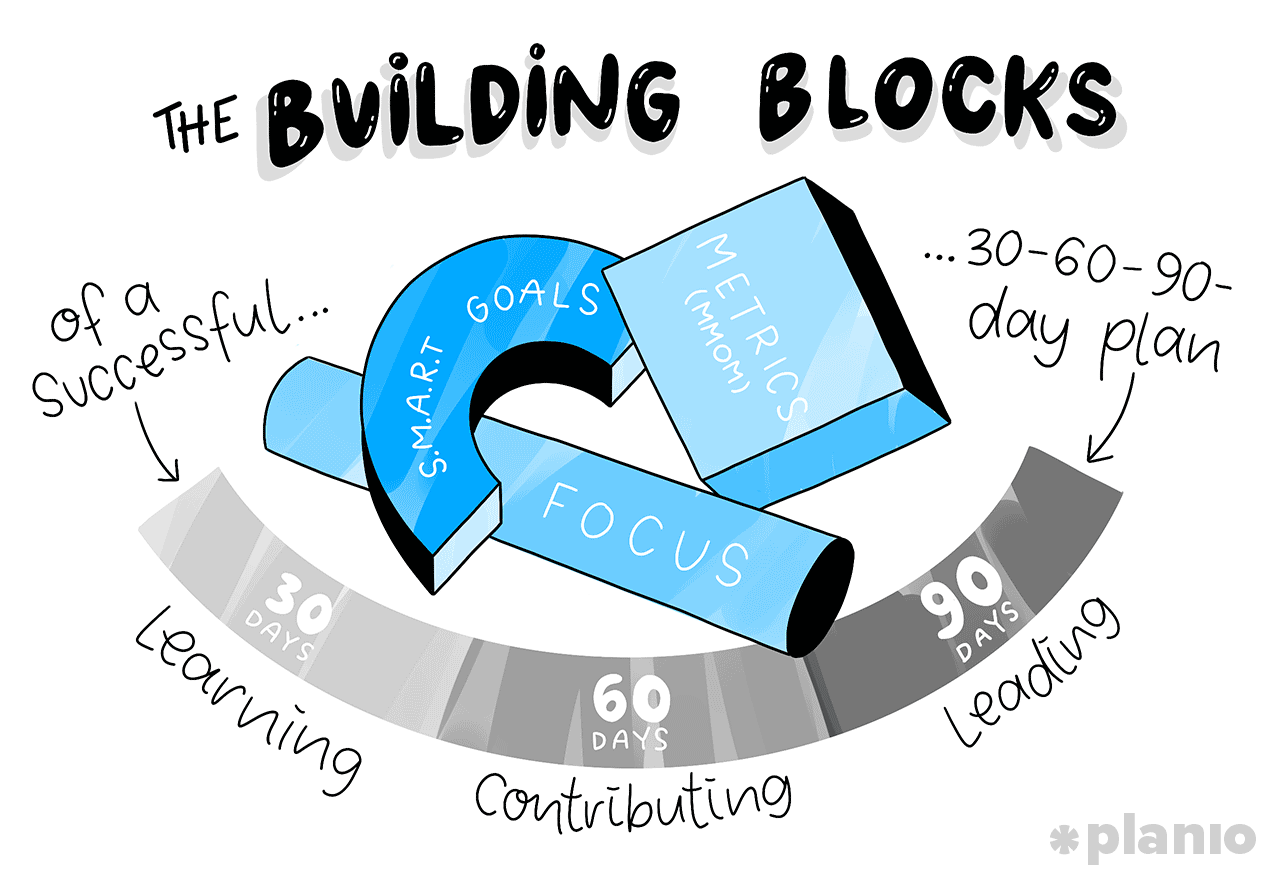

A 30-60-90 day plan gives a new principal a phased entry: listen and learn in the first 30 days, test and align in the next 30, then act on what you found by day 90.
Below is each phase in detail, a free template you can copy, and the mistakes that cost new principals their first year.
A well-structured transition process is essential for any new principal taking on leadership responsibilities. A strong 30-60-90 day plan sets your direction, but you’ll also need reliable systems to carry it out. These tips for staying organized as a first-year principal can help you manage daily demands while keeping your larger leadership goals in focus.
While a 30-60-90 day plan provides immediate tactical guidance, comprehensive onboarding ensures long-term success, including familiarity with essential resources for educators.
This systematic approach helps new principals navigate both the visible challenges and hidden complexities of school leadership, including leveraging ESSER funds to support key initiatives.
A 30/60/90-day plan can be your guiding light. Let’s delve into crafting an effective one that ensures a smooth transition and a promising start.
In your first 30 days, the physical environment you create sends a powerful message about your leadership style. These 52 ideas for making your principal’s office a welcoming haven offer a simple, high-impact way to show that your school is a safe, welcoming, and positive place.
What does a good principal entry plan look like?
The plans that work read like a schedule, not a philosophy. Here is what
the first 90 days look like when the phases are done properly.
Days 1 to 30, listen. Meet every staff member one to one, even briefly.
Ask the same three questions each time so the answers can be compared: what
is working here, what gets in your way, and what should I not change. Read
the last two years of data before you form an opinion about it. Be visible
in classrooms daily without clipboards or judgments. Write nothing public
yet.
Days 31 to 60, test what you heard. Take the patterns from those
conversations back to staff and check them: here is what I heard, did I get
it right. Sit with the leadership team and pick no more than two priorities
for the year. Start short, non-evaluative classroom visits so teachers get
used to an open door before any formal observation happens.
Days 61 to 90, act. Publish the two priorities with what each one will
look like in practice. Name who owns what. Put the first measurable
checkpoint on the calendar. Close the loop with staff by showing which of
their inputs shaped the plan, because that is what earns you the second 90
days.
The pattern behind all three phases: the first month buys credibility, the
second month buys agreement, and only the third month spends either one.
Why a 30/60/90 Day Plan?
This type of plan provides clear milestones for your first three months. It aids in:
-
- Establishing clear priorities.
-
- Demonstrating your leadership vision.
-
- Building trust among staff, as they’ll see a proactive approach.
Download Now: Free 30/60/90 Day Plan Template
Breaking Down the 30/60/90 Day Plan:
The phased approach of a 30/60/90 day plan works best when integrated with comprehensive entry planning strategies.
These strategies help new principals establish credibility while building sustainable leadership practices.
New principals can accelerate this process with classroom walkthrough tools for new principals building trust, enabling structured, non-evaluative visits that generate instant feedback and establish a culture of continuous improvement from day one.
Understanding various entry plan methodologies can enhance your 90-day framework significantly.
First 30 Days: The Observation and Understanding Phase
-
- Meet & Greet: Initiate one-on-one meetings with staff, teachers, and student representatives. Even if you know them, these meetings set the tone for your leadership.
-
- School Culture Review: Observe the school culture and dynamics, noting areas of potential improvement.
-
- Systems & Processes Audit: Review current administrative processes, academic systems, and extracurricular activities. Identify inefficiencies.
-
- Feedback Collection: Use anonymous surveys to gather insights about what’s working and what isn’t.
Days 31-60: Strategy & Planning Phase
-
- Analyze Feedback: Go over the feedback and observations to identify major areas of focus.
-
- Goal Setting: Define clear, measurable goals for academics, administration, and school culture.
-
- Resource Audit: Assess if the school has the necessary resources (human, material, and financial) to achieve these goals.
-
- Draft Initiatives: Start drafting initiatives based on goals set. For example, if improving reading levels is a goal, one initiative could be setting up a weekly reading hour.
Days 61-90: Implementation & Adjustment Phase
-
- Roll Out Initiatives: Begin implementing the initiatives, ensuring all staff understand their roles.
-
- Monitor & Review: Closely monitor the progress. Is the new reading hour effective? Are more resources needed?
-
- Feedback Loops: Establish regular feedback mechanisms to know how changes are being received.
-
- Adjustment & Tweaking: Make necessary tweaks based on feedback and initial results.
Common mistakes in a 30-60-90 day plan
Arriving with the plan already written. A plan built before you have heard the staff tells them their answers were never going to matter. Write the framework in advance; write the priorities after day 30.
Too many priorities. Three or more reads as a wish list and gets treated as one. Two is the working maximum for a first year.
Confusing visibility with evaluation. Walking into classrooms in the first 30 days with a scoring form attached turns a relationship-building move into a threat. Keep early visits non-evaluative and say so out loud.
No checkpoint on the calendar. A plan without a date attached to each priority quietly becomes a document nobody reopens. Put the 90-day review in the calendar during week one.
Skipping the loop back. Staff told you things in month one. If they never hear which of it shaped the plan, the next round of honesty costs a lot more to get.
Templates and Tools:
Several online platforms, like Trello or Asana, can help in creating visual 30/60/90 day plans that are easily adjustable and shareable with your team.
Conclusion:
Creating a 30/60/90 day plan as a new principal in a familiar environment requires a balance of leveraging your prior knowledge and approaching issues with fresh eyes. This plan will not only guide your early days but also establish a foundation for your leadership journey. Remember, the objective is continuous growth and improvement for both you and your school community.
Bonus Tips:
-
- Stay flexible. While having a plan is essential, be ready to adapt as you gather more information.
-
- Involve others. Engage experienced teachers, other administrators, and even students in your planning process. Their insights can be invaluable.
-
- Celebrate small wins. This will boost morale and create a positive atmosphere.

