Giving feedback to resistant teachers is one of the hardest things. School leaders do it anyway because students need great teaching. Done right, it builds trust and improves outcomes for kids.
This guide gives you a practical, research-backed system for feedback. You’ll learn how to have tough conversations without pushing teachers out.
Education Walkthrough’s digital observation platform helps school leaders document feedback conversations, which you can then use to track teacher growth over time and ensure consistent follow-through across every coaching cycle.
Learn More About the Education Walkthrough Tool Today!
Key Takeaways
- In high-poverty schools, about 18% of teachers leave or move each year. Feedback that feels punitive can push already fragile staffing over the edge. The teachers who most need support are often the first to go.
- A three-part coaching system works best in these settings. First, separate coaching from evaluation. Second, use neutral, evidence-based language like the SBI model. Third, end every conversation with one small, trackable next step.
- A 2023 study tracked 133 teachers and 3,649 students in high-poverty charter schools. Coaching with practice opportunities led to stronger teaching and better student outcomes in ELA. Feedback must be paired with rehearsal, not just talk.
- “Resistance” is usually fear, exhaustion, or low psychological safety. You can lower defensiveness without lowering expectations. That balance is where real growth happens.
Why Does Feedback Cause High Teacher Turnover in High-Poverty Schools?
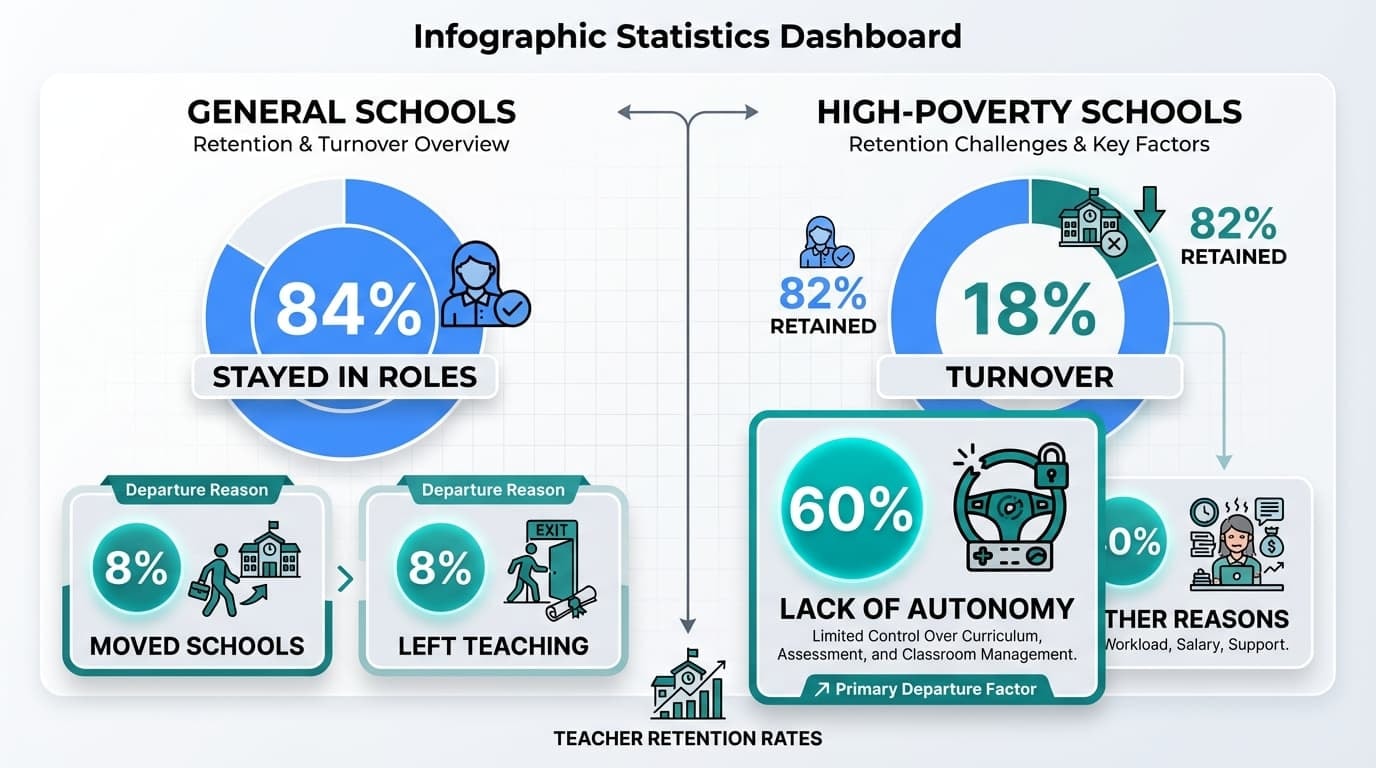
In Title I schools, poorly delivered feedback directly correlates with increased teacher turnover, which degrades institutional knowledge and negatively impacts student achievement metrics.
Picture Lincoln Middle School in February 2026. It’s a Title I campus where 78% of students qualify for free lunch. Principal Ms. Torres leaves walkthrough notes for a 15-year veteran. She flags low student engagement and an unclear lesson objective.
By Thursday, the teacher has filed a complaint with the union rep. Two colleagues mentioned feeling “targeted.” The quiet resistance spreads down the hallway. Ms. Torres didn’t want a crisis. She wanted to help kids learn.
This happens in schools everywhere. The data shows why it matters so much. According to the 2021–22 NCES Teacher Follow-up Survey, 84% of teachers stayed in their roles. But 8% moved schools and 8% left teaching entirely.
In high-poverty schools, turnover jumped to 18% in a single year. That’s a lot of institutional knowledge walking out the door.
The reasons teachers leave tell an important story for leaders. 66% of those who left said their new job had a better work-life balance. 60% reported more autonomy and control over their work. 58% said their workload was more manageable somewhere else.
Punitive feedback directly threatens teacher autonomy, causing immediate disengagement. Because 60% of departing teachers cite a lack of autonomy as their primary exit driver, utilizing deficit-focused language frequently results in teachers leaving the profession entirely.
Teachers who started in 2015 have survived three major curriculum shifts. They lived through a pandemic and countless new initiatives. When you walk in with feedback, many hear, “Here we go again.”
This guide offers a different path. One that improves teaching and keeps good people in the building.
The Mindset Shift: Rethinking “Resistance” in Context
Resistance is rarely about not caring. It’s almost always about something deeper.
Let’s look at another example: Two teachers at Jefferson Elementary. Ms. Patterson has taught 4th grade for 25 years. She’s watched six principals come and go. One put her on an improvement plan for a single low score. Then quietly dropped it when they left.
She now treats every feedback conversation as a game she’s learned to survive. Her defensive walls aren’t about ego. They’re about self-protection after years of inconsistent leadership.
Mr. Chen is in his second year. He was hired mid-year to replace a teacher who quit in October 2025. He got three days of orientation and a stack of curriculum binders. When his AP stops by with “concerns,” he hears one thing: you’re failing, and you’re next.
Veteran and novice teachers may project resistance to observation, but this behavior rarely indicates laziness or a lack of care. Instead, teacher defensiveness serves as a psychological shield against inconsistent leadership and high-stakes evaluations.
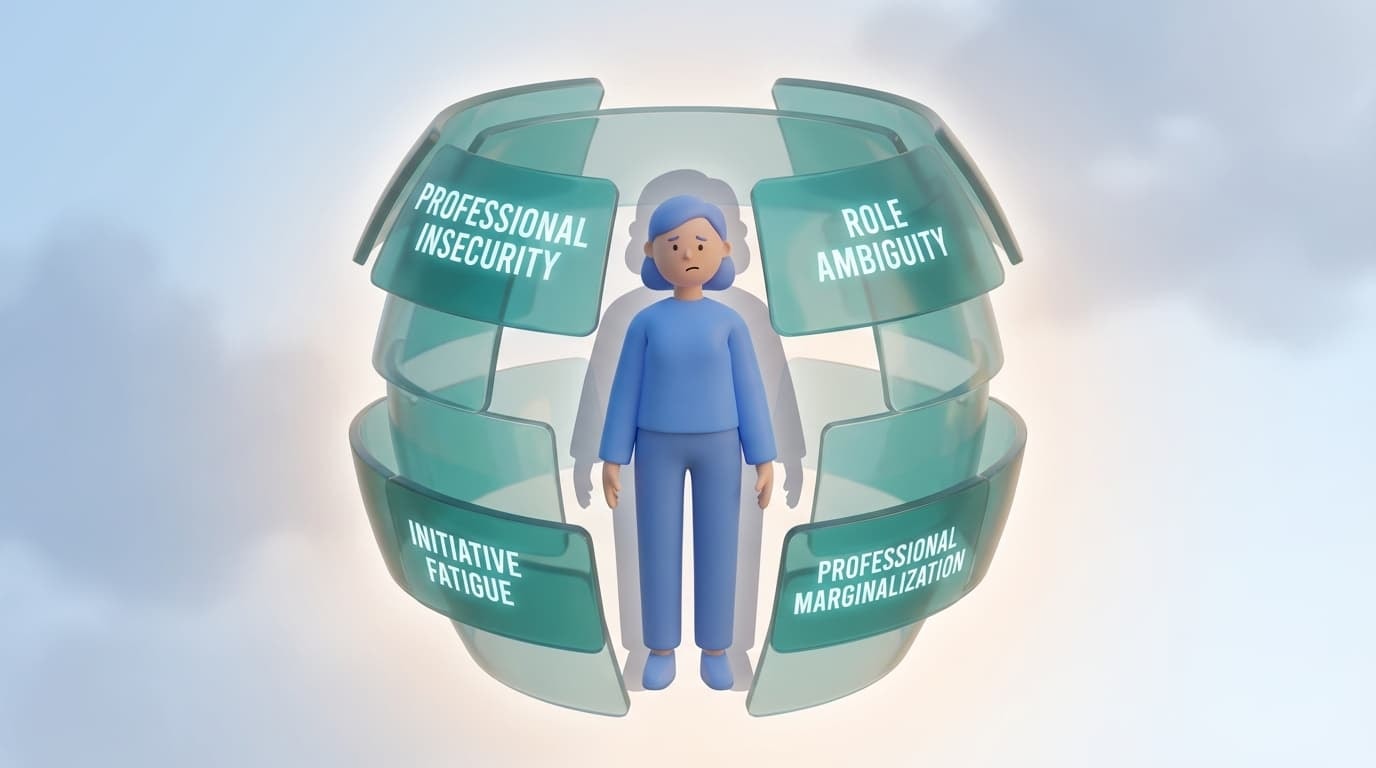
Their resistance is covering something real:
- Professional Insecurity: A fear of being labeled ineffective and subsequently losing employment.
- Role Ambiguity: Confusion stemming from shifting administrative expectations and curriculum changes.
- Initiative Fatigue: Exhaustion resulting from years of uncompensated changes without structural support.
- Professional Marginalization: Anger generated by feeling disrespected as an autonomous professional.
The research backs this up. Among teachers who moved schools in 2021–22, 19% did so involuntarily. When feedback feels like the first step toward a forced exit, resistance becomes survival.
Schools that introduce coaching only for “struggling” teachers make it worse. In 2021, one high school tied coaching to a “targeted support plan” for low-rated teachers. Within weeks, even strong teachers refused help. The stigma was too heavy.
The OECD TALIS 2024 report is clear: mentorship works best when it’s framed as collaborative, not remedial. When teachers see feedback as support rather than judgment, defensiveness drops. The question to ask when someone shuts down isn’t “why don’t they care?” It’s “where is trust thin, and how do I rebuild it?”
A 3-Part System for Feedback in Low-Trust, High-Pressure Environments
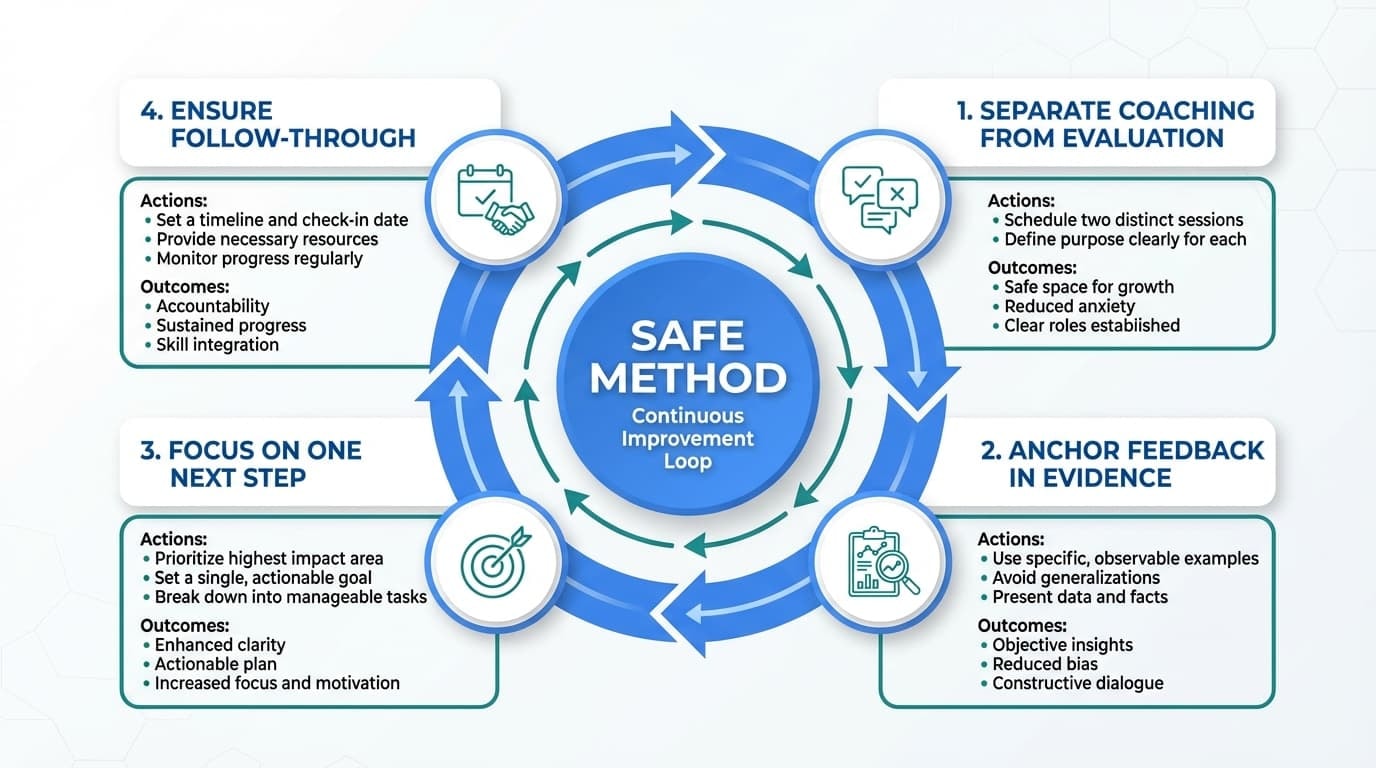
The SAFE Feedback Cycle gives leaders a clear path through tough conversations.
- S — Separate coaching from evaluation.
- A — Anchor feedback in evidence.
- F — Focus on one next step.
- E — Ensure follow-through. Here’s how each stage works in practice.
Stage 1: Separate Coaching from Evaluation
Label the conversation clearly at the start.
Say: “This is a coaching conversation, not part of your formal evaluation.” That one sentence changes the entire tone of the meeting.
Keep coaching notes and evaluation records in separate places. This protects the teacher and protects you. Open every coaching conversation with a student-centered purpose. “I want to make sure your 7th graders can cite evidence by May,” lands better than “The district says scores need to improve.”
Stage 2: Anchor in Evidence Using the SBI Method
The Situation–Behavior–Impact model keeps feedback grounded in facts. Not feelings, not opinions…what you actually saw.
Here’s an example: “In Tuesday’s 3rd-period Algebra class, during independent practice, I noticed 14 of 22 students were off-task within 5 minutes. When I asked 3 students what they were supposed to do, none could explain the task.”
That’s specific, observable, and hard to argue with. It’s also much easier to act on than “your classroom management was poor.” Replace judgment words with descriptions of what you saw. That small shift lowers defensiveness every time.
Stage 3: Focus on One Next Step
Don’t list everything that needs fixing. Pick the one change that will have the biggest impact on students right now.
Make it concrete and time-bound.
“Improve student engagement” is too vague. “By Friday, include a turn-and-talk every 10 minutes during direct instruction” is something a teacher can actually do.
Better yet, ask the teacher to propose the first step. That small move builds ownership and buy-in fast.
Stage 4: Ensure Follow-Through
Schedule a specific follow-up before you leave the room. “I’ll stop by Thursday, 2nd period, for 10 minutes to see the turn-and-talks in action.” Then actually show up.
Skipping follow-up sends a message that the feedback didn’t matter. When you do return, lead with what improved. “I saw four turn-and-talks, and students were on task — that’s a real shift. Now let’s think about deepening the prompts.”
Handling Different Teacher Profiles: Tailoring Your Approach
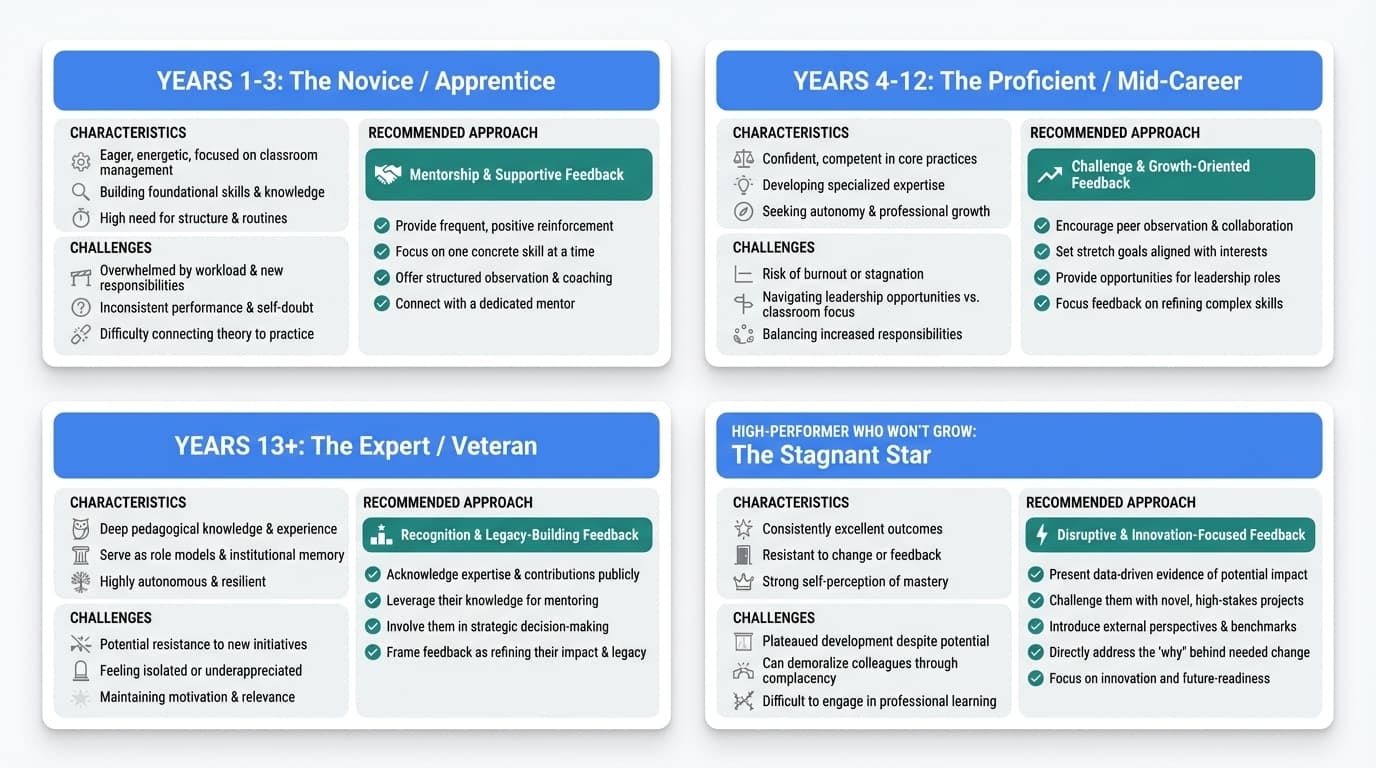
Not every resistant teacher is resisting for the same reason. Your approach needs to flex.
Novice or Early-Career Teachers (Years 1–3)
New teachers struggle with classroom management and pacing — not defiance. Many came from student teaching environments, nothing like their current school. Their resistance often looks like agreeing in the moment, only to not change anything.
Normalize the struggle first: “Most teachers take 2–3 years to feel confident with pacing. This is a skill you’re building, not a character flaw.” Then provide models — show them what success looks like rather than just describing it.
Co-create solutions together. “You said transitions are hard. What if we co-plan Thursday’s lesson and build in a specific entry routine?” Celebrate small wins loudly and specifically. Moving from 8 students off-task to 2 is real progress worth naming.
Aim for weekly check-ins during the first semester and biweekly thereafter. Pair new teachers with a mentor who can normalize the early-career experience.
Mid-Career Teachers (Years 4–12)
These teachers often have strong student relationships but outdated instructional strategies. Resistance sounds like “I’ve tried that before” or passive-aggressive minimum compliance.
Acknowledge their expertise before anything else. “You’ve built real trust with these 9th graders — that’s hard to do. Let’s use that to try a new discussion approach.” Then connect the ask directly to student data. “Only 42% scored proficient on citing evidence last month. Research shows structured protocols move that number. Can we test one for three weeks?”
Give them a choice within the structure. “You need to increase student talk time. Would you prefer Socratic seminar, small-group discussion, or think-pair-share?” Respect their experience while still holding the line on outcomes.
Veteran Teachers (Years 13+)
Veteran resistance is often about institutional fatigue and self-protection. These teachers have outlasted principals and initiatives. Their silence or deflection can influence the whole staff.
Lead with data and respect together. “You have 18 years with this student population. Here’s what the outcomes data shows. Help me understand what you’re seeing.” Position them as problem-solvers, not problems to be solved.
Frame feedback around legacy when possible. “In five years, what do you want former students to say about your class?” That question often opens doors that direct critique closes.
When resistance continues despite multiple attempts, be clear and calm: “Students meeting the standard by May is non-negotiable. Coaching is here to support you — what would make this feel more like a partnership?”
Never criticize a veteran teacher publicly or in front of newer staff. Privacy builds trust. Public correction just builds walls.
The High-Performer Who Won’t Grow
Some teachers produce strong test scores but resist feedback on equity or instructional variety. Their resistance sounds like “my scores speak for themselves.”
Affirm success, then extend it: “Your Algebra scores are consistently strong. Let’s use that as a foundation to build more conceptual understanding through student discourse.” Then bring in equity data if needed. “85% of students pass the state test — but only 52% of your Black male students did, compared to 91% of white female students. Let’s explore what’s happening there.”
Position these teachers as instructional leaders. Pushing their own growth becomes part of the role, not a critique of their performance.
Real Coaching Scripts: What to Say (and Not Say)
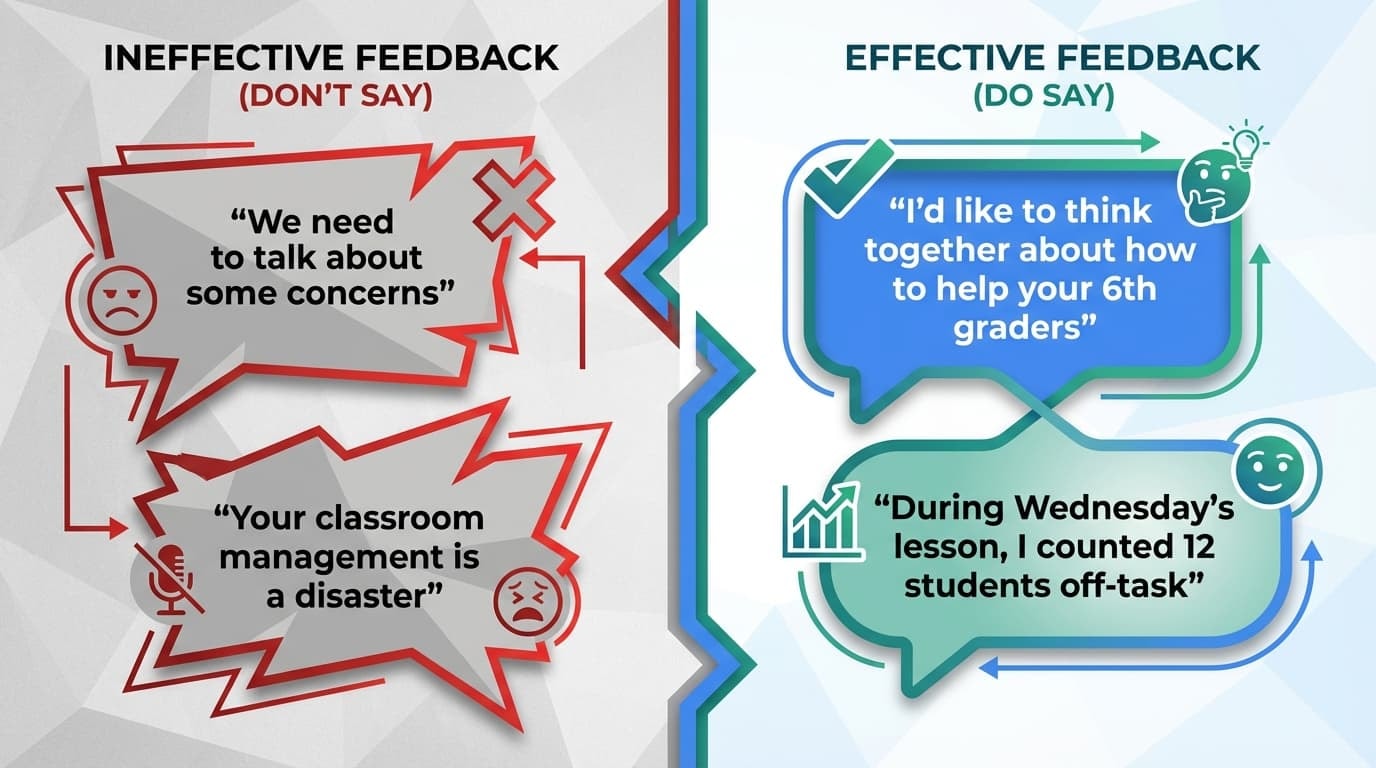
Good feedback sounds different from bad feedback. Here’s the difference in real conversations.
Opening a difficult conversation
Don’t say: “We need to talk about some concerns.” Do say: “I’d like to think together about how to help your 6th graders master the main idea by month’s end. I have some observations from Monday that might help. Does it now work?”
Delivering critical feedback
Don’t say: “Your classroom management is a disaster.” Do say: “During Wednesday’s fractions lesson, I counted 12 students off-task within the first 10 minutes — some talking, some on phones. When students aren’t engaged, they can’t access the content. What do you think is causing the disconnect?”
When a teacher deflects responsibility
Don’t say, “Don’t blame the kids.” Do say: “I hear that this group is tough — they are. And they still need to learn fractions before May. Let’s focus on what we can control. What if we tried a seating chart with peer tutors for two weeks?”
When no progress is happening
Don’t say: “You said you’d try think-pair-share and I didn’t see it.” Do say: “Last week we agreed to try think-pair-share twice per lesson. I didn’t observe it on Tuesday or Thursday. Was it not workable, or did something get in the way?”
Ending a coaching session
Don’t say: “Let me know if you need anything.”
Do say: “Here’s our next step: you’ll try turn-and-talk during Monday’s fractions lesson. I’ll observe for 15 minutes at 10:00 a.m., and we’ll debrief over lunch. If it doesn’t go well, we adjust. If it works, we build on it.”
Education Walkthrough provides customizable templates that make it easy to log these conversations. Our notifications also help you track next steps and follow up on time.
When Coaching Isn’t Enough: Moving to Accountability
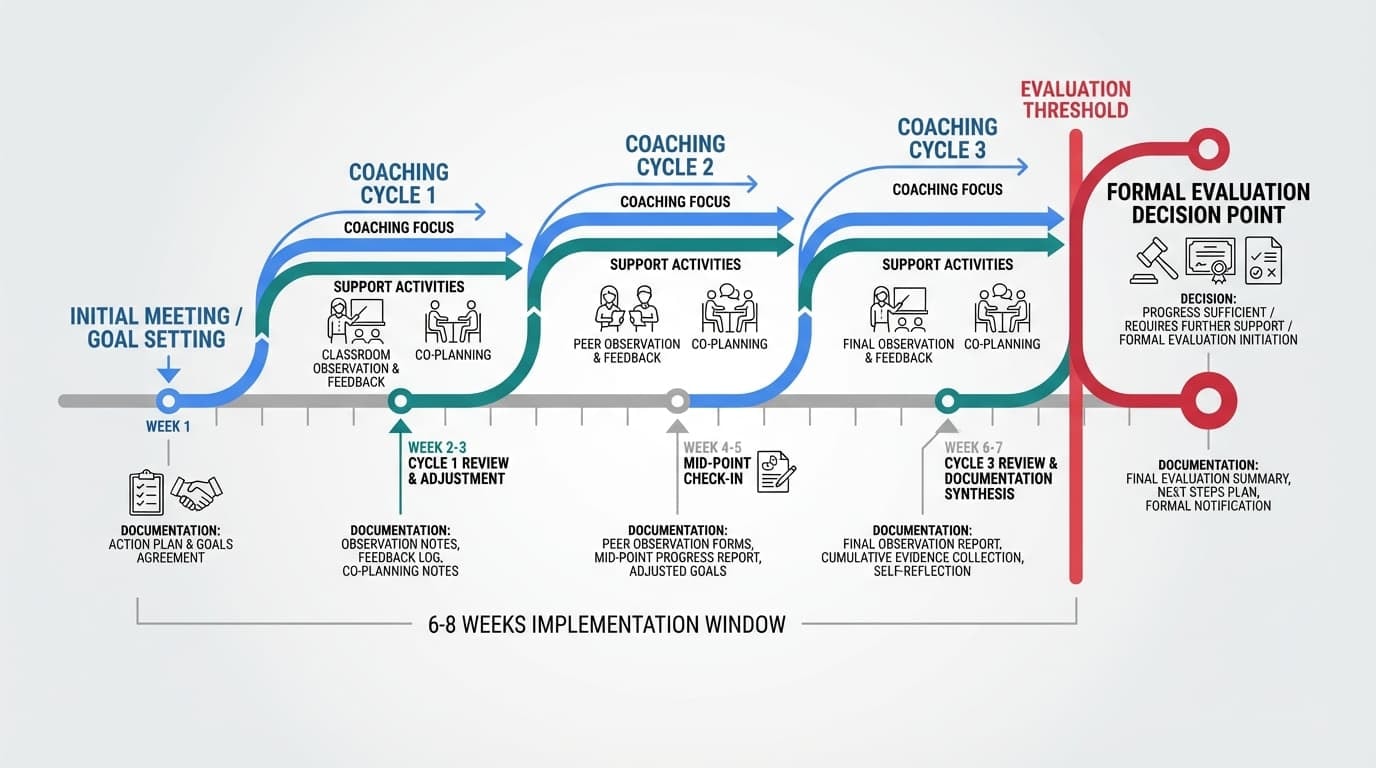
Coaching works for most teachers when paired with support and clear expectations. But not always. Coaching should always come first and be substantial, including:
- Multiple coaching cycles with clear, documented next steps
- Classroom observations with specific, actionable feedback
- Offers of co-planning and chances to observe peers
- A reasonable implementation window of at least 6–8 weeks
If, after all this support, teaching practice still shows no meaningful improvement, then formal evaluation should be introduced.
Here’s how to have that transition conversation clearly and calmly:
“Over the past eight weeks, we’ve had four coaching conversations about classroom management and student engagement. We co-planned lessons. I modeled routines. You observed Ms. Garcia’s class. But behavior referrals are up 40%, and only 38% of students passed the last assessment. I’m moving this to a formal improvement plan. You’ll have clear benchmarks, a timeline, and continued coaching support. But students being engaged and learning — that part is non-negotiable.”
Document everything before this conversation. Coaching notes, observation records, meeting summaries, and student outcome data all matter.
Education Walkthrough streamlines this process by providing a centralized, digital app for administrators and coaches to quickly record, organize, and share observations, meeting notes, and performance data.
Also, you have to follow district and union protocols carefully, and keep offering support even during formal processes. Always keep in mind that your accountability is to the children first.
Moving from Reactive Feedback to a Coaching Culture
The best schools don’t wait for teachers to struggle before offering coaching.
In reactive schools, coaching only shows up when someone is in trouble. That creates a stigma so heavy that even struggling teachers hide rather than ask for help. In schools where teaching actually improves, feedback is frequent, brief, and expected for everyone.
- Normalize short, regular visits: Aim for 10–15 minute weekly walkthroughs in every classroom by October 2026. Tell teachers upfront: “These visits are about learning and support, not catching anyone out.”
- Give teachers a voice in the process: Build a feedback working group of 6–8 teachers across experience levels. Ask them to co-design observation norms, feedback scripts, and forms that capture what actually matters for student learning. When teachers help build the system, buy-in goes up across the board.
- Create mentoring structures: Pair new teachers with strong veteran colleagues. Peer observations, co-planning sessions, and informal check-ins help normalize struggle and build confidence faster than any formal training.
- Share data transparently: Share aggregate trends across the whole staff: “In fall 2025, we saw strong teacher-student relationships but inconsistent checks for understanding.” When feedback is about patterns — not individual blame — defensiveness drops.
- Invest in coach development: Instructional coaches need training in adult learning and feedback methods, not just content knowledge. Priority topics include using SBI in difficult conversations, handling defensive responses without escalating, and building trust with resistant teachers through consistency.
Position coaches as a resource for everyone, new teachers, veterans, and high performers alike. The moment coaching becomes a signal of trouble, it stops working.
Conclusion: Better Feedback Builds Better Schools
Feedback only works when teachers feel safe enough to receive it.
The schools that improve are the ones that treat feedback as a normal, supportive part of teaching, not a warning sign. That shift doesn’t happen overnight. It takes consistent follow-through, clear expectations, and real investment in teachers as professionals.
Education Walkthrough helps school leaders build that culture. From logging walkthrough notes to tracking teacher growth over time, our platform makes the whole feedback process faster, clearer, and more consistent.
Frequently Asked Questions
Use this section to quickly troubleshoot the most common challenges school leaders face when giving feedback to resistant teachers in high-pressure, low-trust environments.
How do I handle a teacher who flat-out refuses to meet?
Start with a low-stakes, relationship-first approach. Try a quick hallway check-in that asks how things are going before launching into any critique. If refusal continues, send a calm written invitation tied to a student goal: “I’d like to talk about getting your 3rd graders’ reading levels up before May assessments. Here are three time options.”
If they still won’t meet, consult HR and document all attempts. Keep your tone student-centered throughout. Refusing to meet is data about the relationship, not permission to stop trying.
What if feedback conversations keep turning into debates about past decisions?
Acknowledge the frustration briefly: “You’re right — three curriculum shifts since 2019 have been hard.” Then redirect to what you can both control: “Given that, what’s one thing we can try next week to help students track the main idea?”
Time-box the venting when needed. “Let’s take 5 minutes on your concerns, then 10 minutes on this specific class period.” Keep a running list of systemic issues and follow up on them separately. That shows respect and keeps coaching on track.
How do I give honest feedback when I’m less experienced than the teacher?
Lead with your vantage point, not authority: “You bring 18 years of classroom experience. I’m looking at cross-school data and current state expectations. Let’s put those together.”
Rely on observable evidence. “During yesterday’s lab, 9 of 24 students didn’t finish the procedure” is harder to argue with than a general impression. Ask for the teacher’s expertise too — “What strategies have worked for you with similar groups?” Your humility, combined with evidence,e creates productive conversations even with resistant veterans.
How do I keep feedback from overwhelming an already burned-out teacher?
Narrow the focus to one high-leverage change for a defined window: “For the next two weeks, we’re only working on lesson openings.” Ask directly about bandwidth: “Given everything on your plate, what feels doable in the next 7 days?”
Pair feedback with real support — help create materials, cover a class so they can observe a peer, or co-plan one lesson together. Show you’re sharing the load, not just adding to it.
What if coaching cycles aren’t changing practice?
Review the pattern together using collected evidence — observation notes, student work, and behavior data. Ask directly: “What’s getting in the way of trying this consistently?”
Check whether the next steps are too vague or misaligned with the real root cause. Redesign the plan to be smaller and more specific. If teaching practice still doesn’t shift after clear expectations and multiple documented cycles, move to formal performance improvement. Follow district and union guidelines carefully. Your ultimate accountability is to the children in that classroom.