Observation gaps—the prolonged absence of non-evaluative classroom visits—sever the professional connection between teachers and administration. This lack of visibility drives 80% of teachers to feel professionally isolated, directly accelerating burnout and increasing turnover rates.
This guide analyzes the impact of feedback deficits, through a policy analysis, and outlines peer-based strategies to rebuild retention.
Key Takeaways
- When teachers don’t get visits or feedback for a long time, they can feel alone and stressed. More than 80% say their classroom is rarely visited, and many feel burned out.
- Teachers feel happier and stay longer when they get helpful feedback from leaders or other teachers. Even short visits that are not for grading help teachers feel seen and part of the team.
- Peer visits and tools like Education Walkthrough help schools give faster, clearer feedback. This builds trust, helps teachers work together, and makes schools better for teachers and students.
1. Why Does a Lack of Feedback Lead to Professional Isolation?
Observation gaps create a vacuum of support where teachers operate without pr
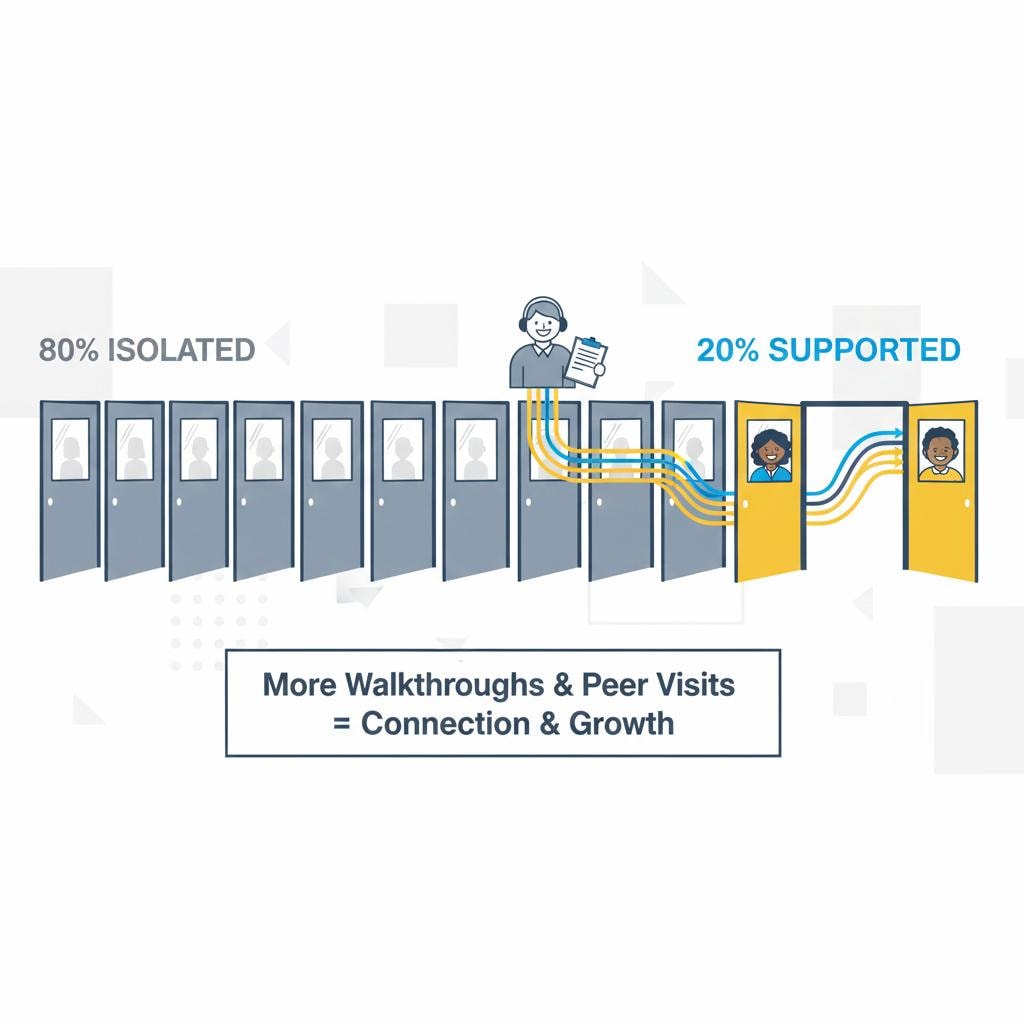
ofessional validation. Data from the University of Northern Iowa indicates that over 80% of teachers rarely receive visits from peers or leaders, leading to a ‘siloed’ work environment. This lack of visibility reinforces the perception that teachers are invisible laborers rather than valued partners, a primary psychological driver of attrition.
At the same time, 74 percent of teachers are performing additional duties due to staff shortages. Approximately 80 percent report doing more than their job description requires. This adds more stress and makes teachers feel even more alone. Over time, this causes burnout and makes some teachers want to leave their jobs, especially as they see morale fall .
The numbers are serious:
- 44 percent of K-12 teachers feel burned out often
- One in five teachers under age 30 says they plan to leave teaching in the next five years
- Turnover in schools reached 23% during the 2023-2024 school year, with rates hitting 30% among new teachers, according to Education Resource Strategies
Teacher attrition disrupts instructional continuity, directly correlating with lower student achievement scores and increased behavioral issues.
High turnover forces districts to divert critical funds toward continuous recruitment and onboarding, destabilizing long-term educational financial planning.
Solution: More Walkthroughs and Peer Visits Help Everyone
To fix this, schools need to make classroom visits a regular habit. These visits should not be scary or feel like a test. Instead, they should be concise and helpful, providing teachers with support and ideas for growth.
One great solution is peer observation. This means teachers visit each other’s classrooms and give helpful feedback. Research shows this works, especially in the context of hiring new teacher . Approximately 80 percent of elementary and middle school teachers prefer peer feedback over formal evaluations.
Additionally, when teachers receive 6 to 10 walkthroughs per year, they improve more quickly than those who receive only 2 or 3. These visits help teachers feel connected and supported. They also improve student achievement by assisting teachers to grow in real time.
Even better, peer visits help new teachers feel less alone. They learn by observing others and receive feedback that helps them develop. This can help reduce teacher turnover and strengthen school communities.
Our analysis of district retention data shows that schools using platforms like Education Walkthrough to track visit frequency see a measurable increase in teacher satisfaction scores.
2. How Does Professional Isolation Accelerate Teacher Burnout?
Let’s be real, teaching can feel pretty lonely sometimes. Over 80% of teachers say peers or school leaders rarely visit their classrooms. Without regular check-ins, feedback, or even a “Hey, great lesson today,” many teachers feel invisible.
- A December 2025 report by RTE Newshighlights a survey of over 1,000 teachers where 86% reported personal burnout at work.
- Nearly half of K–12 teachers report feeling burned out “often” or “always.”
- 40% say they don’t feel supported at work.
- More than 75% report high stress levels every week.
And it’s not just a rough day here and there; it’s ongoing chronic stress. Over time, this emotional drain leads many to think about leaving. National surveys show that about half of teachers plan to retire earlier than expected. The hardest hit? New teachers and those in understaffed schools who are taking on too many roles.
Between 2020 and 2022, around 300,000 public school teachers and staff left the profession, and now 1 in 8 teaching roles is either unfilled or filled by someone not fully certified. That makes the load even heavier for those who stay, adding to the stress and burnout cycle.
Even teachers who stay in the same school year after year say they feel cut off. Without regular visits, feedback, or collaboration, the work starts to feel like it’s all on them — and that isolation wears people down.
Solution: Connection and Feedback Make a Big Difference
Here’s the good news: when teachers feel supported, everything gets better. Research shows that regular, encouraging feedback from leaders can lower burnout and help teachers stay in the profession longer.
Schools that make time for things like:
- Mentorship
- Peer observation
- Quick, meaningful feedback
…see better teacher retention, especially among experienced teachers who want to keep growing, not just survive the job.
In fact, recent research shows that teachers who feel noticed and appreciated by school leaders report much lower levels of burnout. Feedback doesn’t need to be formal or intense; it just needs to be consistent and supportive.
Big-picture studies from around the world agree: improving school culture and working conditions, especially in feedback, collaboration, and recognition, is one of the most innovative ways to reinvent public education and reduce teacher attrition, particularly regarding education finance .
This kind of change doesn’t just help teachers; it allows students, too. Teachers who feel connected and cared for are more likely to stay engaged, push through challenges, and lift the entire school community.
3. Observation Gaps Leave Teachers in the Dark
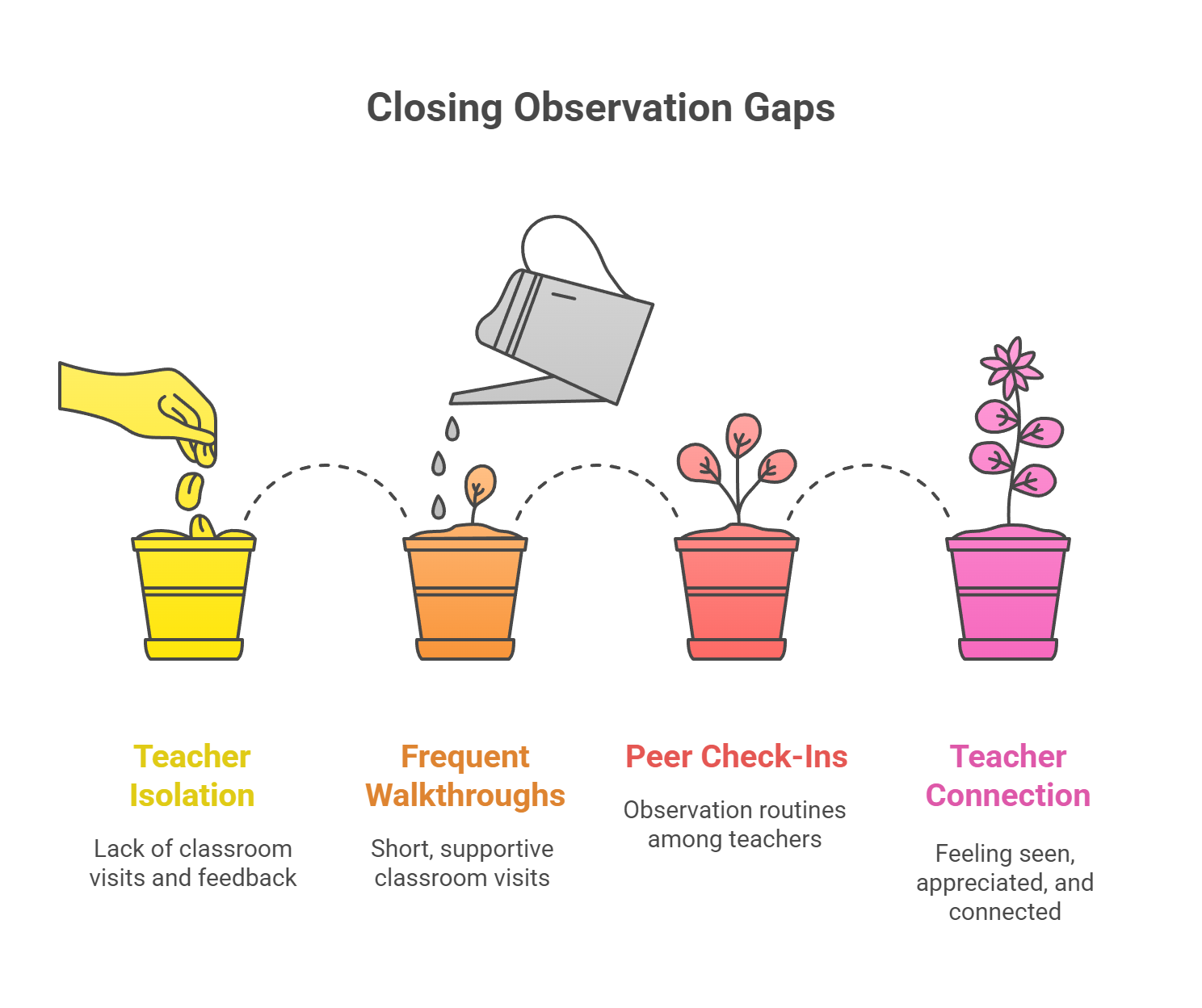
When teachers go many days or even months without anyone visiting their classroom or giving them feedback, they can start to feel left out of the school team. These missed visits are not just skipped check-ins. They are lost chances to help teachers feel supported and grow.
In schools like this, teachers may feel like no one notices their hard work. This is extra hard for new teachers or those with tough classes. Without support or encouragement, many feel stressed and may leave their jobs early. This hurts not just teachers, but the whole school.
Without regular, constructive feedback from school leaders or peers, teachers may begin to doubt their effectiveness, feel professionally isolated, and consider leaving. In fact, how observation gaps create teacher isolation and drive turnover is one of the most pressing issues in education today.
Solution: Frequent Walkthroughs and Peer Check-Ins
One proven way to close these observation gaps is by building a culture of short, supportive classroom visits. Walkthroughs led by school leaders and peer observation routines help teachers feel seen, appreciated, and connected.
Frequent walkthroughs that are non-evaluative can:
- Reinforce good teaching practices
- Offer timely, helpful suggestions
- Build trust and transparency
This kind of visibility reduces isolation, improves teacher retention, and boosts morale across the board. It also helps administrators stay more attuned to the classroom, leading to better-informed professional development and stronger relationships.
4. How Does Observation Frequency Affect New vs. Experienced Teachers?
Both new teachers and experienced educators are facing growing pressure. From managing student needs to adapting to shifting education policy, the demands on teachers continue to climb. For many, the result is burnout and eventual turnover.
Research in education statistics shows that turnover rates remain high, particularly in the first five years of a teaching career. But even veteran teachers are leaving due to chronic stress, lack of feedback, or feelings of being undervalued in their roles.
When many teachers leave their jobs, it becomes a big problem for schools and students across the country. Even teachers who stay at the same school often say they don’t feel supported or appreciated. This makes them feel less excited about teaching and can make them want to leave later on.
Solution: Supportive Leadership and Retention-Focused Policies
School leaders play a significant role in teacher retention. When administrators build strong, trusting relationships with their staff, it creates a more positive school climate that keeps teachers engaged.
School leaders can mitigate isolation through specific retention strategies:
- Growth-Focused Check-ins: Schedule bi-weekly, non-evaluative walkthroughs to normalize classroom presence.
- Structured Recognition: Publicly acknowledge specific instructional wins to validate teacher effort.
- Protected Collaboration Time: Dedicate hours for peer-to-peer observation to break down classroom silos.
In public school districts that implement these practices, teachers report higher job satisfaction and lower turnover rates. Supporting the emotional and professional well-being of teachers isn’t just good leadership; it’s smart policy.
5. Lack of Connection Between Feedback and Growth
In too many schools, teacher observations are disconnected from real instructional support. A classroom visit happens, but the key findings indicate tha feedback either never arrives or comes too late to be useful. This leaves teachers unsure about how they’re doing or how to improve, and it weakens the impact of educational evaluation as a tool for growth.
These missed connections not only affect teacher quality but also make professional development less relevant or motivating. Over time, this disconnect can erode trust and contribute to higher teacher turnover.
Solution: Action-Oriented, Timely Feedback
When feedback is shared quickly and clearly, it becomes a tool for growth, not judgment. The key is creating a feedback loop that feels helpful and consistent.
This means:
- Sharing feedback within hours or days, not weeks
- Focusing on actionable next steps
- Making space for two-way conversations
When used well, feedback can increase teacher effectiveness, strengthen instructional practices, and reduce the uncertainty that leads to teacher attrition.
6. Why Do Observation Gaps Disconnect Teachers from School Goals?
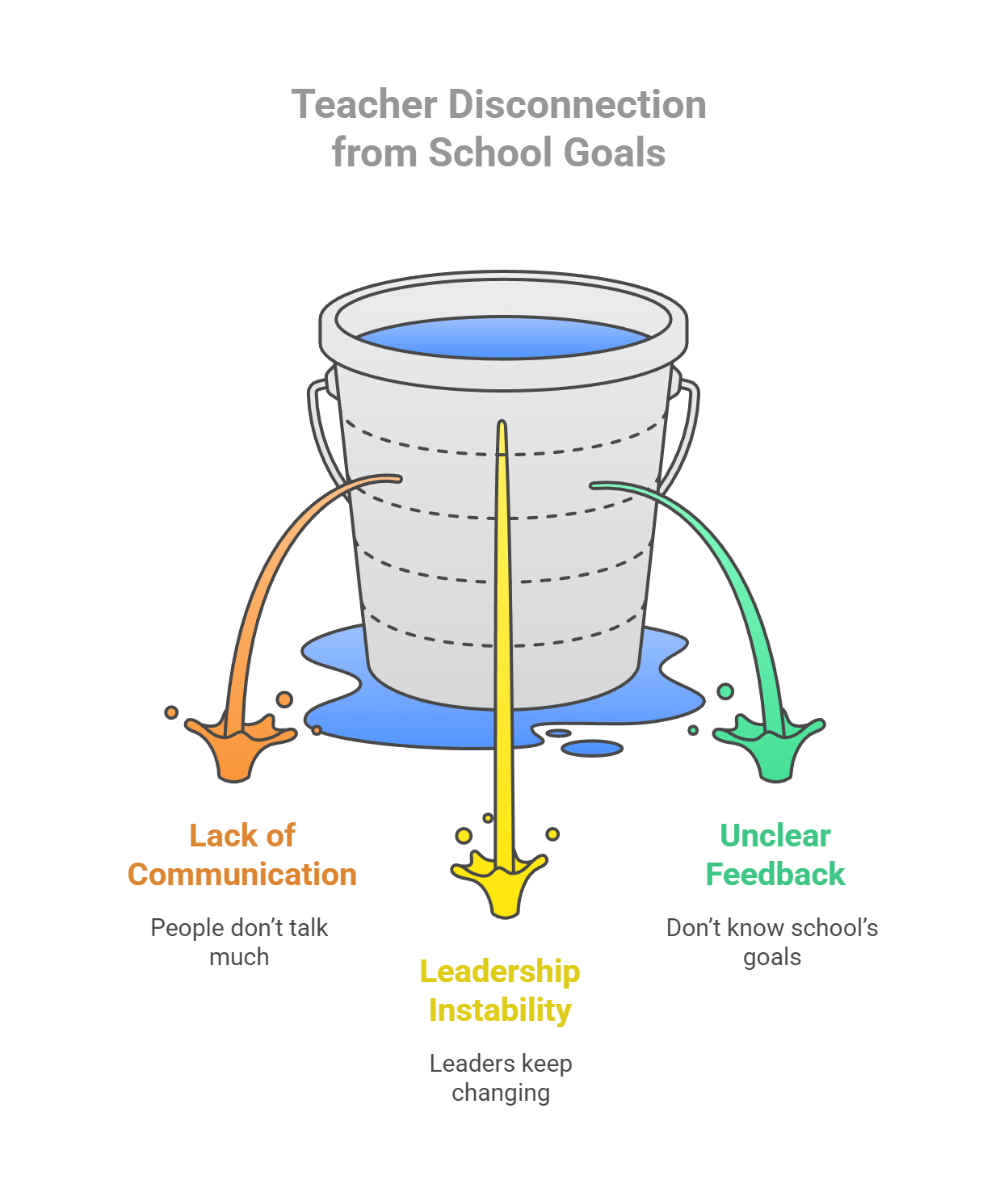
Many individual teachers report feeling siloed, focused only on their classroom with little visibility into school-wide goals or strategies. When teachers don’t see how their work connects to a larger purpose, it can lead to disillusionment and detachment.
This happens a lot in big schools or districts where people don’t talk much or the leaders keep changing. When teachers don’t know the school’s goals or don’t get clear feedback, they may stop caring or move to another school that gives them more support.
Solution: Collaborative Culture and Shared Purpose
Fostering a school environment where teachers feel like part of a team can dramatically improve teacher retention. School leaders can create stronger connections by:
- Including teachers in decision-making processes
- Aligning PD and coaching with shared school goals
- Offering opportunities to collaborate across grade levels
When teachers understand how their work fits into a bigger picture, they are more likely to stay invested and stay in the same school from one school year to the next.
Using a shared platform like Education Walkthrough helps ensure alignment across the board. Every teacher sees consistent feedback language, rubric use, and growth goals, so coaching feels coordinated rather than scattered.
Book A Demo Of Education Walkthrough
7. Teacher Turnover Continues as Stress Builds Up
Many teachers are leaving their jobs, and the problem is not slowing down. Recent education statistics indicate that teacher turnover remains a serious issue in the teacher workforce with public education. Some teachers leave after only a few years, while others transfer schools or leave the teaching profession entirely. This hurts students, schools, and entire districts.
Even teachers who stay in the same school often feel unsupported. They say they’re doing too much with too little help. These feelings lead to burnout, which in turn increases teacher attrition, affecting not just the teachers but also the families of the students .
In the previous school year, many schools experienced high teacher turnover rates, particularly among experienced and new teachers. When too many teachers leave, students experience inconsistent instruction, and schools spend more time and money recruiting new staff.
Solution: Strong Support Can Help Teachers Stay
To lower turnover, schools need to support both new and experienced teachers. This means providing them with time to talk with peers, regular feedback, and opportunities to grow. Teachers are more likely to stay when they feel noticed and valued.
8. Why Is Follow-Up Critical for Effective Teacher Feedback?
In many schools, classroom visits occur, but feedback doesn’t come soon enough or isn’t clear. This makes it hard for teachers to know how they’re doing or what they can improve. Over time, this erodes trust and contributes to greater teacher attrition.
Teachers want feedback that helps them grow, not just checklists. However, when feedback is absent or delayed, it diminishes the impact of educational evaluation and impedes professional growth.
Without support, some teachers feel stuck and think about quitting. This contributes to high teacher turnover rates, mainly when it occurs year after year within the same school.
Solution: Feedback That’s Fast and Actionable
When feedback comes quickly and clearly, teachers can use it to grow right away. Good feedback should:
- Happens within a day or two
- Focus on one or two things to try next
- Give teachers a chance to ask questions or share thoughts
When schools build this kind of feedback loop, it helps teachers feel supported and improves teacher effectiveness. This also helps students do better in class.
Conclusion
When teachers feel alone and don’t get help or feedback, it hurts more than just them. It can affect how students learn and how schools work. Many teachers feel tired and leave their jobs, which makes things more complicated for schools.
Studies show that when school leaders provide support, feedback, and opportunities to collaborate, teachers perform better and remain longer. This helps students learn more and strengthens schools.
That’s why many schools use tools like Education Walkthrough. It helps teachers and leaders provide timely feedback and stay aligned, without creating additional work for anyone.
Frequently Asked Questions
Have questions? Our team at Education Walkthrough is here to help!
What are observation gaps in education?
Observation gaps happen when teachers don’t get regular visits or feedback from other teachers or school leaders. Without this support, it’s harder for teachers to grow, share ideas, or feel part of a team. These gaps can hinder professional development and make it harder for teachers to remain in the profession.
How do observation gaps contribute to teacher turnover?
When teachers feel alone and unseen, they may get stressed or burned out. This can lead to turnover, which means teachers leaving their schools or even the profession. Research shows that when teachers feel supported, they are more likely to stay and teach in the same school for an average of several years .
What are some effective strategies to address observation gaps?
Helpful things include peer visits, mentorship, and quick feedback. Many districts use these tools to help educators feel part of a team and grow in their jobs.
How can school leaders help reduce observation gaps?
Leaders can visit classrooms more often and give support right away. This helps teachers feel noticed and makes them want to stay in the school longer.
Why is addressing observation gaps important for the future of education?
Fixing these gaps keeps teachers happy and improves student learning. It also helps schools have lower turnover rates and stronger education overall, even compared to prepandemic levels.