We know the pressure school and district leaders are under. Compliance requirements are more complex, documentation expectations are higher, and repeat findings can quietly snowball into funding risks and public trust issues.
In fact, at Education Walkthrough, we’ve sat alongside administrators who are doing the right work but lack the systems to prove it.
That’s why we believe audit readiness isn’t about reacting when an auditor shows up. It’s about building everyday practices that turn classroom observations into reliable, defensible data.
To help with this, the Education Walkthrough tool helps schools observe, document, and analyze instruction in ways that support educators and stand up to compliance scrutiny.
Trusted by instructional leaders in over 3,500 schools, it’s the best way to start, send, and save walkthroughs with ease.
In this guide, we’ll show you how to stay audit-ready year-round, avoid repeat findings, and shift from “I think things are improving” to “Here’s the data that shows it.”
Key Takeaways
- Audit failures are common, but not inevitable. Nearly 1 in 4 K–12 districts fail at least one part of their annual audit, and many of those issues repeat year after year because the root cause was never fixed.
- The same problems keep popping up. Audit failures consistently stem from five predictable categories: Student Data Inaccuracy, Repeat Findings, Manual Reconciliation Errors, Weak Internal Controls, and Documentation Gaps.
- Compliance is about systems, not last-minute fixes. Protecting your school from compliance audits means having detailed records, consistent processes, and documented corrections before auditors arrive.
- The financial and reputational stakes are real. Since 2024, K–12 schools have faced significant financial losses due to fraud, specifically linked to cash-handling weaknesses and weak internal controls.
The New Reality of School Compliance Audits in 2025–26
Let’s be honest, audits feel heavier than they used to.
Even as oversight agencies restructure and budgets freeze, expectations for schools haven’t eased. If anything, they’ve multiplied.
For leaders heading into 2025–26, the real question isn’t if an audit will happen. It’s whether your systems are quietly preparing you…or quietly setting you up.
In our work with over 3,500 schools, we frequently observe administrators who are confident in their daily instruction but lack the defensible data to prove it during an audit.
But when auditors ask for evidence such as timelines, documentation, and trends, that confidence needs backup. The landscape has shifted, and treating audits like a once-a-year fire drill just doesn’t hold up anymore.
Here’s what the current reality looks like across the country:
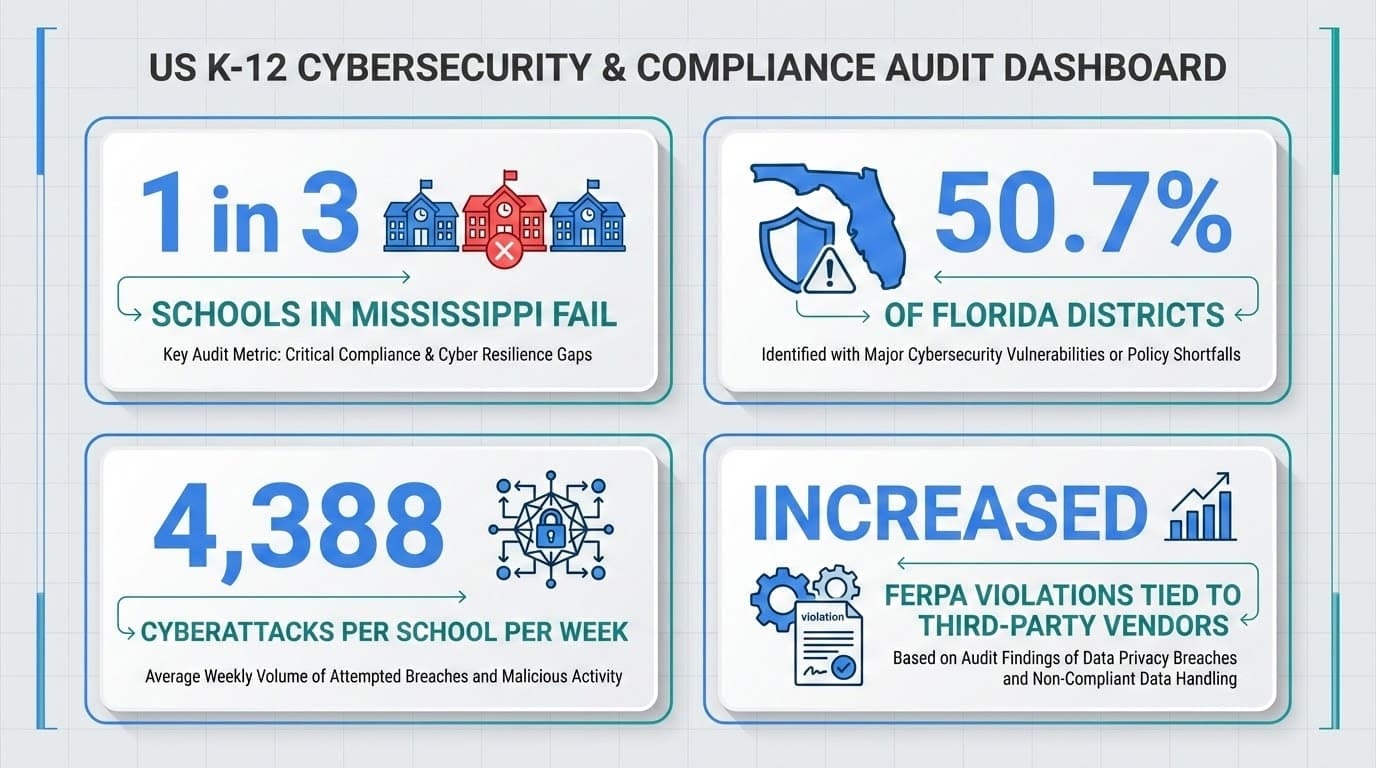
- 1 in 3 schools in Mississippi fail at least some portion of their annual financial audit
- 50.7% of Florida districts (34 of 67) reported significant audit findings
- 4,388 cyberattacks per school per week were recorded in Q2 2025, making the education sector prime target.
- FERPA violations tied to third‑party vendors increased from 2023 to 2024
Today’s audits don’t live in silos. They cut across finance, student services, data privacy, Special Education, and ELL programs, often all at once.
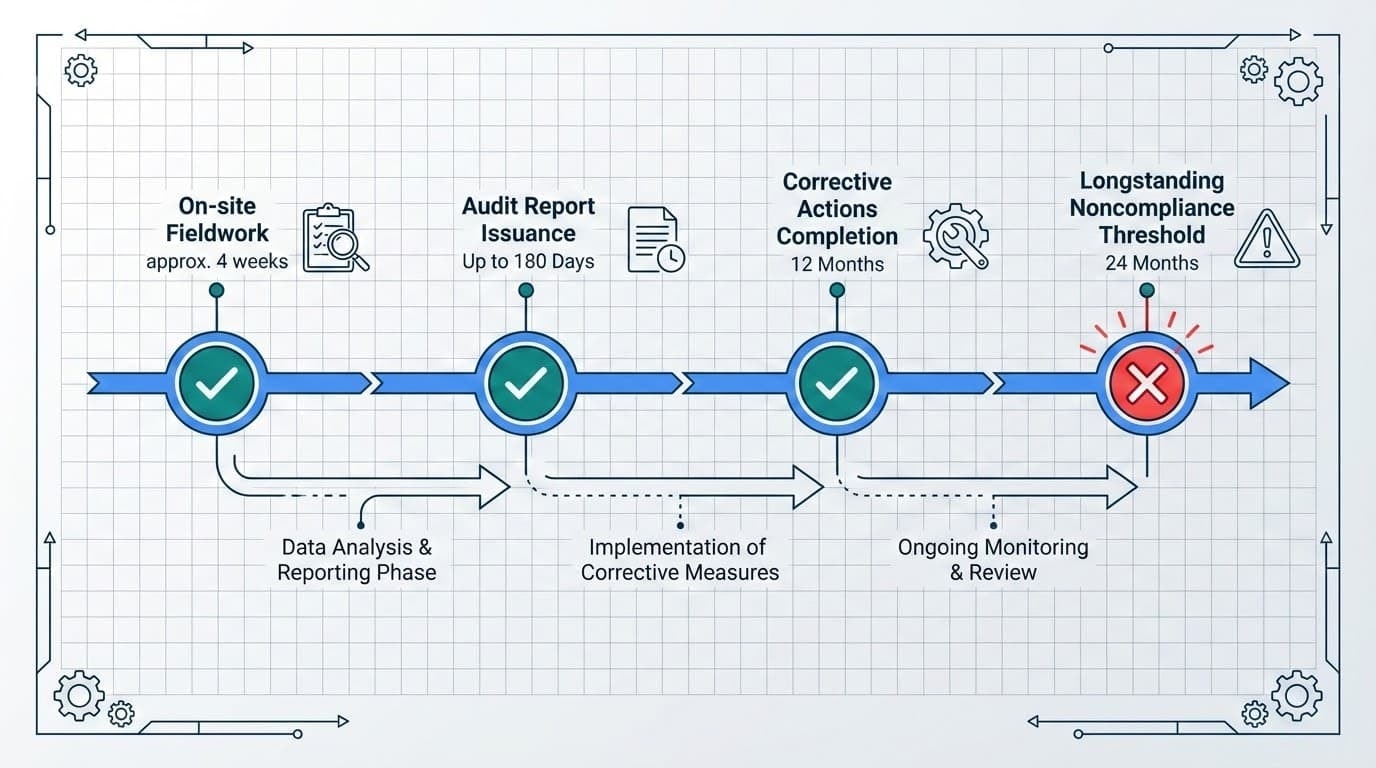
A typical audit includes roughly 4 weeks of on-site fieldwork, followed by a final audit report within 180 days of the audit period’s close. During that time, auditors may examine everything from bank reconciliations to IEP timelines to attendance coding.
When we talk about protecting your school from compliance audits, we’re not talking about avoiding oversight. That’s not realistic or responsible.
What we are talking about is avoiding damaging findings, eliminating repeat issues, and preventing financial clawbacks that pull resources away from classrooms. Schools that weather audits well don’t do it by luck. They do it through year‑round preparation.
What Are the Top 5 Root Causes of Compliance Audit Failures?
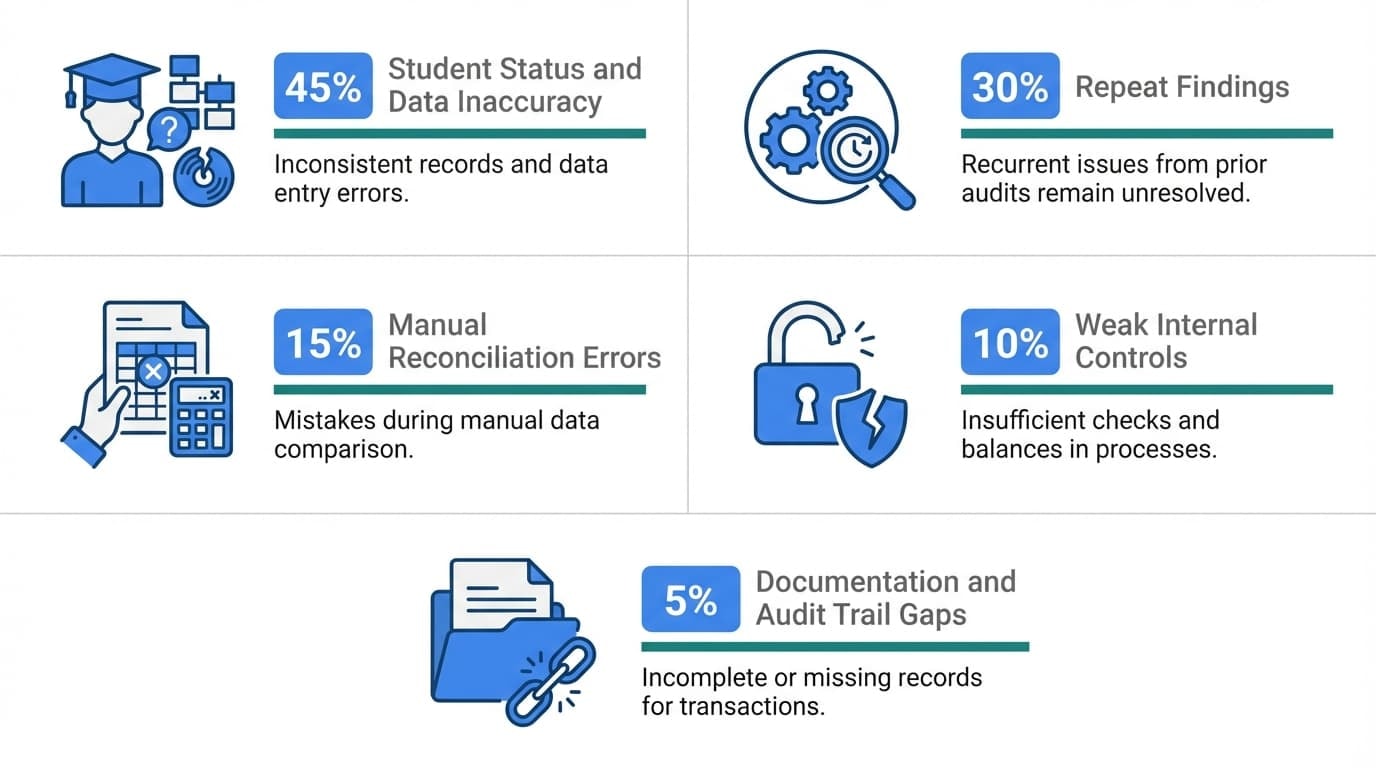
Thankfully, here’s the good news. Most compliance failures aren’t surprises. They’re patterns. The same categories appear year after year in state and federal reports, which means schools actually have a clear roadmap for what not to overlook.
1. Student Status and Data Inaccuracy (16.8% of All Findings)
Student status inaccuracy serves as the leading cause of audit failure, accounting for 16.8% of all findings.
Errors in Average Daily Attendance (ADA) coding or program eligibility flags directly impact Title I reimbursements and state funding models.
Because one small data error can snowball into significant financial clawbacks, schools must prioritize the visibility of enrollment dates and grade level records over manual logs.
Average Daily Attendance drives funding. Title I reimbursements depend on accurate academic or student records. One small data error can snowball quickly.
We’ve seen schools confident in their instruction but blindsided by audit findings tied to attendance coding or outdated Special Education and ELL eligibility flags. The issue wasn’t a lack of care; it was a lack of visibility.
2. Repeat Findings (13.6% of All Findings)
Repeat Findings are the compliance category that makes auditors and school boards most uneasy, comprising 13.6% of all audit issues.
When the same issue appears in two consecutive audits, it signals to regulators that the district lacks the implementation capacity to resolve known root causes.
On our team, we say, “Finding the issue is the easy part.” Fixing it in a way that lasts is where schools struggle.
When the same issue shows up two audits in a row, it’s rarely about compliance knowledge. It’s about implementation gaps and inconsistent follow‑through.
3. Manual Reconciliation Errors (About 25% of Audit Failures)
Spreadsheets, manual logs, and hand‑checked reconciliations leave too much room for human error. Unmatched bank statements, miscalculated activity funds, and unlogged deposits are still some of the most common findings we see.
Many schools know these processes are fragile, but upgrading school systems feels overwhelming. Until an audit makes the risk impossible to ignore.
4. Weak Internal Controls
When one person controls too much of a process, mistakes slip through, and fraud becomes easier. Many schools lack an internal audit function, and fraud cases involve cash‑handling weaknesses.
Missing signatures, no separation between purchasing and receiving, and unrestricted access to student data systems all raise red flags. Not because leaders don’t care, but because controls weren’t designed to scale.
5. Documentation and Audit Trail Gaps
Auditors operate on the principle that ‘undocumented means undone,’ frequently citing schools for missing signatures, incomplete IEP timelines, and unapproved attendance corrections.
Similar gaps show up everywhere, from IEPs missing consent dates to attendance corrections without supervisor approval.
These findings show up in reports as missing signatures, incomplete timelines, and undocumented decisions. Each one creates legal risk, threatens funding, and chips away at community trust.
Protecting your school from compliance audits doesn’t mean doing more work. It means building systems that capture the good work you’re already doing, and turning it into clear, defensible evidence.
Why Do 13.6% of Audit Findings Become Repeat Issues?
When we tell leaders that in some states, around 30% of audit findings are repeats, there’s usually a pause. Not because they’re surprised, but because it feels painfully familiar.
At Education Walkthrough, we’ve worked with schools that could clearly articulate what went wrong in the last audit. They had action plans, meeting notes, and even task lists. And yet, a year later, the same issue resurfaced. That’s when it clicks: the problem is sustainability.
Repeat findings aren’t about schools ignoring problems. They’re about fixes that never fully take root.
Why Managing Compliance and Corrective Actions Break Down
Here are the most common reasons we see well‑intended fixes fall apart:
- Underestimated Timelines: Districts often plan for six-month rollouts for technology that realistically require 12–18 months.
- Vague Ownership: Tasks assigned to departments rather than named individuals lose accountability.
- Lack of Verification: Without an internal audit function, there is no mechanism to confirm the fix works.
- Missing Stress-Tests: New systems are often adopted without validating that they specifically close the compliance gap.
We say this internally, “Compliance doesn’t fail at the planning stage, it fails at the handoff.”
The Audit Timeline Reality Schools Are Up Against
Understanding the audit clock explains why repeat findings are so common:
- ~4 weeks of on‑site audit fieldwork
- Up to 180 days from the audit period close to the final report
- 12 months to complete corrective actions under standards like IDEA
- 24 months before unresolved findings become longstanding noncompliance
That last marker matters. Once a finding hits the two‑year mark, it can trigger zero compliance points under federal frameworks, along with funding cuts and heightened scrutiny.
When Turnover Turns Fixable Issues Into Repeat Findings
Let’s imagine a district being cited for inaccuracies in attendance data. In this situation, the registrar leading the fix left mid‑year. Now, the replacement inherited a half‑completed student information system migration, with no written ownership plan and no clear benchmarks.
By the next audit, the original issue was still there, and new ones had been added.
Without documented procedures and handoff protocols, turnover didn’t just slow progress; it stalled or erased it.
How Do You Build a Year-Round Audit Readiness Process?
The districts that handle audits with confidence all share one thing in common: they don’t treat compliance as a seasonal event. When compliance lives inside everyday workflows, audits become confirmation and not confrontation.
Step 1: Map Your Compliance Domains
Start by naming every area auditors care about:
- Finance and accounting
- Average Daily Attendance (ADA)
- Student privacy (FERPA and state laws)
- Special Education (IDEA timelines and services)
- English Language Learner programs
- Title I and federal grants
- Health, safety, Title IX
Clarity here prevents blind spots later.
Step 2: Assign Real Owners, In Writing
Each domain needs a named individual, not just a department. Document:
- The regulations they own
- How often they report (monthly or quarterly)
- Their authority to flag issues and request support
- Backup coverage during absences
Ownership is how fixes survive staff changes.
Step 3: Run Quarterly Internal Mini‑Audits
Don’t wait for external auditors to surface gaps:
- Q1: ADA and attendance accuracy
- Q2: Special Education timelines and documentation
- Q3: Financial controls and cash handling
- Q4: FERPA and vendor data sharing
These reviews catch issues while they’re still small.
Step 4: Maintain a Central Corrective Action Log
Your single source of truth should include:
- The issue and how it was identified
- Assigned owner and deadline
- Evidence of completion
- Verification that the fix actually works
This is where intention becomes proof.
Operational Practices That Prevent Findings
Small, consistent checks prevent big audit surprises. You should implement these operational practices:
- Monthly enrollment‑to‑attendance reconciliations catch funding errors early.
- Quarterly IEP timeline checks ensure evaluations stay within the 60‑day window.
- Regular vendor reviews confirm FERPA‑compliant data practices.
- Version‑controlled policies show auditors that procedures are current.
- Dated training rosters prove staff received the statutory guidance.
At Education Walkthrough, we make these operational checks simpler and more visible. Leaders can log walkthroughs, attach supporting photos or videos, and track recurring tasks in one central dashboard. This turns routine audits into an organized, transparent audit process and ensures documentation is ready the moment auditors arrive.
Designing Internal Controls Auditors Trust
Given that fraud occurs at the school level, strong controls matter.
- Dual signatures for larger disbursements
- Separation of purchasing, receiving, and reconciliation
- Two‑person cash counts with signed logs
- Role‑based access to student data systems
Do: Require two staff members to verify cash deposits.
Don’t: Let the same person collect, record, and reconcile funds.
When controls are documented and practiced, auditors notice.
How Can Staff Training Reduce Compliance Violations?
Training is one of the highest‑ROI compliance investments. Schools that invest see a reduction in violations.
Priority training by role:
- Teachers: Attendance accuracy, FERPA basics, IEP obligations
- School Administrators: Special Education timelines, discipline documentation
- Office staff: Academic records management, data entry accuracy
- Finance teams: Internal controls, reconciliation procedures
Build a predictable training rhythm:
- August: Core compliance refresh
- January: Mid‑year documentation check
- Ongoing: Targeted updates after policy or audit changes
Maintain sign‑ins, completion dates, and assessments. Auditors ask for them, and strong records show due diligence.
Protecting your school from compliance audits centers confidence, earned through systems, data, and habits that hold up long after the audit team leaves.
Protecting High‑Risk Areas: Special Education, ELL, ADA, and FERPA
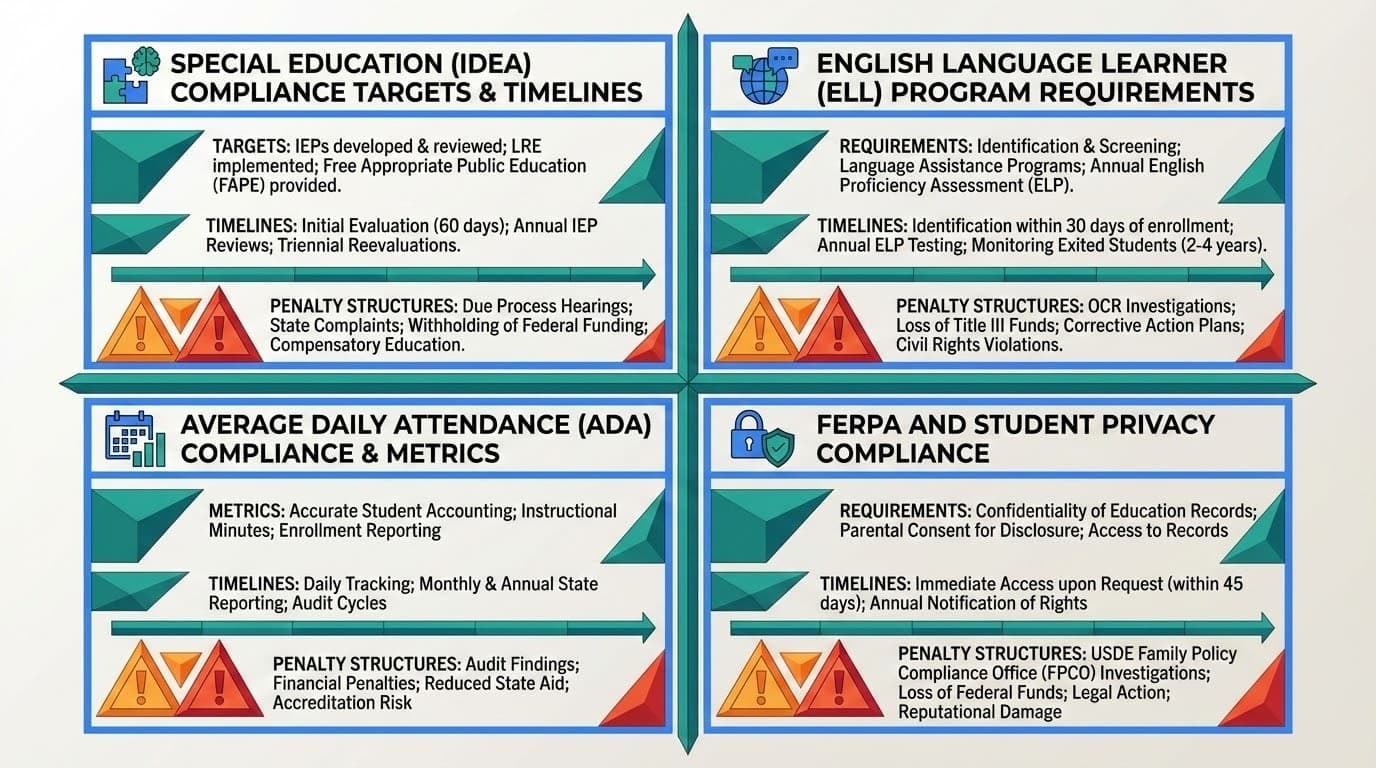
When auditors dig deep, they almost always dig here. Special Education, English Language Learner programs, Average Daily Attendance, and student privacy carry the highest compliance risk. This is because they sit at the intersection of student rights, public funding, and public trust.
At Education Walkthrough, we know the challenge isn’t that teachers aren’t doing the work. It’s that capturing consistent, audit-ready evidence across dozens of classrooms, systems, and staff can feel impossible.
Our tool simplifies this by letting leaders capture walkthroughs, attach photos and videos, save drafts, and generate polished reports in real time. Every classroom observation, every student service, and every compliance checkpoint is documented, making audit prep faster and more accurate.
Special Education (IDEA) Compliance Targets
Special Education audits are driven by timelines, equity, and documentation. Auditors are looking for clear evidence of:
- 100% of evaluations completed within 60 days of parental consent
- Zero allowable racial disproportionality in suspension and expulsion rates
- A 12‑month window to correct most findings
- A 24‑month threshold after which unresolved findings become longstanding noncompliance with zero compliance points
Schools that monitor these indicators monthly instead of annually avoid the slow drift that turns manageable delays into major findings. When leaders can pull a simple visual, showing evaluation timelines or service delivery trends, the conversation shifts from justification to continuous improvement.
English Language Learner (ELL) Program Requirements
A recent NYC audit shows how quickly ELL compliance can unravel when systems aren’t monitored. Some ELL students:
- lacked required documentation
- were taught by uncertified teachers
- did not receive mandated instructional time
The outcome was an increase in service waiver requests over two years.
The fix is simple: tighter daily practice. That is verifying certifications, logging instructional minutes consistently, and maintaining individual progress records that show services were actually delivered.
Average Daily Attendance (ADA)
ADA drives state funding. Therefore, small attendance errors compound quickly. Poor tracking reduces revenue and triggers painful clawbacks when auditors uncover over‑reporting.
Practical protections that work:
- Standardize attendance procedures across every campus
- Run monthly exception reports to flag unusual patterns
- Correct coding errors immediately instead of saving cleanup for year‑end
- Reconcile enrollment, attendance, and funding claims annually
Schools that treat attendance as data, not just for managing compliance, are far less likely to be surprised during an audit.
FERPA and Student Privacy
FERPA penalties range from $12,000 to $75,000 per violation, and the risk is growing.
Urgent actions schools should take now:
- Review vendor contracts for data‑protection and breach‑notification clauses
- Verify cloud tools meet FERPA security standards
- Audit access logs to confirm only authorized users view sensitive data
- Maintain a current inventory of all vendors with student data access
Schools with proactive and ongoing compliance programs in these areas see reduced penalties when violations occur. Due diligence matters…and auditors notice it.
Documentation and Evidence Auditors Expect to See
Auditors don’t audit intentions. They audit evidence.
Typical audit criteria include:
- Current policies and procedures with approval dates
- IEP and 504 plans with timelines, signatures, and service logs
- ELL placement and progress documentation
- Attendance audit trails showing corrections and approvals
- Vendor contracts with data‑protection language
- Internal control procedures for finance and cash handling
- Training records with dates and attendance rosters
“If it isn’t documented, it didn’t happen” isn’t harsh; it’s simply how audits work. Especially for services like ELL minutes or Special Education supports, delivery must be proven.
Many districts pre‑assemble audit binders for high‑risk domains:
- FERPA binder: Parent notices, training rosters, incident logs, vendor inventory
- Special Education binder: IEP timelines, consent forms, evaluations, service logs
- ELL binder: Identification assessments, certifications, instructional time logs
Strong documentation can be the difference between a finding and a clean close‑out.
From Audit Findings to Lasting Improvement: A 12–24 Month Roadmap
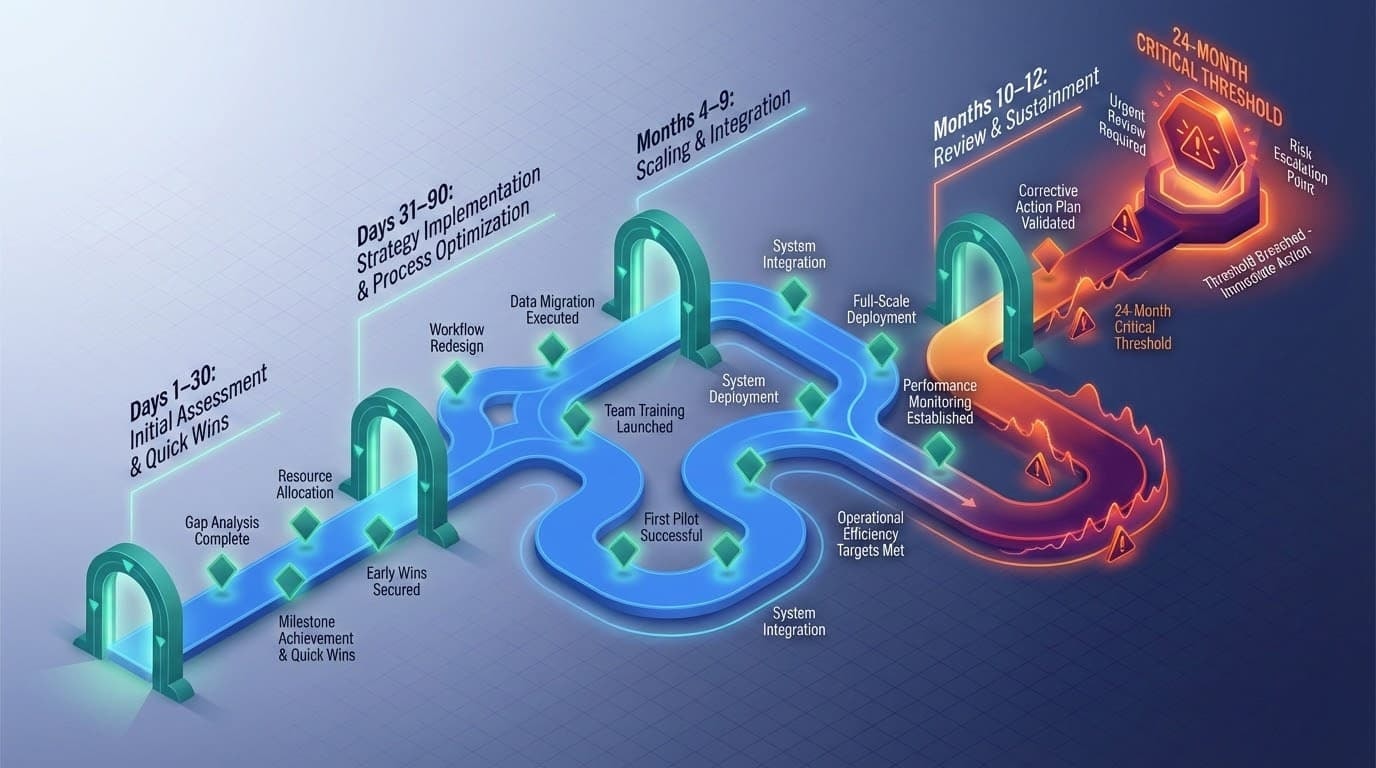
A single clean audit feels good. A trend line of fewer findings every year is what real success looks like.
That requires realistic timelines and systems that outlast leadership changes.
Here’s a sample 12‑month corrective action plan
- Days 1–30: Analyze findings, identify root causes, assign individual owners
- Days 31–90: Design fixes, develop plans, pilot in select areas
- Months 4–9: Full implementation, staff training, documentation updates
- Months 10–12: Internal testing, validation, and adjustments
The 24‑Month Threshold That Changes Everything
Any finding unresolved after two years becomes a marker of systemic noncompliance.
Consequences include:
- Lower compliance ratings and public reporting impacts
- Funding eligibility issues and clawbacks
- Increased legal exposure
- Strained relationships with oversight agencies
Measuring Success Objectively
Track indicators that show real progress:
- Fewer findings year over year
- Zero repeat findings in corrected areas
- Improved quarterly internal audit scores
- Fewer escalations requiring external reporting
- Clean documentation in sample reviews
This approach prevents the trap of overpromising fast fixes. Technology and system changes almost always take longer than expected. Therefore, planning for that reality prevents rushed rollouts that create new problems.
With Education Walkthrough, sustaining these improvements is easier. Our platform allows leaders to track corrective action progress over months, attach evidence directly to observations, and generate clear, audit-ready reports at each stage. Even during staff transitions, your compliance efforts stay organized and transparent, making lasting improvement not just possible, but achievable.
Case Study: Arizona School for the Deaf and the Blind – Driving Change Through Education Walkthrough
At the Arizona School for the Deaf and the Blind (ASDB), supporting teacher growth used to be a paper-based process with printed walkthrough forms and handwritten feedback, which made tracking progress cumbersome and strategic planning unclear.
Since partnering with Education Walkthrough, ASDB has transformed its approach, centering on visibility, data, and instructional momentum. Meghan Boyle now completes at least one walkthrough per classroom each quarter, plus weekly drop-ins across 40 classrooms.
Key outcomes include:
- Accountability and Visibility: Administrators can log walkthroughs and review trends easily, ensuring presence in classrooms and measurable engagement.
- Data-Backed Professional Development: Insights from the platform can identify gaps, guide lesson planning, and align PD to real classroom needs.
- Flexible Templates: Customizable walkthrough rubrics reduce anxiety for staff and meet varied instructional goals.
- Enhanced Accessibility: Integrated ASL video functionality ensures all staff receive equitable access to feedback and professional development.
Meghan also shares walkthrough insights through newsletters and campus-wide webinars, turning individual observations into school-wide learning. This case illustrates that with the right tools and consistent follow-through, schools can strengthen legal compliance, improve instruction, build staff confidence, and maintain a clear audit-readiness record over time.
From Audit Anxiety to Evidence‑Backed Confidence: Final Thoughts
Protecting your school from compliance audits focuses on building systems that work every day of the year.
The districts that pass audits consistently don’t scramble weeks before auditors arrive. They embed improvements into daily operations, systematically track remediation, and treat audit readiness as part of how the organization operates.
Start small, but start now. Choose one high‑risk area. Map the regulatory requirements. Assign ownership. Document consistently. Run an internal review this quarter and track corrective actions in a central system.
At Education Walkthrough, we believe the same principle applies to compliance as it does to instruction: what gets observed, documented, and analyzed gets better.
When leaders can move from “I think we’re improving” to “Here’s the data that proves it,” compliance becomes clarity, not chaos.
The question isn’t whether schools can afford to invest in proactive compliance systems. It’s whether they can afford not to.
FAQ: Protecting Your School From Compliance Audits
This FAQ addresses common questions that arise once leaders begin strengthening their compliance and audit‑readiness systems.
How often should our district run internal “mock” audits?
At a minimum, conduct one comprehensive internal review per year that mirrors the scope of your external audit. Supplement this with quarterly mini‑audits focused on high‑risk areas such as ADA accounting, Special Education timelines, cash handling, and FERPA compliance.
Rotating focus areas each quarter keeps the workload manageable while maintaining year‑round vigilance.
What is the first thing to do if we receive a negative audit finding?
Begin a root‑cause analysis within 30 days. Addressing only the surface issue almost guarantees recurrence.
Form a cross‑functional corrective action team, identify why the gap occurred, and define systemic changes that prevent it from happening again. Communicate early with auditors about realistic timelines—underpromise and overdeliver. That credibility matters more than perfection.
How can small or under‑resourced schools improve compliance without adding staff?
Start with your highest‑risk areas based on audit history and funding sources. Many student information systems and finance platforms already contain reporting tools that go underused.
Shared‑services arrangements, regional cooperatives, and independent school associations can also provide audit support, training, and policy resources without the cost of new hires.
Do changes to federal structures in 2025–26 reduce our legal obligations?
No. Legal mandates under IDEA, Title III (ELL), FERPA, and related statutes remain in effect regardless of agency restructuring or funding uncertainty.
Documentation requirements, service timelines, and data protection standards still apply, and future audits will review past periods of compliance. Reduced visibility does not mean reduced obligation.
What should we document during the year to make audits easier?
Maintain organized records in these categories:
- Policy updates with approval dates and version history
- Compliance‑related staff training (dates, attendees, completion verification)
- Parent rights communications and notifications
- Special Education and ELL service logs
- Attendance corrections with supervisory approval
- Internal audit results and follow‑up actions
- Necessary corrective measures with evidence of completion
- Security incidents and response activations
- Vendor assessments and contract reviews
Consistent, searchable documentation is one of the strongest forms of audit protection. When evidence is easy to access, auditors spend less time digging and more time moving on.