Frequent classroom walkthroughs prevent teacher burnout by breaking the cycle of isolation and providing the immediate, consistent validation educators need to feel supported.
By shifting leadership visibility from rare evaluations to routine coaching, schools build a culture of trust that directly lowers stress and increases retention.
This guide explains why burnout is rising, how specific walkthrough loops reduce anxiety, and how to implement a support-first observation strategy.
Key Takeaways
- Frequent classroom walkthroughs by administrators help identify early signs of teacher burnout and provide vital support, fostering a culture of trust and collaboration.
- Immediate and constructive feedback from walkthroughs enhances teacher engagement and self-efficacy, which can lead to improved job satisfaction and reduced turnover rates.
- Reducing administrative burdens allows teachers to focus more on instruction, while a supportive school community created through walkthroughs contributes to lower burnout and improved student outcomes.
Why Teacher Burnout and Turnover Are Rising
Teacher burnout is intensifying across every level of education. In the U.S., 60% of K–12 teachers reported burnout in 2024, and 53% still reported it in 2025, according to a RAND survey of nearly 1,500 public school teachers. In higher education, 64% of faculty experienced stress and emotional exhaustion.
The issue is global. In Canada, 77% of teachers reported emotional exhaustion. In Australia, 52% experienced severe depression, while teacher stress, anxiety, and depression reached triple the national average. Two-thirds of primary teachers in China reported experiencing burnout.
Staffing shortages add to the pressure. In 2024–2025, 70% of U.S. K–12 teachers reported shortages, with 82% of schools facing multiple vacancies and added policy mandates. Globally, teacher shortages average 6.5% of qualified staff, with 58% of a 44 million gap due to attrition.
Turnover continues to rise. In 2025, 16% of U.S. teachers planned to leave their jobs, down from 22% in 2024. Still, 7% remained in 2023–24, while 29% considered switching roles and 40% sought jobs outside education.
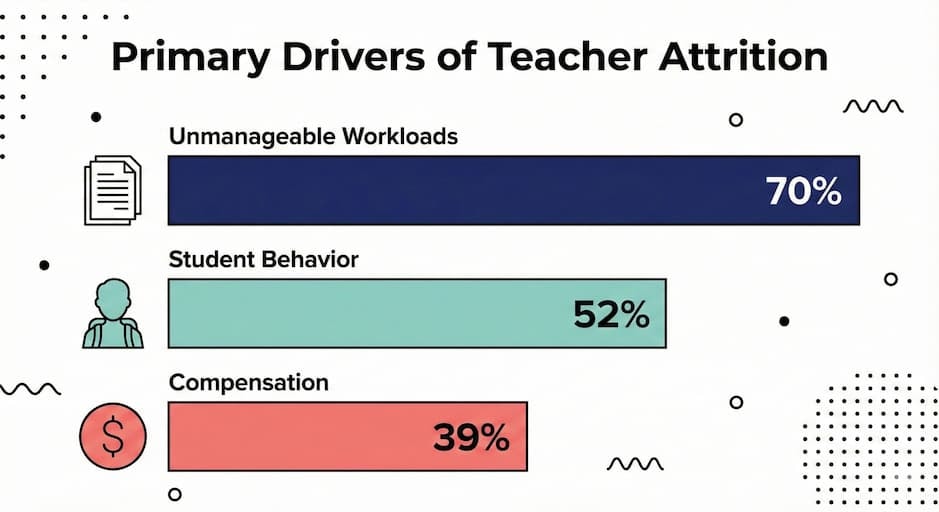
Research identifies three primary drivers of this attrition:
- Unmanageable Workloads: Cited by 70% of educators as a major stressor.
- Student Behavior: Reported by 52% of teachers as a key challenge.
- Compensation: Identified by 39% of staff as a reason for leaving.
How Do Walkthroughs Specifically Reduce Teacher Stress?
Walkthroughs are more than just short visits to classrooms. When done with purpose and consistency, they become a foundation for school improvement, stronger relationships, and better learning outcomes.
These visits help connect school leaders with teachers in meaningful ways, reduce chronic stress, and allow educators to focus on growth instead of survival. For many educators, walkthroughs offer one of the few moments of meaningful feedback and recognition in the school day.
This section explores the key reasons why walkthroughs work. Each benefit highlights how frequent walkthroughs prevent teacher burnout and turnover by directly improving the teaching experience.
Immediate feedback builds instructional confidence
One of the most powerful aspects of walkthroughs is the ability to provide teachers with feedback immediate, non-punitive feedback builds instructional confidence by validating a teacher’s effort in real-time.
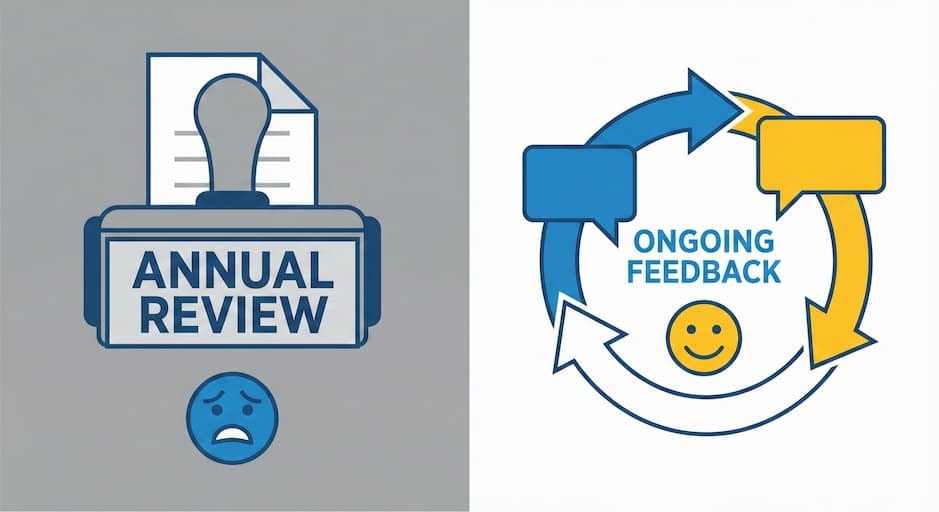
Research from the Bill & Melinda Gates Foundation’s Measures of Effective Teaching (MET) project shows that teachers who receive frequent, specific feedback are significantly more likely to remain in the classroom than those receiving only annual reviews. When a principal spotlights a specific instructional win—such as effective wait time or clear directions—it triggers a release of dopamine and reinforces professional self-efficacy.
This consistent validation counteracts the “imposter syndrome” that drives many early-career educators to burnout.
When teachers receive immediate, specific, and positive feedback, it helps build their self-efficacy, the belief in their own instructional abilities. This is essential in preventing educator burnout, which often stems from uncertainty, lack of recognition, and chronic stress. Teachers experiencing burnout frequently report feeling isolated and unsure whether their efforts are practical. Feedback closes that gap.
Instructional Improvement in Real Time
Compelling walkthroughs do more than capture a moment; they spark meaningful dialogue and ongoing instructional improvement. School leaders can identify trends across classrooms and address them through coaching and collaboration.
Real-time instructional coaching reduces the anxiety of “failing alone” by treating teaching as a collaborative, evolving practice.
A 2024 analysis of instructional coherence by the RAND Corporation suggests that teachers who perceive their feedback systems as consistent and aligned with school goals report higher job satisfaction. Instead of waiting months for a formal evaluation, teachers receive micro-corrections that allow them to fix issues immediately.
This pivot from “autopsy” (end-of-year review) to “biopsy” (ongoing diagnosis) transforms the principal from a judge into a partner, significantly lowering daily performance anxiety.
This kind of real-time adjustment supports professional development, improves instructional quality, and helps prevent teacher burnout. When teachers are equipped with the support they need when they need it, their confidence and performance improve.
Improved Student Success
Walkthroughs also make a difference where it matters most: in student outcomes. Frequent teacher support visits help improve instruction, which in turn leads to greater student engagement, better behavior, and stronger academic performance.
The Wallace Foundation emphasizes that strong instructional leadership, which includes regular classroom visits and feedback, is directly linked to improved student achievement. When teachers receive support to fine-tune their instruction, they can better meet the needs of all learners.
Walkthroughs also help address student behavior issues by giving leaders insight into what is happening during instruction. With that understanding, they can recommend classroom management tactics that reduce disruptions and support student focus.
Discover How With Education Walkthrough
Support for Long-Term Retention
Teacher turnover is one of the most expensive and disruptive challenges schools face. The Learning Policy Institute estimates that replacing one teacher can cost up to $25,000. But the real cost is the impact on students and staff morale.
Frequent walkthroughs are a key part of teacher retention initiatives. They create opportunities for connection, conversation, and professional affirmation. Rather than letting teacher burnout build silently, walkthroughs allow school leaders to spot early signs of stress and respond with support.
This helps prevent teacher exhaustion, reinforces a supportive school environment, and strengthens trust between teachers and administrators. For newer staff or younger teachers, this kind of support can be the difference between staying in the profession and leaving it.
How Do Walkthroughs Transform School Culture?
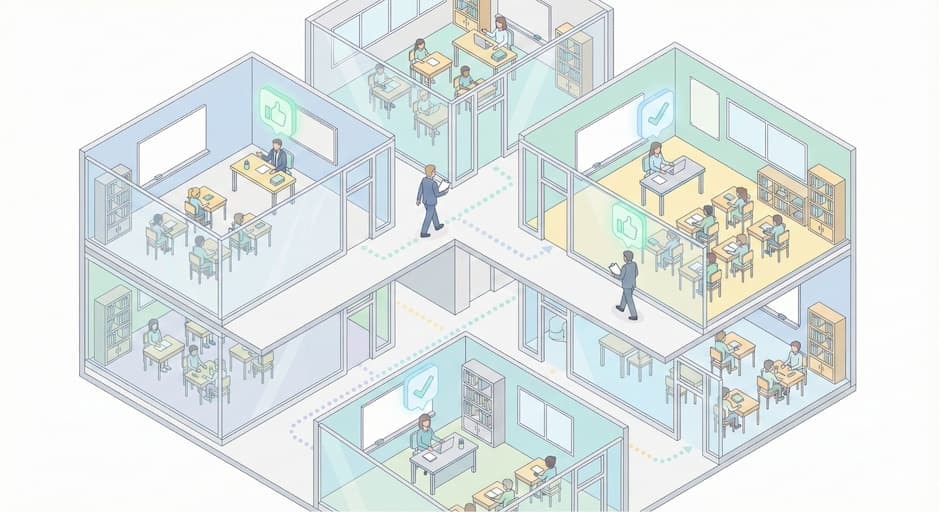
While walkthroughs clearly support instruction, their most excellent power may lie in shaping a school’s culture. A school’s culture, its sense of trust, collaboration, and shared purpose, directly impacts teacher morale and retention.
This section explores how walkthroughs help build stronger relationships, reduce isolation, and create a school community where both teachers and students thrive.
Building Trust with Consistent Presence
Trust is foundational in education. Without it, feedback feels threatening, support feels insincere, and leadership feels distant. Walkthroughs offer school leaders a simple, consistent way to build that trust.
When leaders are present in classrooms regularly, not just during evaluations, teachers feel acknowledged. They know someone sees their work, values their effort, and is available to listen. This visibility helps reduce teacher stress and creates a climate where growth is possible.
A 2018 survey by Panorama Education found that trust in school leadership was significantly higher in schools where classroom visits were frequent and supportive rather than judgmental.
Build Stronger Teacher Relationships With Education Walkthrough
Strengthening Engagement Through Feedback
Feedback is one of the most potent tools school leaders have, and one of the most underused. When given constructively, feedback doesn’t just correct mistakes; it strengthens teacher engagement and job satisfaction.
The Gates Foundation’s MET study showed that teachers who receive regular, personalized feedback are more likely to stay in the profession, improve their skills, and lead within their schools.
Walkthroughs create space for this feedback to happen naturally. Over time, teachers begin to see leaders as partners in growth, not just evaluators.
Reducing Teacher Isolation
Many teachers, especially in large schools or high-turnover districts, report feeling isolated. They spend entire days or weeks without meaningful interaction with leadership. This isolation is a silent factor in educator burnout.
Walkthroughs change that. Even short visits can become moments of connection, support, and recognition. When done consistently, they help teachers feel part of a team.
Isolation is especially harmful to new or struggling teachers. By using walkthroughs as a tool for connection, school leaders can catch burnout before it spirals into resignation.
Improving Self-Efficacy and Instruction
Teacher self-efficacy, the belief that one can make a difference, is closely tied to performance, resilience, and student achievement. Walkthroughs help build that belief by giving teachers insights into what’s working and how to grow.
When teachers feel more confident, they’re more likely to innovate, take risks, and reflect deeply on their practice. This kind of growth mindset leads to better teaching, higher student engagement, and greater professional fulfillment.
A 2016 study in Teaching and Teacher Education confirmed that regular, supportive observations increase teacher self-efficacy and reduce stress.
Lightening the Admin Load
Burnout often comes from overwork. Between grading, meetings, paperwork, and planning, teachers rarely have time to reflect, recharge, or connect.
Walkthroughs, when streamlined and efficient, help reduce this load. Instead of long-form evaluations or disorganized feedback, walkthroughs offer short, focused moments of observation that require minimal teacher prep.
This simplicity gives teachers more time to teach, plan, and breathe. It also helps administrators gather insights without adding hours to their week.
Simplify Your Observation Workflow With Education Walkthrough
Supporting Student Behavior and Focus
One of the top contributors to teacher burnout is student behavior. After the disruptions of recent years, many classrooms have more students struggling with focus, regulation, and emotional needs.
Walkthroughs enable school leaders to observe behavior in context rather than only through disciplinary referrals. This enables more accurate support, coaching, and resource allocation.
When behavior is addressed proactively, both students and teachers benefit. Teachers experience fewer disruptions and less stress, and students receive the consistency and support they need to succeed.
What Results Have Schools Seen From Frequent Walkthroughs?
It’s one thing to talk about how frequent walkthroughs prevent teacher burnout and turn
over — it’s another to see it in action. Across the country, schools of all types are using classroom walkthroughs not just as a compliance tool, but as a catalyst for real instructional improvement, healthier school culture, and stronger retention.
Below are two real-world examples of how schools implemented Education Walkthrough to support teachers, reduce feedback delays, and build more equitable systems of support. Their stories show what’s possible when walkthroughs are frequent, intentional, and focused on growth.
Adair Elementary School (Adair County, Kentucky)
Challenge: Coaches at Adair Elementary struggled with delayed feedback and disorganized documentation, resulting in missed opportunities to provide real-time support to teachers.
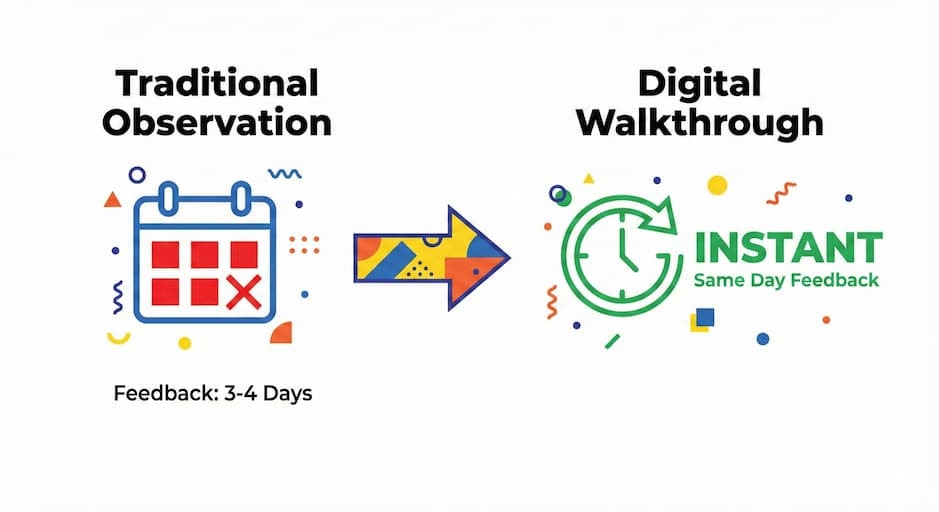
Solution: By using Education Walkthrough, AES implemented real-time feedback using mobile walkthrough templates and dashboards. Observations were completed in minutes and sent instantly to teachers and coaches.
Results:
- Feedback delivery went from 3–4 days to same-day
- Every teacher received 2 walkthroughs per week with immediate follow-up
- Coaches saved time and focused more on modeling and mentoring
- Principals used school-wide trend data to inform PD and PLC topics
“The minute my coach left, I’d get feedback in my inbox. It used to take days.”
— Megan Bell, Teacher
Learn How Education Walkthrough Helped Adair Elementary Improve Faster
Washington Latin Public Charter School (Washington, D.C.)
Challenge: Leadership couldn’t track which teachers had been observed or when, leading to uneven support and coaching blind spots.
Solution: The team used the Education Walkthrough as a live-coverage dashboard to ensure that every teacher received equitable, timely walkthroughs. Observations were tracked in real time and synchronized across all observers.
Results:
- Observation gaps were spotted within hours, not weeks
- Equitable coaching distribution reduced burnout and increased trust
- Coaching meetings focused on strategy instead of record-keeping
- Feedback consistency improved with shared forms and language
“We finally knew which teachers were being seen — and how often. It changed everything.”
— Bill Clausen, Assistant Principal
See How Washington Latin Used Education Walkthrough To Close Coaching Gaps
How Can Administrators Implement a Low-Stress Walkthrough Strategy?
Preventing teacher burnout doesn’t requi
re a massive overhaul of your school’s system. Often, it starts with showing up more consistently, not to judge but to support. Frequent walkthroughs can reduce teacher burnout, build trust, and improve instructional quality when implemented with intention.
Here’s how school leaders can begin.
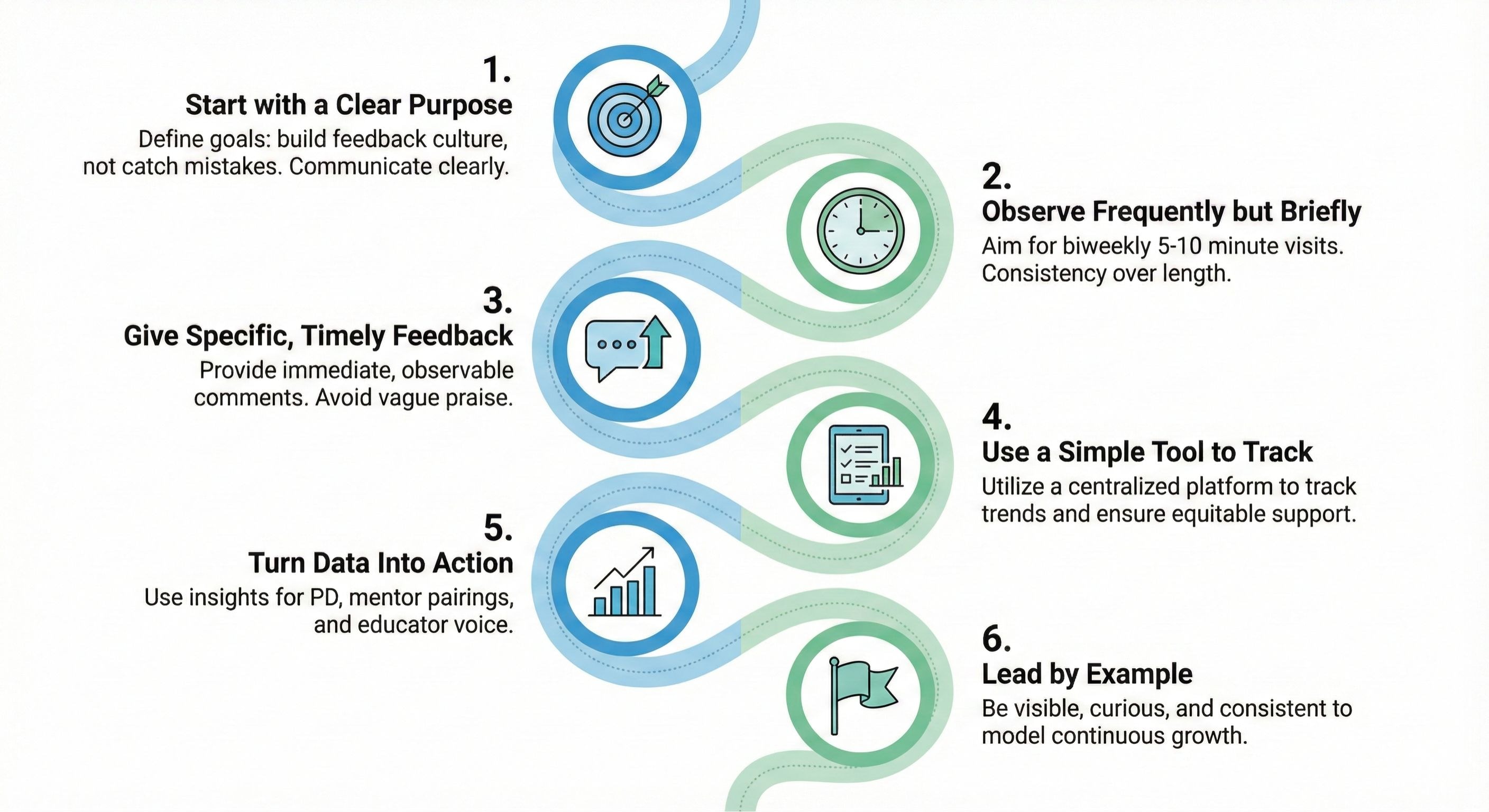
1. Start with a Clear Purpose
Set the tone early. Walkthroughs aren’t about catching mistakes. They are about building a feedback culture. Make this purpose clear in every conversation with teachers and coaches. Teachers experiencing burnout often feel isolated or over-scrutinized. Clarity about your goals helps ease those concerns and promote mental health.
Tip: Host a brief staff meeting or send a video message explaining why walkthroughs are being used and what teachers can expect.
2. Observe Frequently but Briefly
One of the most successful instructional rounds strategies involves teachers visiting one another for short observations. School leaders can follow a similar model. Instead of monthly in-depth sessions, aim for biweekly 5- to 10-minute visits with each teacher. Consistency is more valuable than length.
Frequent walkthroughs also help leaders observe classroom management tactics in practice and provide timely coaching when a teacher is managing a challenging environment.
Tip: Schedule short observation blocks on your calendar and treat them as fixed appointments.
3. Give Specific, Timely Feedback
Walkthroughs are powerful only when followed by relevant feedback. Avoid vague praise like “great job.” Instead, comment on something observable. For example, “Your use of wait time led to three students changing their answers. That was an effective formative strategy.”
This supports teacher self-reflection and enhances job satisfaction. It also provides adequate support, especially for younger teachers who may need frequent guidance and encouragement.
Tip: Don’t delay. Feedback is most useful when delivered within the same day.
4. Use a Simple Tool to Track Observations
Many school districts still rely on sticky notes or spreadsheets. These systems can create coaching blind spots and unequal support, which contribute to high teacher turnover. A centralized platform such as Education Walkthrough facilitates tracking trends, identifying coaching needs, and ensuring that every teacher is supported.
Explore the Education Walkthrough app to streamline your observation process and strengthen your school climate.
5. Turn Data Into Action
Observation data should lead to meaningful change. Use insights from walkthroughs to:
- Plan relevant professional development
- Adjust mentor pairings
- Empower educator voice in school decision-making
Tip: When teachers perceive that data drives actual improvements, they are more likely to engage with the process.
6. Lead by Example
Be visible, curious, and consistent. The teaching profession needs leaders who model continuous growth. Your presence in classrooms demonstrates to teachers that they are not alone in their efforts to succeed.
Conclusion: Support Teachers, Strengthen Schools
Burnout isn’t just a buzzword. It’s a real and growing challenge facing educators at every level. When teachers are overwhelmed by administrative tasks, unclear expectations, or a lack of support, it affects not just their well-being but the entire school community. From student engagement to long-term retention, the ripple effects are undeniable.
But small, intentional actions can make a big difference. Frequent classroom walkthroughs help school leaders stay connected to the work happening every day.
If you’re ready to start turning walkthroughs into a meaningful support system for your teachers, you don’t have to reinvent the process.
Explore how Education Walkthrough can help you streamline observations, deliver instant feedback, and support your team, all in one simple platform.
Try It Education Walkthrough For Free
Frequently Asked Questions
How often should administrators conduct classroom walkthroughs?
Administrators should conduct classroom walkthroughs biweekly, aiming for about 18 visits per teacher per year to provide consistent support and foster connections. This frequency ensures effective engagement with the teaching and learning environment.
What is the best approach to giving feedback during walkthroughs?
The best approach to giving feedback during walkthroughs is to engage in authentic conversations by asking evidence-driven questions, which fosters meaningful dialogue rather than relying on traditional feedback methods like the sandwich approach. This technique encourages constructive and impactful discussions.
How can walkthroughs help in reducing teacher burnout?
Walkthroughs can significantly reduce teacher burnout by offering vital support, identifying individual needs, and fostering a collaborative school culture. This environment builds trust and encourages shared growth among educators.
What are the key benefits of frequent classroom walkthroughs?
Frequent classroom walkthroughs build trust and enhance teacher engagement, providing immediate feedback that boosts self-efficacy. This practice fosters a supportive school community and promotes continuous improvement.
What training do administrators need to conduct effective walkthroughs?
Administrators need training in observation protocols, accurate note-taking, effective feedback delivery, and coaching conversations to conduct effective walkthroughs. This training ensures they can provide constructive insights and support for improvement.