
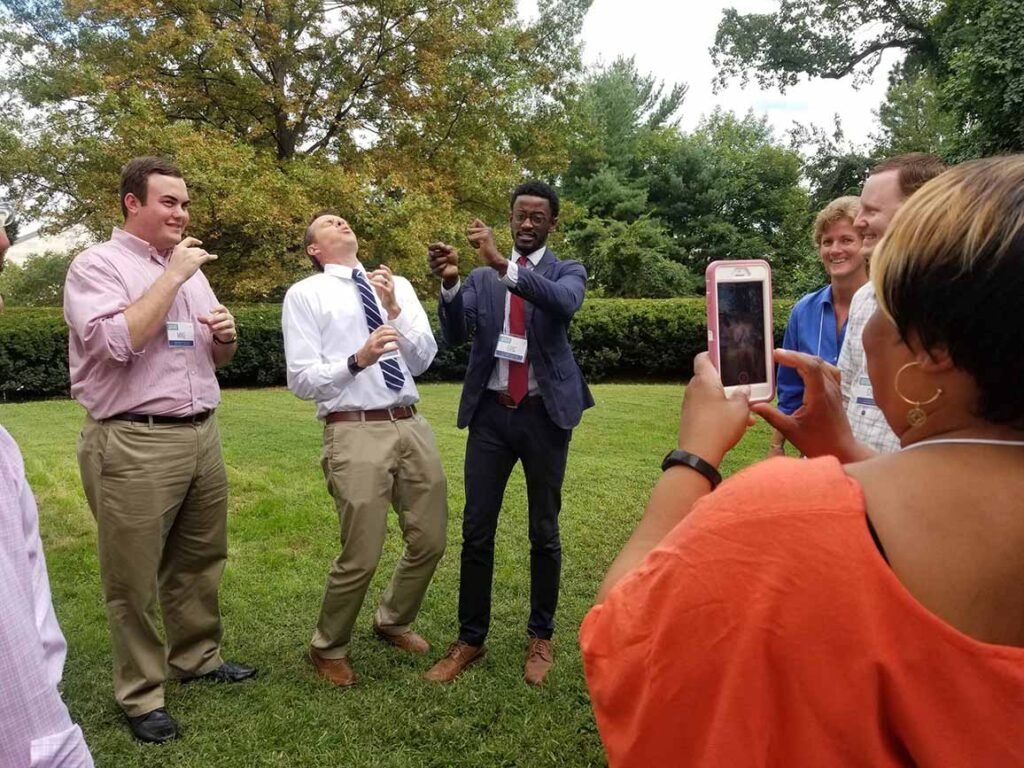

As a leader in your school, education district, or learning community, you play a critical role in shaping staff culture. The small choices you make about how teachers interact can quietly shape the entire school environment.
Teachers spend most of their day behind closed doors. They teach, plan, and grade, then do it all again, often without any meaningful chat with a colleague. Such isolation slowly erodes morale and makes it tough to create a strong school culture. Team-building activities can help boost morale by encouraging positive interactions and recognition among staff.
Have you ever thought about how limited teacher collaboration affects both teachers and students?
The cost is higher than most schools realize. Disconnected staff are usually more vulnerable toteacher burnout, and fragmented teams rarely generate the collaborative energy that moves a school forward. According to Gallup, only 32% of employees are engaged at work. Team-building exercises can help close this engagement gap by fostering personal connections and trust among team members.
In this article, we’ll look at effective team-building activities for teachers and the research behind them.
Why Team Building for Teachers Matters More Than You Think

Staff relationships shape school culture just as much as leadership decisions do. When teachers feel connected with their colleagues, collaboration gets easier. Morale improves, and the whole school environment becomes more stable and supportive.
What the Research Actually Shows
The data on teacher isolation is hard to ignore. Once you see it, the case for intentional team building becomes impossible to dismiss.
Research consistently links strong staff collaboration to two outcomes that every instructional leader cares about: keeping good teachers and improving student achievement.
Here’s what the evidence shows:
- A study on team-based staffing found that schools using collaborative structures experienced 56% lower teacher turnover than those using traditional models.
- Schools with strong staff collaboration report 23% higher student test scores.
- Research on improving teacher morale with team building shows that trust building and shared professional development directly reduce burnout risk.
- Over 70% of teachers report feeling professionally isolated at some point in their careers.
These numbers reframe the conversation entirely when you see the long-term impact on teacher morale. Team building isn’t a feel-good add-on squeezed into a staff meeting. It’s a retention strategy, a school culture strategy, and a student outcomes strategy all at once.
Collaboration, honest feedback, and a shared sense of belonging are what actually shape the core qualities of effective teachers. Without those conditions, even strong educators can find it difficult to grow their practice over time.
When you deliberately invest in that environment, the results show up in classrooms, in retention data, and in the overall energy of a school.

Quick Team Building Activities for Staff Meetings

Staff meetings are prime real estate when time is limited and attention is split across a dozen priorities. They’re already scheduled, the whole team is present, and the window is short. That makes them the perfect place to drop in a quick activity—like icebreaker games or other team building activities—that actually builds something.
Faculty Meeting Bingo is a quick team-building activity that encourages staff to interact and learn fun facts about one another, typically taking just 10-15 minutes to complete.
[Image: teachers participating in a quick team building icebreaker activity during a staff meeting]
Icebreakers That Actually Get People Talking
Not all icebreakers work well in practice. The best ones require zero prep, create genuine moments, and don’t make anyone cringe.
Icebreaker activities are especially helpful for new hires and new team members, as they facilitate introductions, foster communication, and help recently joined colleagues integrate smoothly into the staff.
Two Truths and a Lie
This simple icebreaker is a reliable starting point, especially for new staff. Each participant, taking a turn as one team member, shares three statements about themselves: two truths and one lie. The group then guesses which of the three statements is the lie.
This activity typically takes 10-15 minutes to complete. It sounds simple, but it consistently surfaces personal stories that colleagues would never hear otherwise. Great for communication skills, and even better for building a sense of familiarity across a staff.
Human Bingo
Human Bingo takes a little more setup but pays off in cross-department connections. In this activity, staff mingle to find colleagues who match prompts on their bingo card—these can be custom bingo cards or note cards with prompts related to personal or school-related fun facts.
A free Human Bingo card generator makes the prep painless. Faculty Meeting Bingo is another icebreaker game designed to encourage staff interaction by using custom bingo cards with prompts about fun facts. Both activities work especially well for larger staffs where people rarely interact outside their grade level or department.
Both activities build communication skills without feeling like a workshop exercise.
Short Games That Build Connection in Under 10 Minutes
When time is tight, structure matters. Even a few minutes of intentional interaction can shift the tone of a staff meeting. These activities move fast and still leave a mark. Quick options include icebreaker games, trivia questions, or simple collaborative challenges.
After the list of activities, consider the ‘Map It Out’ activity: staff place pushpins on a large map to share their origins, sparking conversations and connections in about 10-15 minutes.
Staff Speed Dating
Speed dating among staff is a structured way to get people talking one-on-one. Each pair gets 60 to 90 seconds before rotating. It works surprisingly well for large staffs who rarely cross paths. A curated list of staff speed-dating questions keeps conversations meaningful and free of awkward silences.
20 Questions
20 Questions is a game that often needs nothing but curiosity. One person thinks of something, the group asks yes-or-no questions to figure it out. Light, fast, and genuinely fun.
Would You Rather
Would You Rather works because it removes pressure while still sparking conversation. Staff are given two scenarios and asked to choose one, which naturally leads to laughter and debate. It’s an easy way to surface personalities without putting anyone on the spot. It also works well as a warm-up before deeper collaboration activities.
Here’s a quick reference for planning which activity fits best for your next meeting:

For a broader list of team-building games for staff meetings, We Are Teachers has solid options worth bookmarking.
Indoor Team Building Activities That Require Little to No Setup

Effective team building doesn’t need costly retreats, complex planning, or special spaces. Collaborative activities are key for building collaboration among teachers, helping them work together, improve communication, and foster a more cohesive work environment.
Some of the most impactful activities are also the simplest to run. Fun and engaging team-building exercises for teachers include collaborative challenges like Escape Rooms, the Marshmallow Challenge, and scavenger hunts.
Schools can use basic materials and a simple setup to help teachers work together, share ideas, and reconnect throughout the day.
Problem-Solving Challenges for Teacher Teams
Problem-solving activities are great for staff because they encourage creative thinking and foster creative problem solving.
These activities reflect the everyday challenges of teaching, such as limited time, few resources, and shared responsibility.
That’s why these team building exercises, which focus on creative problem-solving, often seem relevant and engaging for educators.
For example, the Marshmallow Challenge is a classic team building exercise that promotes creative problem-solving and collaboration. Similarly, the Pressure Cooker simulation has small groups solve a complex problem together, mirroring the daily pressures and collaborative needs in teaching.
The Marshmallow Challenge
The Marshmallow Challenge is a classic for good reason. Small teams get spaghetti sticks, tape, string, and one marshmallow. The goal is to build the tallest freestanding structure with the marshmallow on top.
This project-based challenge takes about 18 minutes and requires zero prep. Research on Marshmallow Challenge team dynamics shows it consistently reveals how teams plan, communicate, delegate tasks, and adapt under pressure.
Success depends on how well each team member contributes and how effectively the group delegates tasks to complete the project.
For the Marshmallow Challenge, teams will need:
- Dry spaghetti, tape, string, and one marshmallow per team.
- Groups of 4 to 5 people.
- A timer and a flat surface.
Escape Room Style Puzzles
These collaborative puzzles bring critical thinking, collaboration, and encourage creative thinking into one activity. BreakoutEDU escape room kits for schools offer school-themed scenarios that challenge staff to solve clues together, fostering creative problem-solving among participants. Such collaborative challenges can also enhance employee engagement by making teamwork more interactive and motivating. This type of activity is worth trying if your team responds well to structured challenges.
Creative and Communication-Based Activities
Communication skills don’t improve by accident. They develop through repeated opportunities to practice clear communication, active listening, and open communication among staff. The following activities are designed to make communication gaps visible in a way that feels engaging instead of uncomfortable, helping teachers build trust and collaborate more effectively.
Back-to-Back Drawing
This communication exercise is among the most effective trust-building tools available. To play Back-to-Back Drawing, teachers sit back-to-back. One describes an image, and the other draws it, but they can’t ask questions. The results are always revealing, entertaining, and surprisingly insightful. The full back-to-back drawing activity guide walks through variations and debrief prompts.
To run this activity, you need:
- Paper and pens for each participant.
- A simple image or shape for the describer.
- 10 to 15 minutes for the full activity.
Skribbl
Skribbl.io offers a digital-indoor hybrid option for teams comfortable with screens. It works like Pictionary and is easy to set up, making it well-suited for remote or hybrid staff days. In Skribbl, one person draws a word or phrase, and the rest of the group tries to guess it as quickly as possible. The game boosts energy and promotes quick communication and teamwork among staff.
These activities fit well with collaborative teaching models. They help strengthen the communication habits that make co-teaching effective.
Outdoor and Physical Team Building Options for Teachers

Outdoor activities give teachers a chance to reset and reconnect naturally. A change of environment often helps conversations feel more relaxed. Simple movement-based activities can strengthen collaboration while breaking up long professional development sessions.
Movement-Based Activities That Reset the Room
Sometimes the best thing a staff can do is get up and move. Physical activity isn’t just for students. It helps teachers recharge mentally, reduce stress, and stay engaged during long sessions.
Research by the American College of Sports Medicine shows that being active boosts thinking skills and mood. So, don’t treat physical activity as a random break; it’s a valuable tool for development.
The activities below work best during longer PD blocks or in-service days when there is room to breathe and move. Many of these activities evoke the playful, interactive spirit of elementary school or summer camp, bringing a sense of nostalgia and camaraderie to the team:
- Scavenger Hunt: Run it across school grounds and theme it around school values or history. Scavenger hunts can also be tailored to fit specific educational themes or objectives, providing flexibility in implementation across different classrooms. It builds morale while connecting staff to the place they work every day.
- Human Knot: Groups should stand in a circle, grab hands across the group, and work together to untangle without letting go. For this activity, no materials are needed, and it works with any group size. The challenge of working together to form the correct order and untangle the knot mirrors classic summer camp and elementary school games.
- Walking Brainstorm: Combine sticky notes with movement. Encourage staff to post ideas on walls throughout the hallways and rotate them gallery-style. It keeps energy high and gets quieter voices into the conversation.
- Values Walk: Pair teachers in a group and have them walk and talk through a structured prompt tied to school culture or a current professional development focus.
When you add physical movement to professional development, it does more than change the atmosphere. It supports school-level teamwork that leads to real results over time.
Virtual Team Building for Remote and Hybrid Staff

Remote and hybrid teams still need opportunities to build trust and stay connected. Without intentional interaction, communication can quickly become transactional and disconnected.
If your team is working remotely or in a hybrid model, these easy ideas for holding virtual staff meetings can help keep engagement high and strengthen connections without requiring anyone to leave their desk. Virtual team building relies on collaborative activities to maintain employee engagement and staff morale across screens.
Tools and Formats That Work Across Screens
Virtual team building involves more than just dropping a Zoom link into a calendar invite and hoping for the best. Structure and intention make the difference between a session that connects people and one that drains them.
Screen fatigue is a real challenge for remote and hybrid teams. Research from APA Open shows that nonverbal overload in video calls adds to fatigue. The mental effort needed to understand prolonged nonverbal cues leads to significant exhaustion. The practical implication is to keep virtual meetings short. Aim for 20 to 30 minutes for the best engagement. After that, attention starts to fade.
For virtual meetings, choose formats that boost participation and keep energy high. Here are a few tools and activity types that hold up well across screens:
- Skribbl: As mentioned above, this browser-based drawing game works instantly, with no downloads required, and requires almost no setup. It keeps staff engaged through quick interaction and light competition, making it ideal for virtual staff meetings or hybrid PD sessions.
- Virtual Escape Rooms: These team-based challenges require staff to solve clues together in real time. They encourage collaboration, communication, and shared problem-solving without requiring participants to be in the same physical space.
- Trivia Rounds: Easy to run through any video platform using a shared screen. Use trivia questions as engaging clues or prompts—these can be integrated into scavenger hunts, puzzles, or riddles that guide participants to specific locations or objects based on the answers. Themes based on school history, staff fun facts, or pop culture help keep the activity personal and encourage wider participation from quieter team members.
- Show and Tell: Each staff member shares one object from their workspace and explains why it matters to them. This activity is simple, low-pressure, and surprisingly effective for helping colleagues learn more about each other beyond work roles. Sharing objects or stories can also prompt reflection on shared memories, fostering group cohesion and a sense of collective accomplishment.
For more structure around your remote sessions, this guide to virtual staff meeting ideas covers formats that keep hybrid and fully remote teams engaged without adding to screen fatigue.
Trust-Building and Communication Exercises for Teacher Teams

Strong school cultures are built on trust, not just collaboration. Trust-building activities play a key role in fostering a positive school culture, supporting both employee engagement and retention.
Teachers are more likely to share ideas, ask for support, and work together effectively when they feel respected and psychologically safe within their team.
Trust-building should be viewed as an ongoing project that requires sustained effort and structured initiatives. Classic trust-building exercises like trust falls create immediate increases in team cohesion by requiring participants to engage in authentic vulnerability and mutual dependence. That kind of environment requires intentional relationship-building over time.
Creating Psychological Safety on Staff
Icebreakers open doors for deeper team building, but they often require something more intentional, like vulnerability, honest communication, and shared reflection. This section is about the kind of trust that takes time to build and makes everything else work better.
The foundation of strong collaboration is psychological safety, which depends on open communication among every team member. Research on psychological safety exercises for teams confirms that staff perform better when they feel safe to share ideas, ask questions, and admit mistakes without fear of judgment. Without it, collaboration stays surface-level.
Trust in school communities research from Education Northwest also directly reinforces this idea. Schools with high-trust staff cultures show stronger communication, better problem-solving, and a more resilient school culture overall.
Here are four activities that build that kind of trust:
- Staff Agreements Workshop: Teams collaboratively create their own working norms instead of having expectations handed down by administration. Staff discuss communication habits, meeting expectations, and shared values. This discussion helps build ownership and accountability from the start.
- Vulnerability Rounds: In small groups, each team member shares a professional challenge or failure and reflects on what they learned from the experience. The activity encourages openness and empathy while helping staff recognize that growth often comes through setbacks.
- Peer Observation Pairs: These low-stakes classroom visits focus entirely on professional growth rather than evaluation. One teacher observes another, followed by a reflective debrief conversation about instructional strategies, student engagement, or classroom routines. Peer observation as a team-building approach strengthens trust while encouraging collaborative learning among colleagues.
- Feedback Practice: Staff members practice giving positive, specific, and growth-focused feedback using a simple structure. These chats help teachers feel more at ease giving and receiving feedback in their daily interactions.
These activities take longer than a quick icebreaker. However, that’s what drives lasting trust within a school community. Real trust in a school doesn’t come from a five-minute game, but from repeated, intentional moments where staff feel genuinely seen and heard.
Fitting Team Building Into Your School Calendar

The biggest barrier to consistent team building is the time required to plan and prioritize it. One thing you might be overlooking is that the time already exists, but the opportunities are often underutilized.
Most school calendars are full of built-in windows that administrators can use without adding a single extra day. When planning team-building projects throughout the school year, it’s crucial to secure buy-in from both staff and administration to ensure these initiatives are successful and well-supported.
In-Service Days and Professional Development Windows
The best team-building activities are often those that fit into current school routines. The key is knowing which activity fits which moment. Small shifts, big returns.
Below is a practical calendar guide for timing your team building throughout the year:
- Start of Year In-Service (45-60 Minutes): Use structured trust-building activities and staff agreements workshops to establish expectations early. This is the best opportunity to establish shared norms, strengthen relationships, and set the tone for collaboration before the year’s pace accelerates.
- First Staff Meeting of the Month (10-15 Minutes): Open with a quick icebreaker or communication activity that encourages interaction across teams or departments. Keeping this consistent helps staff view collaboration as a normal part of meetings instead of an occasional extra.
- Mid-Year PD Afternoon (45-60 Minutes): Shift toward deeper collaboration activities such as problem-solving challenges, peer observation pairs, or reflection exercises. By mid-year, staff are usually more comfortable engaging in conversations that require trust and vulnerability.
- Early Release Days: Use these shorter windows for movement-based activities, creative collaboration exercises, or walking brainstorms to help staff mentally reset during demanding parts of the school year.
- End-of-Year In-Service: Focus on reflection, recognition, and celebration. Feedback rounds, appreciation activities, and collaborative reflection exercises help staff close the year feeling connected and valued.
Research from the Learning Policy Institute on effective teacher professional development confirms that sustained, ongoing professional development has a significantly greater impact on teacher practice than one-off events.
That finding applies directly to team building if your goal is to strengthen school culture over time. A single retreat helps, but often it’s just not enough to build a lasting school culture. Consistent, embedded moments create stronger relationships and more sustainable collaboration across staff teams.
This same principle applies to differentiated professional development and coaching, where ongoing, responsive support outperforms generic whole-group sessions every time.
Building a Team Culture That Lasts Beyond Single Activities

One-off activities build rapport while sustained practices build culture. Understanding the difference between the two is important. Educators who grasp this distinction often bring lasting change to school culture and boost staff morale.
Peer Recognition as a Daily Team Building Practice
Most recognition in schools flows from the top down. For example, administrators often lead staff appreciation efforts through awards, shoutouts, or formal recognition during meetings.
The research, however, tells a different story. According to team-based professional development interventions, peer recognition produces 67% higher perceived value than recognition from leadership alone. That’s not a small gap; it’s a structural argument for changing how schools celebrate each other.
The good news is that the formats don’t need to be complicated. Below are examples of simple recognition practices that strengthen team culture over time:
- Shoutout boards in the staff lounge or hallway.
- End-of-meeting appreciation rounds where two or three colleagues name someone who helped them that week.
- Digital recognition channels in whatever communication platform your school already uses.
- Sharing gratitude notes or appreciation messages on note cards, allowing staff to recognize each other’s contributions in a tangible, personal way.
These small, repeated moments build the kind of trust that no single retreat can manufacture.
Embedding teacher appreciation strategies into the school calendar keeps morale high all year long. Collaborative lesson planning is another underused team-building tool. When teachers plan together often, professional development changes. It shifts from something done to them to a process they actively engage in together.
Structured benefits of classroom walkthroughs also shift when they are framed as collegial growth visits rather than evaluative checkpoints. Pair that with consistent peer recognition, and the culture starts to sustain itself.
Ongoing practices that build lasting school culture include:
- Weekly peer shoutout rotation at staff meetings.
- Collaborative unit planning across grade levels or departments.
- Growth-focused walkthrough pairs with structured debrief conversations.
- Monthly reflection prompts distributed amongst the staff.
- Shared professional reading with a brief discussion built into the existing meeting time.
Stronger Schools Start With Stronger Teams
Team building can’t be done with just a one-day event. It’s a culture you build on purpose, one intentional moment at a time. What the research consistently shows is that collaboration reduces turnover, raises outcomes, and makes schools better places to teach and learn.
At Education Walkthrough, we help principals, district heads, administrators, and superintendents build a collaborative school culture where every teacher feels supported and seen. Our platform is designed to turn everyday classroom visits into meaningful growth conversations.
Explore how Education Walkthrough’s instructional leadership platform can help your staff thrive together.
Try Education Walkthrough today
Frequently Asked Questions
What Are the Four Pillars of Effective Team Building?
Most frameworks point to trust, communication, accountability, and shared purpose as the four core pillars. In a school context, these translate directly into staff agreements, peer feedback norms, collaborative planning structures, and a clearly articulated school culture vision that staff actually helped shape.
What Are the Five C’s of Team Building?
The five C’s are communication, collaboration, commitment, conflict resolution, and cohesion. These qualities do not develop automatically. They require intentional team building activities for teachers that give staff repeated opportunities to practice working together across grade levels and departments.
What Is the 70/30 Rule in Teaching and How Does It Relate to Collaboration?
The 70/30 rule suggests students should be talking and doing 70% of the time, while teachers facilitate for 30%. In professional development, the same principle applies. Staff learn more when they actively collaborate than when they passively receive information.
What Is the 80/20 Rule for Teachers?
The 80/20 rule in education suggests that roughly 80% of meaningful learning outcomes come from 20% of instructional strategies. For instructional leaders, this is an argument for identifying high-leverage practices through collaborative professional development and focusing team energy there.
What Is the 10-Minute Rule in Teaching?
The 10-minute rule holds that learner attention begins to drop after approximately 10 minutes of passive instruction. This applies directly to staff meetings and professional development sessions. Shorter, structured activities with built-in interaction keep engagement higher than extended lecture-style presentations.

