


As parents, the end of the school year often has a way of making us pause. You think about the teacher who noticed your child was struggling before you did, the one who stayed patient through the hard weeks, and that kind teacher who made learning feel safe and welcoming. That feeling deserves more than a quick wave goodbye.
Writing a thank you note for teacher appreciation can feel surprisingly difficult, even for parents who are good with words. Most times, you’ve already felt the gratitude deeply in your heart, but finding the right way to express it is what trips you the most.
Knowing the best times throughout the year to give teachers gifts can also shape when and how you reach out. This guide provides you with ready-to-use thank you notes, with examples for every situation, teacher type, and occasion.
What Makes a Thank You Note Really Land

Most parents know they want to say something meaningful. The gap is usually between that intention and actually writing down words on the page.
In this section, we’ll dive straight into two principles that close that gap faster and better than anything else. Adding a personal touch and using heartfelt words can make your thank you note to teachers truly stand out and feel more meaningful.
Be Specific, Not Generic
The most memorable thank you notes are specific. Instead of “Thank you for being a great teacher,” mention the exact ways the teacher made a difference. Did they help your child master a tough subject, encourage a love of reading, or support them through a challenging time? Mentioning a teacher’s passion for their subject and the positive learning environment they create can highlight their positive impact on your child’s motivation and confidence. Focusing on their passion, patience, and effort can show true appreciation.
Make It Personal
A thank you note is most powerful when it feels personal. Use your child’s name, reference a particular project or moment, or share a story that only you and the teacher would know. This personal touch shows you truly noticed and valued their work.
A simple thank you note can serve as a lasting reminder of a teacher’s impact on a child’s education and personal growth.
Be Specific, Not Generic
The difference between a forgettable note and a heartfelt thank you note comes down to one word: specificity.
For example, a generic note might say, “Thank you for everything you do.” However, meaningful ones name something real. So, how do you turn that warm feeling into a note that delivers the real impact you want it to?
Think about a moment that stuck with your child, a skill they built, or a habit they developed because of this teacher. That detail is what will help you make the note worth keeping.
Referencing a specific lesson plan or project—such as a science fair, reading challenge, or creative assignment—can illustrate the big difference the teacher made in your child’s academic journey.
Including specific examples of how a teacher has positively impacted a student’s life or made a difference can make your thank you note more meaningful and impactful.
Sharing a particular example or project not only highlights the teacher’s influence but also shows genuine appreciation for their effort and dedication.
Here are a few things that make specificity work:
- Name one moment, lesson, or behavior you actually observed.
- Highlight their impact by describing what changed for your child.
- Refer to the teacher’s patience and kindness if it genuinely showed up.
- Skip the broad praise and go straight to the real thing.
- End with a positive note to leave a lasting and uplifting impression.
Teacher wellbeing research shows that feeling recognized for specific contributions matters more to educators than general appreciation. That’s worth knowing before you write a single word. When teachers know exactly what they did well, they are more likely to repeat those behaviors and feel a deeper sense of purpose in their work.
Keep It Short and Sincere
A longer note isn’t necessarily a better note; what matters most is sincerity, not word count. Three sincere sentences that name something true will land harder than a full paragraph of warm but vague praise.
Parents sometimes feel pressure to write something elaborate, but the goal is connection, not length. A personal note with heartfelt words can be especially meaningful, showing teachers that their efforts are truly seen and appreciated.
Short thank you notes work because they respect the teacher’s time and force you to say only what matters. If you’re unsure where to start, providing positive feedback to teachers follows the same principle as any real gratitude: be direct, be genuine, and let the specific detail carry the weight.
Even a simple, heartfelt thank you note can significantly boost a teacher’s morale and validate their dedication to education, especially at the end of a challenging school year.
The examples in the next section are built exactly this way, using simple, specific language that feels personal instead of overly polished.

Thank You Note Examples by Occasion

Every occasion calls for a slightly different tone. Here are ready-to-use examples organized by the moments that most often lead parents to reach for a pen.
End-of-Year Thank You Notes
The end-of-year thank you is the most common note parents write, and oftentimes the most meaningful. These examples focus on growth over the full year.
Use one of these as a starting point:
- “Thank you for the patience and care you showed [child’s name] this year. Watching them grow in confidence has been one of the greatest gifts of this school year.”
- “We are so grateful for everything you put into this class. [Child’s name] came home excited about learning in a way we had not seen before, and that is because of you.”
- “This year was not always easy, but you made it feel manageable. Thank you for seeing our child and meeting them where they were.”
Teacher Appreciation Week Messages
National Teacher Appreciation Week falls in early May each year, and it is a natural moment to send a thank you note, even if nothing specific has happened. The occasion itself is the reason. Similarly, Teacher’s Day is another important opportunity to express gratitude—sending an appreciation message on these occasions can uplift teachers, enrich the educational community, and foster a culture of gratitude within schools.
These examples work well for a card, a quick email, or a note tucked into a small gift. For more ideas on how to mark the week, you can find inspiration in our Teacher Appreciation Week ideas for planning something memorable.
Below are examples of short and heartfelt appreciation messages you can send during Teacher Appreciation Week:
- “Happy Teacher Appreciation Week! We just want you to know that what you do every day matters more than you probably realize. [Child’s name] talks about your class constantly.”
- “This week is a small reminder of what we feel all year. Thank you for showing up for our kids with so much heart.”
- “We appreciate you not just this week, but every week. Thank you for making [child’s name] feel seen in your classroom.”
General Appreciation Notes for Any Time of Year
Thank you notes from parents don’t always need a special occasion. September, mid-year, or right after a breakthrough moment for your child are all meaningful times to reach out.
Expressing appreciation for a teacher’s positive influence and unwavering support can make your note even more meaningful and memorable. These examples fit whenever the feeling strikes.
- “We just wanted to reach out and say thank you. [Child’s name] had a tough few weeks, and your patience made a real difference. We noticed, and we are grateful.”
- “No special reason for this note, just appreciation. You have made this year feel steady and encouraging, and that means everything to our family.”
- “Thank you for the extra time you gave [child’s name] last week. It did not go unnoticed.”
Graduation Thank You Messages for Teachers
A thank you message during graduation season often carries more weight. Graduation is a milestone in your child’s academic journey and success, making a teacher’s lasting impact especially meaningful at this time. These notes look back across your child’s years, not just months, and the tone should reflect that. Below are some examples:
- “You were part of the foundation that got [child’s name] here. The habits, the confidence, the love of learning — some of that started in your classroom. Thank you for the long game you played. We will always remember your lasting impact on our child’s success.”
- “Graduation feels like a finish line, but it is really a starting point. Thank you for being one of the teachers who helped build it. Your lasting impact on [child’s name]’s academic journey will always be remembered.”
Thank You Notes for Different Types of Teachers

Not every teacher fits the same mold, and not every thank you note should either. A preschool teacher, a special education teacher, a substitute, and a subject-specific teacher each bring something different to a child’s life. The notes you write for them should reflect that.
Preschool Teacher Thank You Notes
The preschool years are a child’s first experience of school, and the teacher who holds that space carries real weight.
Preschool teachers play a vital role in supporting each child’s learning journey, creating a positive learning environment that encourages curiosity and growth. By fostering a safe space to learn, fail, and grow, they help children build confidence and a love for learning.
For thank-you notes to preschool teachers, keep the tone tender and specific to early milestones. Also, try referencing the first child’s first friendships, routines, or moments of independence.
For example, you can try one of these:
- “You made [child’s name] feel safe from the very first day. Watching them walk in confidently by the end of the year brought us to tears. Thank you for being such a wonderful teacher and for creating a positive learning environment.”
- “The patience and kindness you showed our little one this year set the tone for how they see school. We could not be more grateful to have had such a wonderful teacher guiding our child’s learning journey.”
Special Education Teacher Thank You Notes
A good teacher meets every child where they are. Special education teachers do this as a daily practice, often with fewer resources and more complexity than most parents ever see. Their unwavering commitment plays a crucial role in supporting a child’s progress, helping students overcome obstacles and reach new milestones.
These notes should acknowledge that directly by naming the specific support or accommodation that made a big difference. Being specific with your choice of words of gratitude shows that you recognize the individualized care beyond general efforts.
- “You saw [child’s name] as a whole person, not a set of challenges. The progress they made this year is a direct reflection of your patience and dedication. Our family is deeply grateful for the big difference you made in their journey.”
- “What you do takes a level of care that most people never witness. Thank you for giving [child’s name] the tools and confidence to keep going. You helped them believe in themselves, turning ‘I’ll try’ into ‘I can.’”
For more on what supports teachers in demanding roles, teacher wellbeing resources offer helpful context.
Substitute Teacher Thank You Notes
Even a single day of steady, caring coverage matters. Substitute teachers often step in during early mornings, adapting quickly and still managing to have a positive impact. Substitute teachers rarely receive notes, which makes one all the more meaningful.
- “Thank you for stepping in and keeping things calm. [Child’s name] came home happy, and that tells us everything.”
- “Substitutes rarely get the recognition they deserve. You made a real difference in one week.”
Subject-Specific Teacher Thank You Notes
When a teacher builds a child’s confidence in one subject, that impact lasts. Subject-specific teachers often become the best teacher, an amazing teacher, or even an incredible teacher for a student by inspiring a love for learning and making a real difference in their academic journey. Name the subject and the shift you noticed.
- “Before this year, [child’s name] dreaded math. Now they ask to practice at home. That change belongs to you, an incredible teacher.”
- “Your English class gave [child’s name] a love of reading we had been hoping for. Thank you for being such an amazing teacher and making literature feel alive.”
Notes from Parents vs. Notes from Students

Not every thank you note should come from the same hand, and that matters more than most parents realize. A note from a parent and a note from a child each carry their own kind of weight.
Adding a personal message or personal note with a personal touch can make thank you notes from parents or students far more meaningful and memorable for teachers.
The key to crafting the perfect thank you note lies in sincerity, sharing personal examples, and keeping your message concise—this captures your true feelings and ensures your appreciation feels genuine. Knowing the difference helps you decide which one to send, or whether to send both.
What Parents Can Say
Thank you notes from parents carry a different kind of weight. They come from someone who has experienced the full picture: the homework struggles, the breakthroughs at the dinner table, and the shift in a child’s confidence over months.
Teachers play a crucial role in shaping a child’s education, and as parents, we are often forever grateful to our child’s teacher for their dedication and support. That perspective is worth sharing when you sit down to write a note.
Parent notes work best when they are warm but grounded. Reference the teacher’s professional effort, something specific you observed in your child, and the growth that happened because of this classroom.
A few examples to use or adapt:
- “Thank you for the care and consistency you brought to this year. [Child’s name] came home changed in the best way, and we know that started with you. When [child’s name] struggled with reading, your extra time and encouragement made all the difference. We are forever grateful for your impact on our child’s education.”
- “We watched [child’s name] go from dreading school to looking forward to it. That shift belongs to you. Thank you for what you put into this class and for helping [child’s name] discover a love for science through your creative experiments.”
- “Your patience and kindness showed up in our child every single week. We are so grateful for the year you gave them, especially when you took the time to help [child’s name] with their math challenges. Your support has truly shaped their learning journey.”
If you want to get more inspiration, these teacher note examples cover a wide range of occasions and tones.
What Students Can Write
Student notes hit differently. Teachers often can spot the difference between a note a parent wrote and what their students compose. As expected, the student’s somewhat imperfect versions often carry the most heart.
In fact, “thank you teacher” messages from students are among the most heartfelt teacher messages, as they reflect genuine appreciation and gratitude for a teacher’s positive impact.
For elementary students, the thank you note should be simple and honest. High school students can go a little deeper, but the goal is still authenticity, not a polished piece of writing.
Examples for Elementary Students
- “Thank you for being nice to me when I was sad. You are my favorite teacher.”
- “I learned so much this year. Thank you for making math so much fun.”
Examples for High-Schoolers
- “This class made me think in ways I did not expect. Thank you for pushing us and still being patient.”
- “I came in not caring about this subject. I leave actually interested. That is because of how you taught it.”
- “You are the one teacher who made a positive impact on my life. Your support and encouragement helped me believe in myself and do better than I thought I could.”
Short Thank You Messages for a Quick Appreciation

Sometimes a short thank you note is exactly right. Not every moment calls for a full letter. A thank you card or a teacher card—whether slipped into a gift bag, sent digitally, or left on a desk—can be a quick and thoughtful way to express appreciation.
Even a simple thank you note can significantly boost a teacher’s morale and validate their dedication to education, reminding them why they started teaching in the first place.
Here are six ready-to-use messages for teacher appreciation, each one short enough that you can copy and send it right away:
- “Thank you for making [child’s name] feel like they belonged in your classroom. That mattered more than you know.”
- “We are so grateful for the care you brought to this year. Thank you for everything.”
- “Your patience and kindness showed up in our child every single week. Thank you for doing such an amazing job.”
- “This year was a good one, and you are a big reason why. We appreciate you.”
- “Thank you for seeing [child’s name] and meeting them where they were. It made all the difference.”
- “A small note to say a big thank you. We are lucky our child had you this year.”
Each of these works as a standalone handwritten note, an email subject line with a brief message, or a card tucked inside a gift. No need for editing, you can use them as-is.
Funny and Lighthearted Thank You Messages Teachers Will Actually Enjoy

Humor works best when there’s already a warm relationship with the teacher. If your family has shared laughs with them one or more times during the school year, a playful note during Teacher Appreciation Week or at the end of the year can feel more personal than a serious one.
Humor can also help teachers and fellow teachers get through tough days, fostering camaraderie and mutual support within the teaching community. Keep it light, keep it kind, and let the affection show through the joke.
Here are some funny thank you messages that land without crossing any lines:
- “Thank you for surviving another year with [child’s name]. We are still not sure how you did it, but we are deeply impressed.”
- “You deserve a trophy, a nap, and a very long summer. Thank you for everything.”
- “We asked [child’s name] what to write in this short thank you note. They said, ‘just say she’s the best.’ So: you’re the best.”
- “Thank you for making learning fun and for only occasionally looking exhausted by 3 pm. You hid it well.”
- “We are pretty sure you have the patience of a saint. Thank you for sharing it with our kid all year.”
Customization Is What Makes the Note Memorable

The templates in this guide are meant to give you a jump start, not replace your own voice. The thank you notes teachers remember most often include one small, personal detail that could only come from your child or your family.
Adding a personal touch and using heartfelt words can leave a lasting impression on teachers, making your gratitude truly memorable.
That detail does not need to be dramatic. A quick mention of your child reading more confidently at home, talking excitedly about a class project, or finally feeling comfortable participating can make the note feel genuine and memorable.
Encourage children to include personal touches, like drawings or unique decorations, to make their thank you notes even more sincere and memorable.
Here are a few simple ways to personalize any thank you note:
- Mention your child by name.
- Reference one specific moment or breakthrough.
- Use language that sounds natural to your family.
- Include a short sentence from your child if possible.
- Match the tone to the teacher’s personality. Some notes can be heartfelt, while others can be lighthearted and funny.
Teachers read dozens of cards during appreciation weeks and end-of-year celebrations. The notes that stand out are rarely the longest or most polished; it’s the ones that feel real.
Handwritten Note or Digital Message: Which One Should You Send
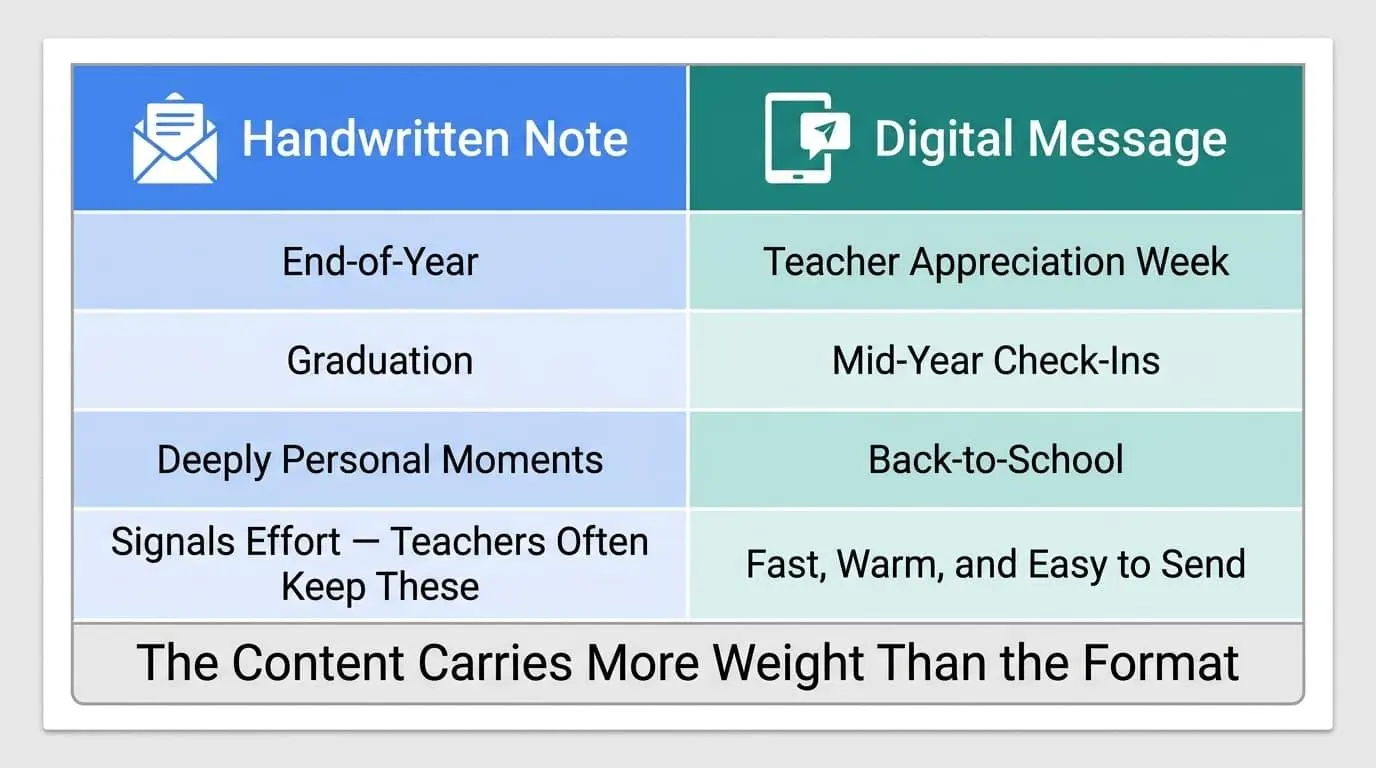
Both formats work. The one that matters most is the one you actually send. Whether you choose a handwritten or digital appreciation message, what counts is the sincerity behind your words—a personal message can be meaningful in any format.
That said, the occasion does shape the choice. Here is a quick way to think about it:
A handwritten note signals effort. A digital message signals thoughtfulness in the moment. So, choosing either of them is not wrong.
The content carries more weight than the format. A specific, sincere digital appreciation message or personal message will land harder than a vague handwritten one. Pick the format that fits the moment, then focus on saying something real.
Adding a small gift, such as a gift card or a DIY item, alongside your thank you note can further enhance your gesture of appreciation and show extra thoughtfulness. If you are also thinking about pairing your note with something tangible, holiday gift ideas for faculty members can help round out the gesture.
How to Get Your Child Involved in Writing the Note
Getting your child involved turns a thank you note from parents into something a teacher will genuinely treasure.
Including your child in writing the note not only highlights their progress and learning journey, but also shows appreciation for the teacher’s unwavering support throughout the year.
[Image: a young child writing or drawing at a wooden table, focused and smiling]
Even a small contribution from the child changes everything. Research on teacher recognition and motivation confirms that personal, student-centered appreciation carries a deeper emotional impact than standard parent correspondence. The sections below break it down by age so you know exactly where to start.
For Younger Children
Young children (ages 3 to 7) do not necessarily need to write a word to make a thank you note feel personal. You can:
- Let them draw a picture to include alongside your note.
- Ask them what they liked best about their teacher, then write their answer word for word.
- Have them sign their name at the bottom, even if it is wobbly.
Teachers play a vital role in creating a positive educational environment where young children can thrive, learn, and grow both academically and socially.
That one question, “What is your favorite thing your teacher did this year?”, often produces the most honest line in the whole note.
For Older Students
Older children can take the lead with a little prompting. Reflecting on essential questions to ask teachers about their philosophy can spark ideas worth turning inward.
Encourage older students to consider how their teacher contributed to their personal growth—how they’ve developed new skills, gained confidence, or discovered new interests thanks to their teacher’s support.
- Ask two or three specific questions. You can start with questions like, “What did this teacher do that surprised you? When did you feel most supported?
- Let them write in their own voice without overediting.
- Add your own paragraph above or below theirs, naming the patience and kindness you observed as a parent.
For older students (ages 10 to 18), their words carry weight. Let them show it, even if the note feels a little imperfect.
Questions Parents Often Ask About Thank You Notes for Teachers
What Do You Say in a Thank You Note for a Teacher?
A strong thank you note mentions one specific thing the teacher did, explains how it helped your child, and ends with sincere appreciation. Keep it brief and personal. Three or four honest sentences will usually mean more than a long, generic message.
Using heartfelt words in your note can leave a lasting impression on a teacher, showing them the true impact they’ve had.
How Long Should a Thank You Note Be?
A thank you note doesn’t need to be long to feel meaningful. Most great notes are between three and five sentences.
Even a short personal note, especially when included in a holiday card or during special occasions, can be just as heartfelt and appreciated as a longer message. Focus on one real example, a short expression of gratitude, and a warm closing rather than trying to say everything.
What Is a Short and Sweet Message for a Teacher?
“Thank you for the care and encouragement you gave [child’s name] this year. Watching their confidence grow has meant so much to our family.
Even a short note like this can acknowledge the positive impact you’ve had on their learning and motivation. We are truly grateful for everything you did.”
What Are Some Good Words to Describe a Great Teacher?
Words like patient, encouraging, compassionate, inspiring, creative, nurturing, dedicated, wonderful teacher, amazing teacher, and best teacher work well in a thank you note. Choose one or two that genuinely match the teacher’s personality and the experience your child had in their classroom.
What Is the Best Compliment You Can Give a Teacher?
One of the best compliments is telling a teacher that your child enjoys coming to school because of them. Complimenting a teacher’s positive influence and lasting impact on students’ lives is especially meaningful, as it acknowledges how their dedication shapes personal growth and leaves a lasting impression. Teachers want students to feel safe, supported, and excited to learn, so hearing that often means more than formal praise.
Should Parents and Students Write Separate Notes?
They can, especially if the student is older. A parent can acknowledge the teacher’s effort and growth they observed at home, while the student adds a more personal voice.
Including a personal message from both parent and student makes the appreciation more heartfelt and meaningful, ensuring the note feels truly memorable. Together, the notes often feel more meaningful and memorable.
Is a Handwritten Note Better Than an Email?
Both work well when the message feels sincere. Handwritten notes, especially thank you cards and teacher cards, often feel more personal and are sometimes kept as cherished mementos for years, while emails are quick and easy to send in the moment. The words themselves matter more than the format.
When Is the Best Time to Thank a Teacher?
The end of the school year is common, but thank you notes are meaningful anytime. Teacher Appreciation Week, holidays, after a difficult season, or right after your child experiences a breakthrough are all thoughtful moments to reach out.
Expressing appreciation throughout the entire school year, especially after tough days, can be especially meaningful and help teachers feel valued for their ongoing dedication.
A Note Worth Writing
A sincere, specific thank you note is one of the most meaningful things a family can give a teacher. It does not need to be long or perfectly worded; it just needs to be real. If something in this guide helped you find the right words, send the note. An imperfect thank you note sent today matters far more than a perfect one never written.
We are incredibly grateful and forever grateful for the lasting impact and positive influence teachers have on our lives.
At Education Walkthrough, we believe every teacher deserves to feel seen and celebrated. Expressing gratitude for their lasting impact not only acknowledges their positive influence but also helps sustain their passion for teaching. Browse our resources to find more ways to honor the educators in your child’s life, from thoughtful holiday gifts for teachers to global teacher wellbeing initiatives worth knowing about.
