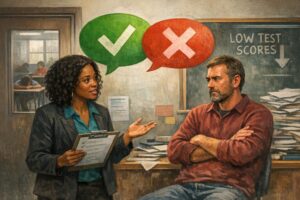
Have you ever spent twenty minutes carefully detailing your experience on a course evaluation, only to see the professor teach exactly the same way the following semester? It feels like your opinion vanished into a void.
Here is the uncomfortable truth: your instructors probably did read your comments, but they may have chosen to keep them at arm’s length.
Understanding why teachers don’t trust your feedback is the first step toward fixing a system that currently feels performative for everyone involved.
Is it possible that the tools we use to measure success are actually standing in the way of real growth? This isn’t about educators who don’t care; it is about a structural failure that makes it hard to receive feedback and still feel positive about the work.
Even when a tutor or instructional coach is paying attention, the lack of encouragement can turn a bridge into a wall.
In this guide, we’ll dive into the data behind these evaluations and explore how to turn a broken loop into a bridge for improvement.
Tools like Education Walkthrough are designed specifically to bridge this gap, moving beyond static surveys to foster real-time, constructive dialogue.
Key Takeaways
- Teachers aren’t ignoring students out of spite, they’re often struggling with a feedback system that research shows is biased and unreliable, with grades predicting ratings more than actual learning does.
- Student evaluations of teaching (SETs) are distorted by gender, attractiveness, course difficulty, and even weather on survey day, making them statistically noisy and difficult for educators to interpret.
- Universities and schools still use flawed student feedback for high-stakes decisions like promotion, pay, and tenure, creating a “broken feedback loop” where neither side trusts the process.
- Students can make their feedback more credible by focusing on specific, observable behaviors tied to learning rather than global judgments about personality or entertainment value.
- Meaningful reform requires multi-measure evaluation systems that combine student input with peer observation, teaching portfolios, and learning outcome data.
The Broken Feedback Loop: Why Does Student Feedback Feel Ignored by Teachers?
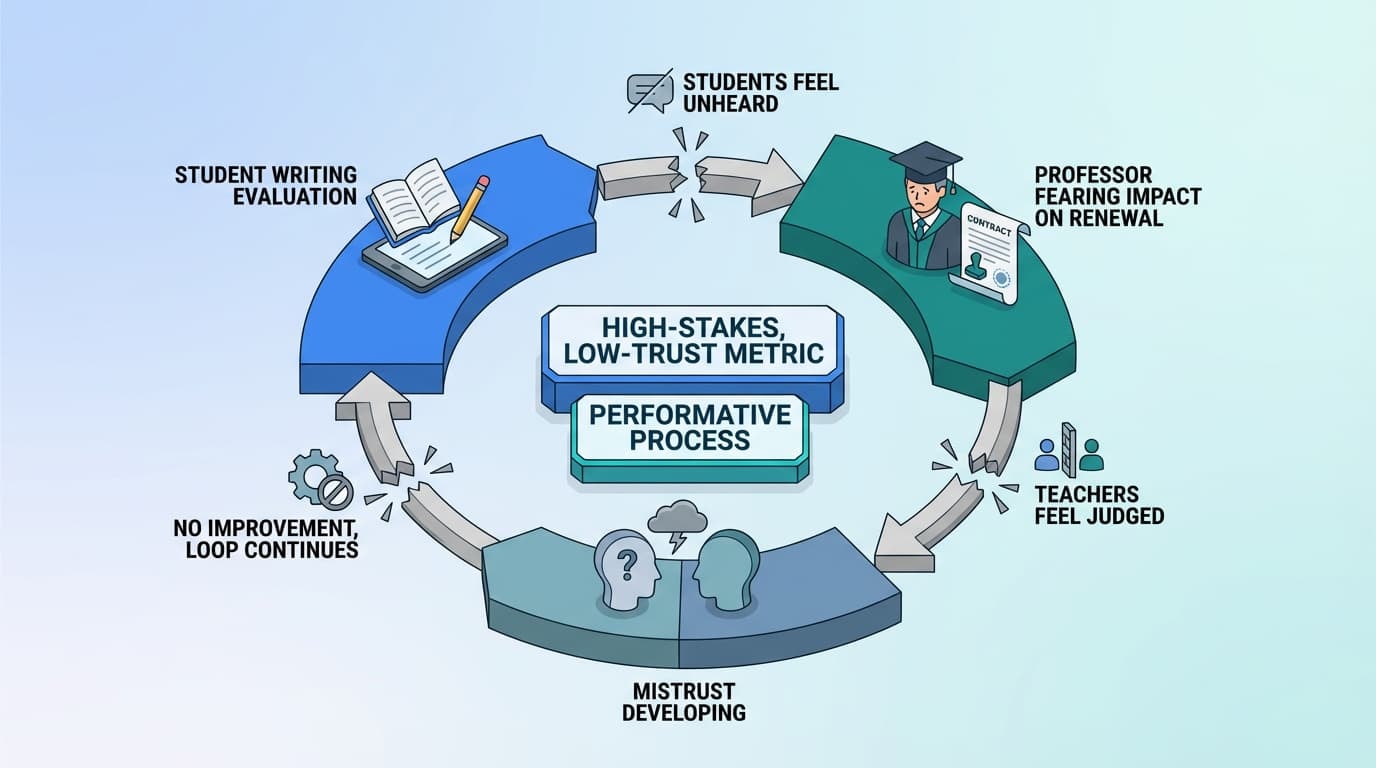
Imagine this scene in 2026: A university student sits in their dorm room, clicking through a 15-question online course evaluation. They spend 20 minutes writing detailed comments about pacing, clarity, and assignments. They hit submit and wonder if their professor will ever read a word of it.
Meanwhile, an early-career faculty member at the same university knows that a small dip in their Student Evaluations of Teaching (SET) could hurt their contract renewal. They fear these surveys. They also don’t fully believe them.
This is the broken feedback loop!
The very tool designed to improve learning has become a high-stakes, low-trust metric. Students feel unheard. Teachers feel judged. And the process itself sometimes just doesn’t measure teaching quality.
This pattern extends beyond higher education. In K-12 settings, learning walks, drop-in observations, and student voice surveys often feel performative to classroom teachers. When feedback is tied to appraisal rather than development, people stop trusting it.
Read on to learn why this mistrust exists and what you can do to change the culture from compliance to coaching.
What Does the Data Say About the Reliability of Student Evaluations?
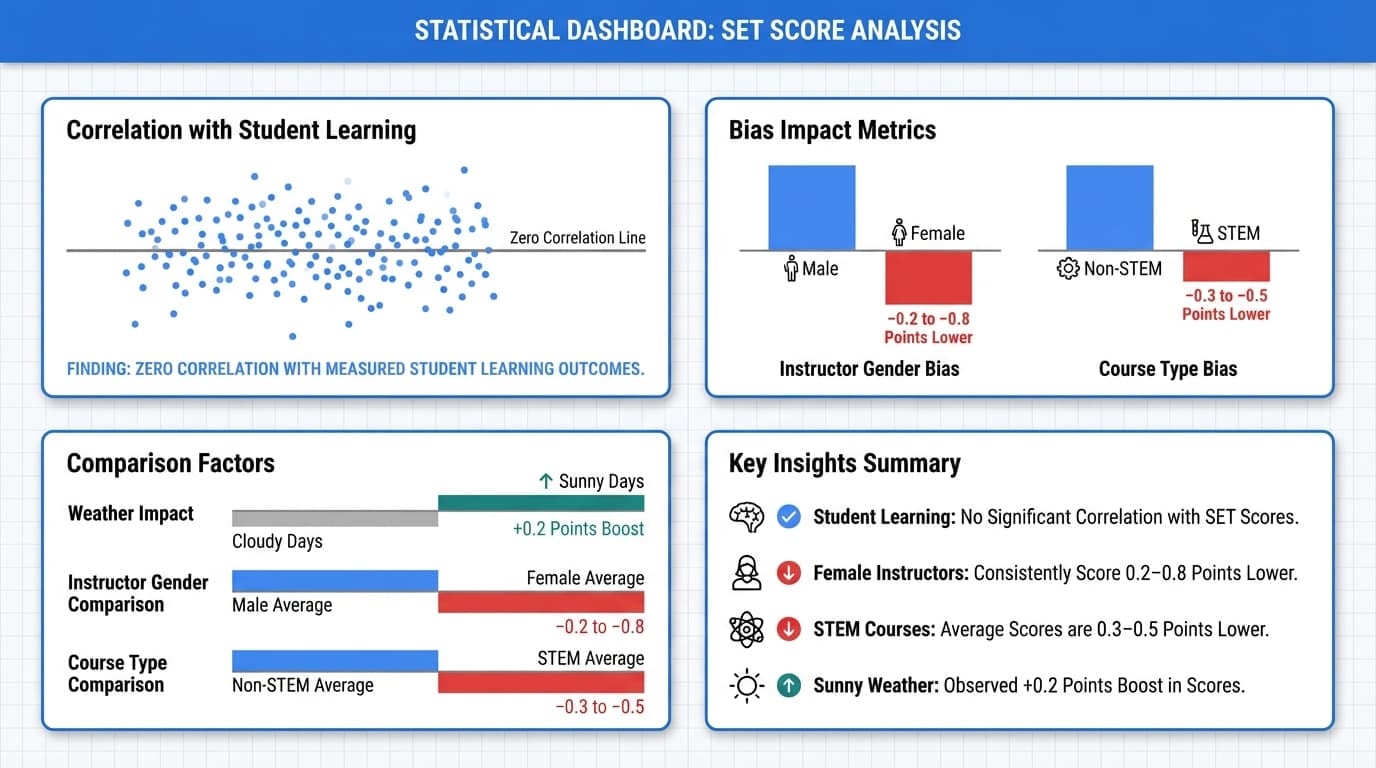
Multiple large-scale studies have shown that student ratings are heavily influenced by factors unrelated to how much students actually learn
According to Uttl, White, and Gonzalez’s 2017 meta-analysis, SET ratings show zero correlation with student learning across all multisection studies. This means ratings reflect biases, not teaching quality.
The work of Boring et al. (2016, replicated 2025) supports this further by revealing female instructors score 0.2–0.8 points lower than males, despite identical teaching. Imagine just being penalized for your gender.
Further research also shows STEM courses get 0.3–0.5 points lower ratings than humanities. This gap persists even when learning outcomes match perfectly.
These patterns hold from sunny weather mood swings to attractiveness halos. As shown by You et al. (2015), sunny days boost scores by 0.2 points regardless of instruction quality.
The studies drive home the fact that SETs predict grades far better than actual achievement gains. This is a fundamental flaw undermining fair evaluations.
Why “Good Ratings” Don’t Always Mean Good Teaching
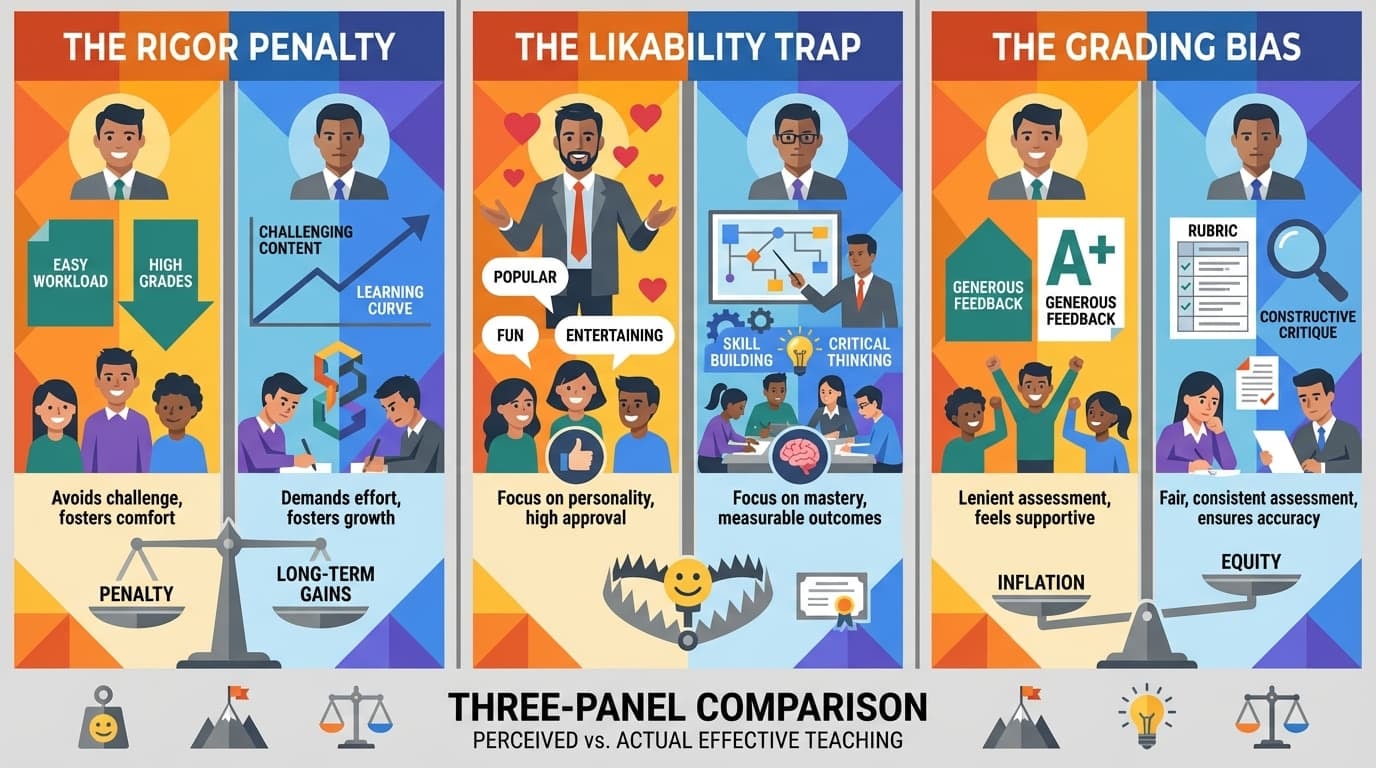
High scores look great on a dashboard, but they often mask the messy reality of a classroom. When we focus only on a number, we risk confusing a “popular” teacher with one who is actually driving student growth.
- The Rigor Penalty: True learning is often uncomfortable. When teachers push students with challenging material, students may mistake that struggle for poor instruction and submit lower ratings as a result.
- The Likability Trap: Feedback often turns into a popularity contest. Charismatic teachers may get glowing reviews based on their personality, even if their methods aren’t actually helping students master the content.
- The Grading Bias: High grades often trigger a “thank you” effect. Students are statistically more likely to give a positive review when they receive an “A,” regardless of how much they actually learned.
This doesn’t mean all highly rated teachers are “easier.” But it does mean the signal is mixed enough that many teachers distrust what the numbers are really telling them.
Why Teachers Look Skeptically at Your Feedback
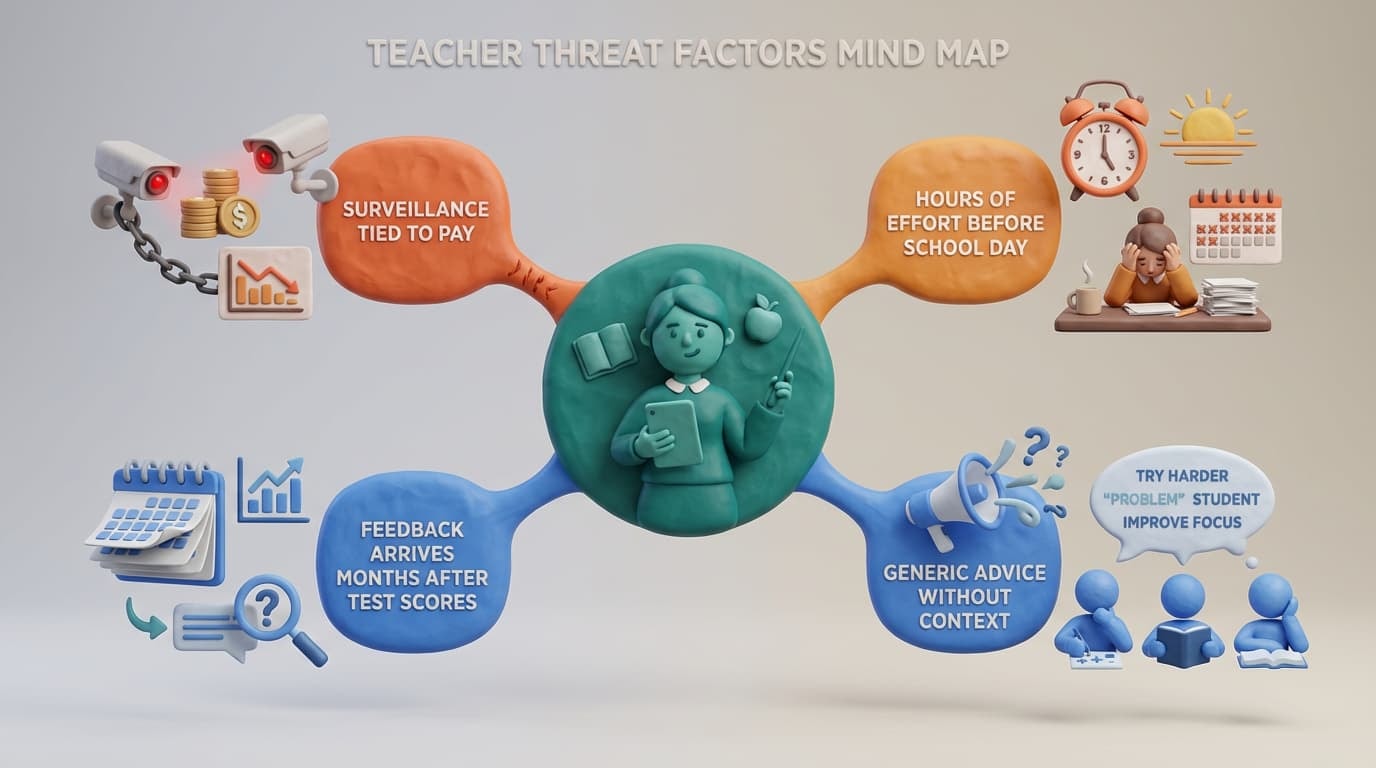
From a student perspective, it can feel like teachers just do not want to hear criticism. However, the reality is much more complicated.
Why should an educator trust a system that feels like surveillance instead of support?
Many teachers experience feedback through digital observation tools as judgmental and tied directly to their pay. This undermines trust before any conversation about growth even starts.
For example:
- When leaders only observe for a few minutes, they miss the hours of effort teachers put in to work hard before the school day begins.
- Feedback that arrives months after late test scores are released offers no real insights for the students currently sitting in the classroom.
For many, a few low scores on an anonymous survey can mean losing their job. That is not helpful coaching. It is high stakes pressure.
Furthermore, generic advice like “engage students more” is useless without the context or time to make changes. Teachers eventually protect themselves by discounting any feedback they cannot verify or discuss, turning a potential bridge into a wall.
Education Walkthrough solves this by providing structured templates that help observers deliver concrete, actionable steps instead of vague platitudes.
Bias, Identity, and the Risk of Being “Judged”
Research shows systematic gender and racial bias in student evaluations. Women and instructors of color have documented evidence that critical feedback may reflect stereotypes more than pedagogy.
A 2023 PNAS study found that violating gender role expectations caused measurably lower SET scores—not merely correlated, but causally linked. Teachers whose demeanor didn’t match gendered expectations were penalized.
Even more troubling: a 2023–2024 field experiment found that showing students a gender-bias awareness video led male students to rate female instructors even lower. The “fix” backfired.
This history makes marginalized teachers particularly cautious about taking negative student comments at face value. Some feedback is thoughtful and fair. But in a stack of anonymous comments, teachers cannot easily distinguish signal from bias.
When Does Student Feedback Feel Like Noise Instead of Help?
One of the most common complaints among educators across higher education and K-12, is that feedback is generic and unhelpful. When comments are vague, they lose their power to inspire change.
This gap between hearing a critique and knowing how to fix it is where many professional growth plans go to die.
- Use Specifics Over Vague Phrases: Most learning walks result in broad suggestions like “use more technology” or “make the class more interactive.” While these might be true, they aren’t actionable. To combat this, you should ensure every observation note includes a concrete “how-to.” Instead of saying “engage students,” try suggesting a specific “turn and talk” strategy you saw work in another room.
- Match the Message to the Teacher: Mismatched feedback makes the problem worse. Giving a veteran teacher basic advice or a novice teacher a complex pedagogical challenge feels like a waste of time. You can avoid this by tailoring your insights to the teacher’s current career stage. Before you hit send, ask yourself if the advice matches their specific goals and experience level.
- Provide the Tools, Not Just the Tasks: Consider a teacher who receives a note saying “differentiate more,” but has no extra time or training to do it. Unsurprisingly, nothing changes. If you want to see growth, you must pair your feedback with resources. If you suggest a change, offer a model lesson, a helpful template, or a few minutes of your time to help them plan the next step.
- Stop the Self-Protection Cycle: When feedback doesn’t come with support or specificity, teachers learn to protect their energy by ignoring it. This looks like distrust, but it is actually a survival tactic. You can break this cycle by making your feedback low-stakes and high-support. When your team sees that your notes lead to a lighter workload rather than a longer “to-do” list, they will start leaning into your insights.
Case Study: Breaking the “Gotcha” Cycle at Carroll County Middle School
In Carroll County Middle School, coaching used to feel like a high-stakes mystery. Teachers felt “clipboard fear” because they didn’t know what was being measured.
Once Mandy Young and her team implemented Education Walkthrough, the culture shifted from surveillance to transparency.
By using a shared template of “non-negotiables,” administrators and teachers finally looked at the same scoreboard. Mandy Young, the school’s Instructional Coach, noted:
“We didn’t just give teachers data; we gave them data they could trust, and once they trusted it, they owned it.”
The dashboard provided anonymized, school-wide growth charts for faculty meetings, turning data into a tool for collective reflection.
This objective approach moved high-yield instructional strategy usage from 38% to 79% in one year, proving that transparent, instant feedback makes teachers invite visits rather than fear them.
Read the Full Carroll County Middle School Case Study
The Problem with Anonymous Snapshots and Why Meaningful Feedback Matters
End of semester course evaluations and single classroom observations share a fundamental flaw because they capture a moment instead of a pattern.
Picture this: a student fills out a survey right after a frustrating exam or an observer drop in during a chaotic day. Is it fair to let one bad afternoon define a whole year of hard work?
Why should these frozen moments represent the entire experience behind the classroom door?
Without context regarding who said it or what their goals were, it is hard for teachers and other educators to know which comments are valid.
Teachers do not hate feedback. In fact, many actively seek peer coaching or student consultations that provide richer data. What they distrust is the isolated and anonymous variety that lacks a relationship.
The solution is not less feedback. You need to start replacing high-stakes snapshots with consistent, low-pressure touchpoints.
For example, using 10 minute walkthroughsto build better cycles over time encourages a culture of continuous support rather than sudden critique.
This is the core philosophy of Education Walkthrough, which simplifies the process of conducting frequent, meaningful visits that normalize growth.
Frequent visits help kids see that growth is a process. This approach turns difficult conversations into opportunities for real change instead of one off judgments that teachers feel they must ignore to survive.
What Power Dynamics Influence Classroom Feedback?
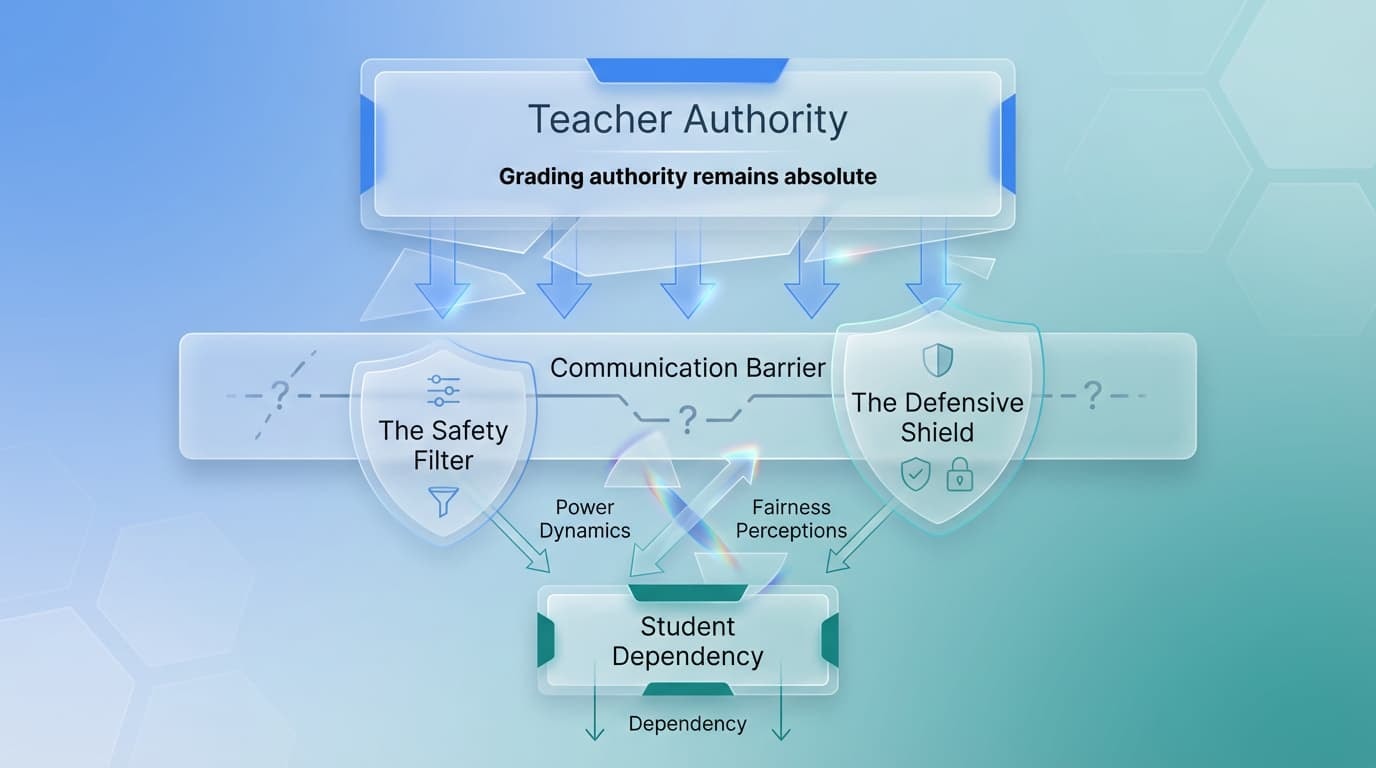
Classrooms are unequal by design. For example, while English teachers might foster open discussions about literature, other teachers might focus on rigid procedural tasks. Therefore, the underlying grading authority remains absolute.
This power imbalance shapes how information flows in both directions. Since students depend on educators for grades and references, they often feel they are walking a tightrope.
- The Safety Filter: Students may sugarcoat their opinions to stay safe or wait to vent until the term ends when there is nothing left to lose.
- The Defensive Shield: Because of the weight of their responsibility, so many teachers hear anonymous criticism as a threat to their authority rather than a tool for reflection.
As revealed in a 2024 study by Frontiers in Education, students themselves were the largest source of variance in ratings. This is partially because they react to power dynamics, fairness perceptions, and identity.
When student comments focus on personality (“too strict,” “too opinionated”) rather than concrete teaching behaviors, teachers often dismiss them as role-resistance rather than constructive input.
In K-12, additional layers such as parent pressure, leadership walk-through checklists, district data dashboards, further politicize feedback. Every remark can potentially become a formal complaint.
Why “Just Be Honest” Isn’t That Simple
Many students today post on Reddit and TikTok that they fear retaliation for honest criticism, even when surveys are supposedly anonymous.
Asking a student to be blunt without total trust is like asking a child to admit they broke a vase before they know the consequences; the instinct is to hide the truth to stay safe. This fear encourages extremes: either glowing praise to stay on a teacher’s good side or harsh venting once grades are locked in.
Neither extreme produces the balanced, specific feedback that actually helps a school grow like a healthy business. This creates a fractured environment:
- Mutual Distrust: Neither side fully trusts the other because of the inherent power struggle.
- Structural Barriers: The lack of trust stems from the system’s design, not personal flaws.
- Missed Growth: Without honesty, the chance to buildrelationships through clear communication is lost.
Addressing this requires intentional design. We need clear protections, transparent data use, and shared norms. When we move away from “gotcha” moments, we can finally focus on genuine improvement.
How Students Can Give Feedback Teachers Actually Trust
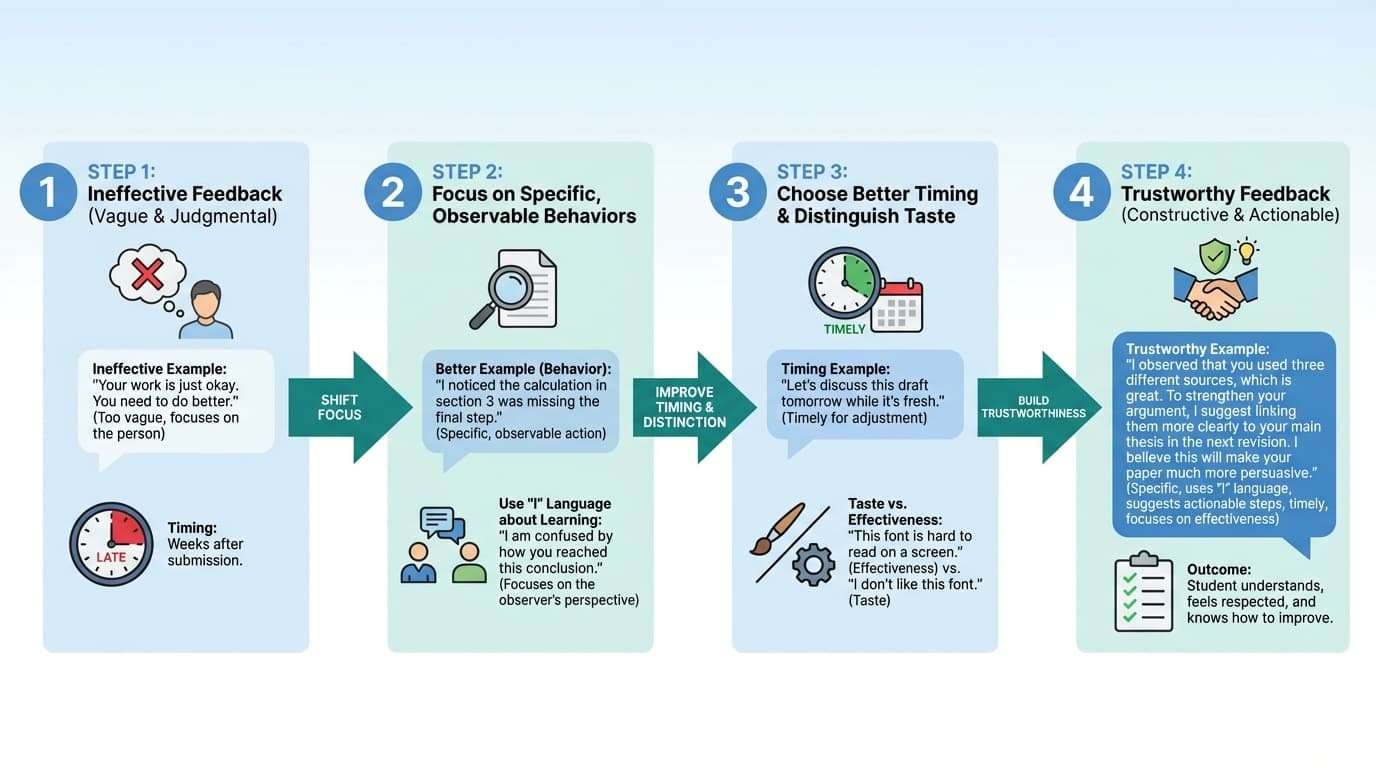
If you’re a student who feels ignored, here’s the good news: the kind of feedback you give matters. There are concrete ways to make your voice more credible and your input more actionable.
- Focus on specific, observable behaviors: Instead of: “You’re a bad lecturer.” Try: “When you post slides 48 hours before class, I know what to expect and it helps me participate more. When they’re posted the night before, I struggle to prepare.
- Use “I” language about learning: Instead of: “This course is confusing.” Try: “I struggled to follow when we switched topics quickly without a summary.” This signals that your goal is improvement, not punishment.
- Choose better timing: Mid-semester check-ins, office hours, or structured mid-course surveys are far more actionable than end-of-term venting. Making these conversations part of your routine ensures your feedback arrives while there is still time for the instructor to change your experience. If your feedback arrives after grades are submitted, there’s nothing the instructor can do offer you a better experience
- Distinguish taste from effectiveness: Just because a course is hard or not entertaining doesn’t mean it’s bad teaching. Noting what helps learning like clarity, practice opportunities, feedback conversations, response speed, builds your credibility as someone interested in education quality, not just ease.
Making Your Voice Count in a Flawed System
Systemic reform like changing how SETs are used in promotion, is largely out of student hands. But individual choices still matter.
- Give thoughtful, balanced feedback that names what works well, not just what’s wrong, so that teachers are more likely to listen to your perspective.
- Support faculty who are pushing for fairer evaluation systems.
- If you’re involved in student government or graduate councils, advocate for mid-course feedback and multi-measure evaluations.
- Answer open-ended questions with concrete examples instead of “N/A.” This helps school leaders and teaching centers see patterns more clearly.
You can’t fix institutional metrics alone. But you can make your own feedback more trustworthy and constructive, and that gives it a better chance of being heard.
What Needs to Change for Teachers to Trust Student Feedback
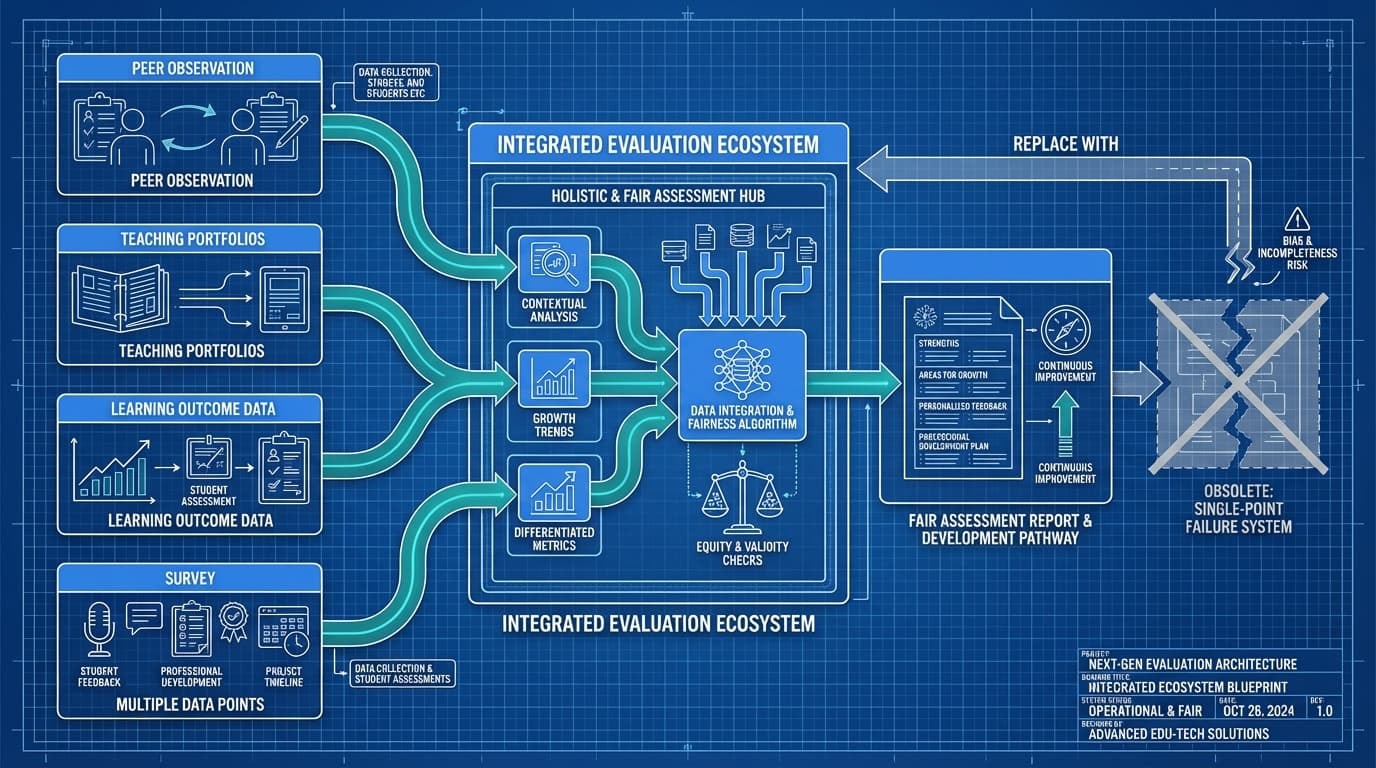
The data from the last decade proves that relying on student survey only creates biased results. To fix this, we need a system that values the ability of a teacher to grow.
What works better? Multi-measure evaluation systems that combine student input with:
- Peer observation where colleagues discuss specific strategies and offer helpful teacher feedback.
- Teaching portfolios that document how well parents understand the curriculum and goals.
- Learning outcome data that tracks student progress and daily work quality consistently.
Studies show these combinations produce fairer and more reliable judgments of teaching quality. Using multiple data points ensures that one bad day doesn’t ruin a career.
De-emphasize raw average scores in promotion decisions, especially when response rates are low. A handful of angry comments should not determine a professional’s future.
Instead, provide dedicated time, training, and coaching. When professional development includes ongoing observation cycles, feedback transforms from one-off judgment into continuous improvement.
When teachers see student input leading to realistic support and not just high-stakes ranking, they become more open to trusting and using it. By integrating various data points through a centralized platform like Education Walkthrough, schools can create a more holistic and trusted view of teacher performance.
How School Leaders Can Build a Culture of Trust, Not Surveillance
What should a healthier feedback culture look like today? To move away from the “compliance” mindset, school leaders must rethink how they handle daily observation.
- Low-stakes learning walks focused on specific goals, not gotcha moments
- Transparent sharing of how feedback is used and what changes result
- Clear separation between coaching and formal appraisal
- Teachers and students involved in co-designing feedback instruments—questions, timing, and reporting
Innovative K-12 networks are already proving that trust and accountability can coexist. By leading with positivefeedback, administrators can show that observations are meant to highlight strengths, not just find flaws.
Treat these ideas as a checklist for revisiting your own evaluation policies.
The goal isn’t to eliminate student feedback but o create a system where feedback leads to growth instead of defensiveness.
Education Walkthrough is the premier tool for school leaders who want to replace outdated surveillance with a vibrant culture of coaching. Our platform makes it effortless to provide the high-frequency, positive reinforcement that modern educators need to thrive. Stop guessing about classroom impact and start building a community of trust today.
Try Education Walkthroug today and transform your school culture!
Frequently Asked Questions
Do teachers actually read student course evaluations?
Most university instructors do read their evaluations, often in detail. However, they weigh comments against known biases and look for consistent patterns over several semesters rather than reacting to isolated remarks.
In many institutions, teaching centers also receive anonymized summaries and may use them in workshops or coaching. What feels like “being ignored” is often teachers filtering out noise and focusing on trends they can realistically address.
Are there types of feedback teachers trust more than others?
Teachers tend to trust feedback that is specific, behavior-focused, and linked to learning outcomes. Comments like “When you gave the example about X, the concept finally clicked for me” carry more weight than vague judgments about personality or course difficulty. Mid-course feedback is also highly valued because it allows for immediate adjustmen
Why do schools and universities still rely on SETs if they’re so flawed?
SETs are cheap, easy to administer at scale, and provide numerical data that administrators can put into dashboards and reports. That makes them institutionally attractive even when research questions their validity.
Changing evaluation systems requires policy shifts, sometimes union negotiations, and new resources for peer review and coaching. Reform moves slowly. Some universities now explicitly state that SETs are just one piece of evidence among many incremental progress.
Is student feedback more reliable in K–12 than in higher education?
In K–12, surveys are often used formatively to improve classroom climate rather than for formal firing decisions, making them less threatening. However, power dynamics and bias still exist, so the same trust issues apply regardless of the students’ age.
What can I do if my teacher really does seem to ignore all feedback?
Try a private, respectful conversation centered on shared goals like clarity or fairness. Using existing structures like student councils or mid-course check-ins to raise patterns is often more effective than individual complaints, as specific feedback is harder to dismiss.
How does positive feedback improve the observation process?
When leaders lead with positive feedback, it reframes the observation as a partnership rather than a performance review. Highlighting what is working well builds the necessary trust for teachers to actually listen to and implement suggestions for improvement.