As a K-12 leader, you’re no stranger to the whirlwind of managing teacher evaluations, professional development, and the relentless push for student success. Every year, new models promise to transform your school, but most leave you with more confusion than clarity. Sound familiar?
Then there’s the Danielson Framework for Teaching. Since 1996, Charlotte Danielson’s research-backed approach has guided thousands of schools, turning evaluations from stress-inducing chores into pathways for growth. It’s not just another tool, it’s a clear roadmap to instructional excellence.
Why should you rave about it? Because it creates a shared vision for great teaching, delivers actionable feedback, and drives student achievement.
If you’re part of the number who wants to empower your educators and lead your school to success, get in! It’s about to be a ride.
Key Takeaways
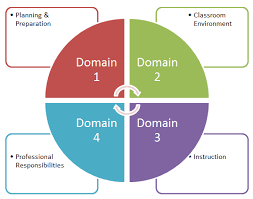
- The Danielson Framework for Teaching organizes teaching into four domains, guiding instructional excellence and student engagement.
- It builds a clear structure for teacher evaluation, making feedback practical and growth-focused.
- Professional Learning Communities (PLCs) and tools like Education Walkthrough amplify its impact.
- Research shows it improves teacher retention and student outcomes when implemented thoughtfully.

Understanding the Danielson Framework for Teaching
Let’s break it down.
If you’ve ever wondered how some schools seem to have a shared vision for great teaching-while others get stuck in endless debates about “what good looks like”-the Danielson Framework for Teaching (FFT) is the secret sauce behind that clarity.
But what exactly is it, and why has it become the backbone for teacher evaluation systems and professional growth in thousands of districts?
Back in 1996, Charlotte Danielson-an educator with deep roots in both classroom teaching and educational research-set out to solve a big problem: Most teacher evaluation systems were vague, inconsistent, and, frankly, not very helpful for teachers who wanted to grow.
Drawing on the Interstate New Teacher Assessment and Support Consortium (INTASC) standards and the best research of the time, she created the Danielson Framework for Teaching.
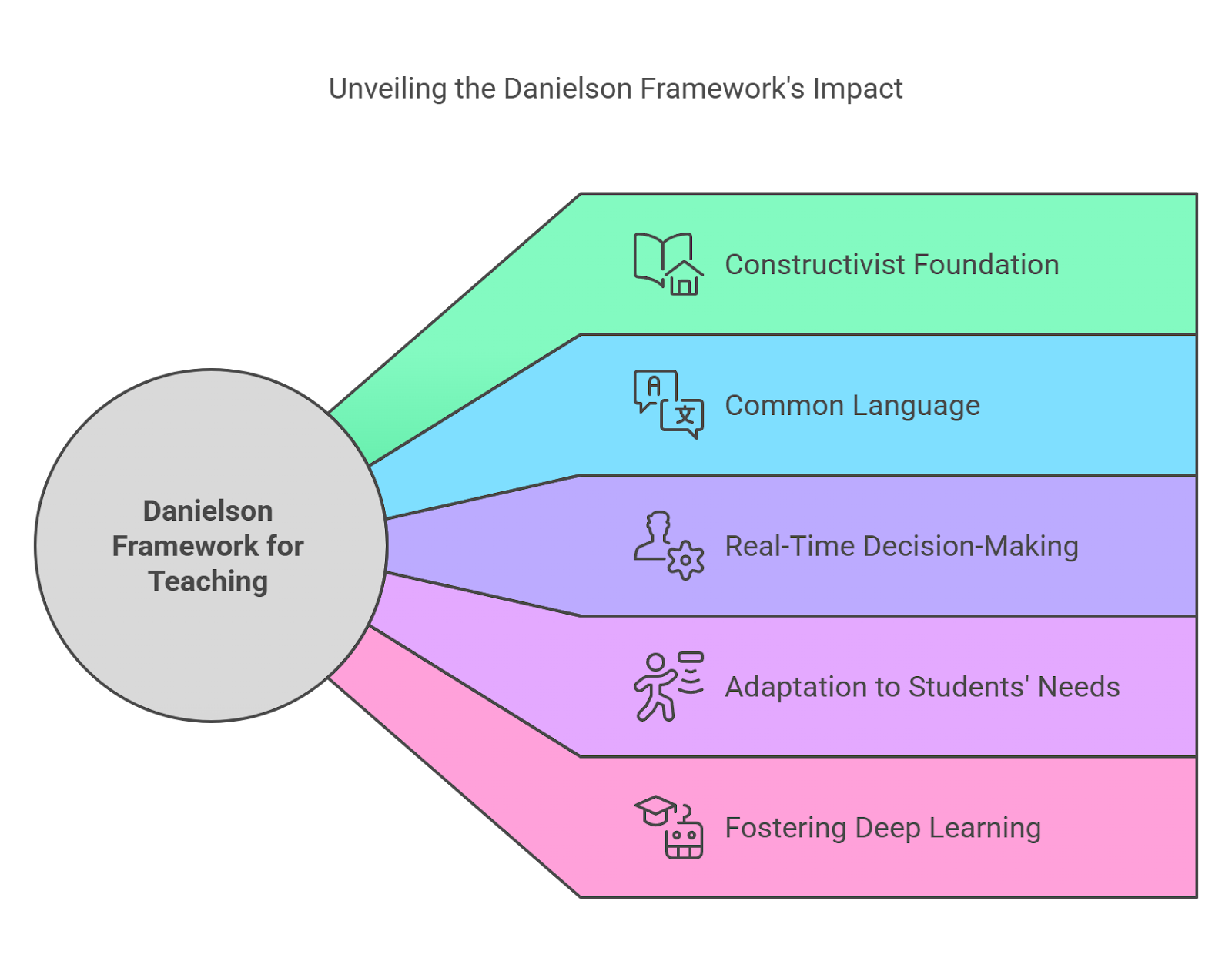
What’s the big deal? Let’s make it clear, it’s not about rigid lesson plans. Rooted in constructivism, it celebrates teachers as decision-makers who adapt to students’ needs in real time. For K-12 leaders, it’s a way to align evaluations with growth, ensuring every teacher knows their strengths and next steps.
A 2018 National Education Association study found that schools using the framework saw a 12% increase in teacher satisfaction with evaluations. Why? It provides a common language that makes feedback meaningful, not judgmental.
“The Framework provides a road map to build and sustain individual and organizational strength.” — Charlotte Danielson, Danielson Group
The Four Domains of the Danielson Framework
Think of great teaching as a house. The Danielson Framework’s four domains are its pillars, each supporting a piece of the structure. Let’s explore them with a fresh perspective.
Domain 1: Planning and Preparation
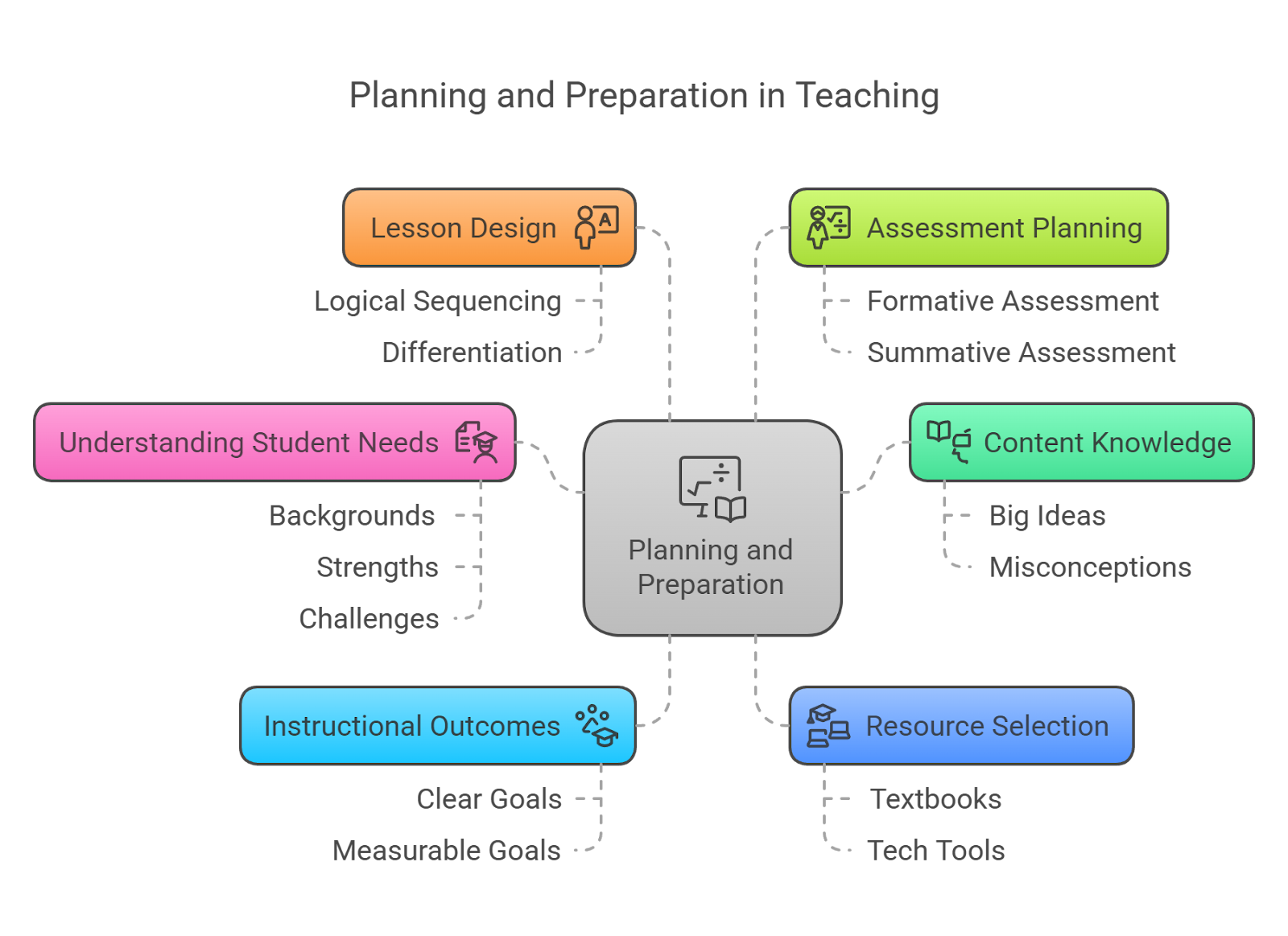
Ever seen a teacher make a complex lesson look effortless? That’s planning at work. Domain 1 is about the groundwork teachers do before class starts.
- What It Covers: Deep content knowledge, understanding student needs, instructional outcomes, choosing relevant resources, designing differentiated lessons, and planning assessments.
- Why It Matters: Studies reveal that when teachers tailor their lessons to student needs and collaborate effectively, student engagement can increase noticeably-proving that strong preparation truly sets the stage for success.
Real-World Insight: In a California district, teachers harnessed student data to craft personalized lessons filled with hands-on activities for learners who needed extra support. In the end, there were noticeable gains in student performance that underscore how thoughtful preparation and targeted instruction can transform learning experiences.
Domain 2: The Classroom Environment
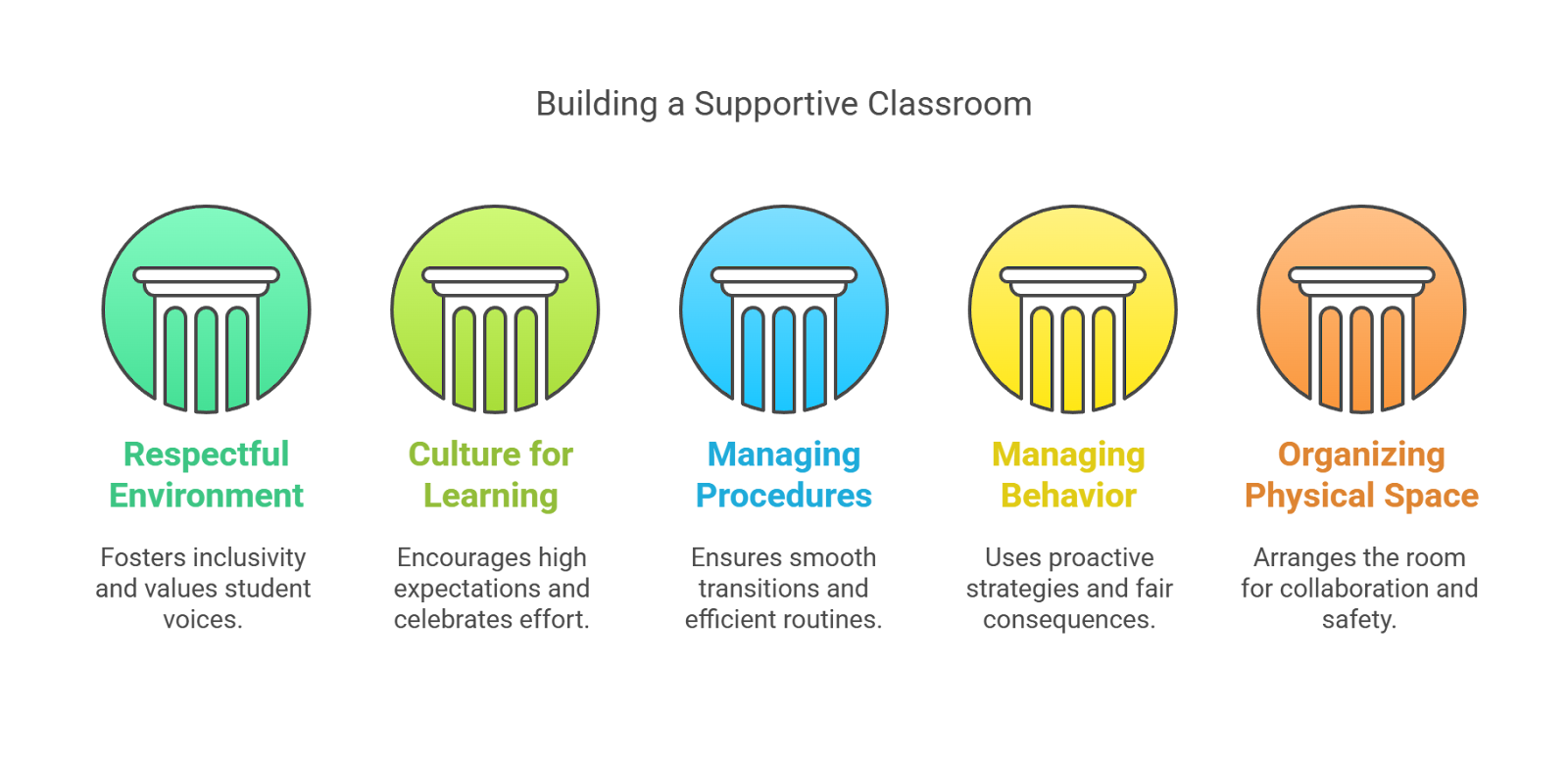
You’ve been in that classroom; the one where students feel safe, respected, and ready to learn. Domain 2 is about creating that space.
- What It Covers: Building a respectful culture, setting high expectations, managing routines, addressing behavior proactively, and organizing the classroom for collaboration.
- Quick Win: A consistent transition routine, like a timer or signal, can save 5–10 minutes of instructional time daily.
Story: A 7th-grade teacher in Ohio struggled with chaotic transitions. After adopting a timer-based routine, her classroom became more focused, and students stayed engaged. Evaluation data reflected her progress, showing a stronger learning environment.
Domain 3: Instruction
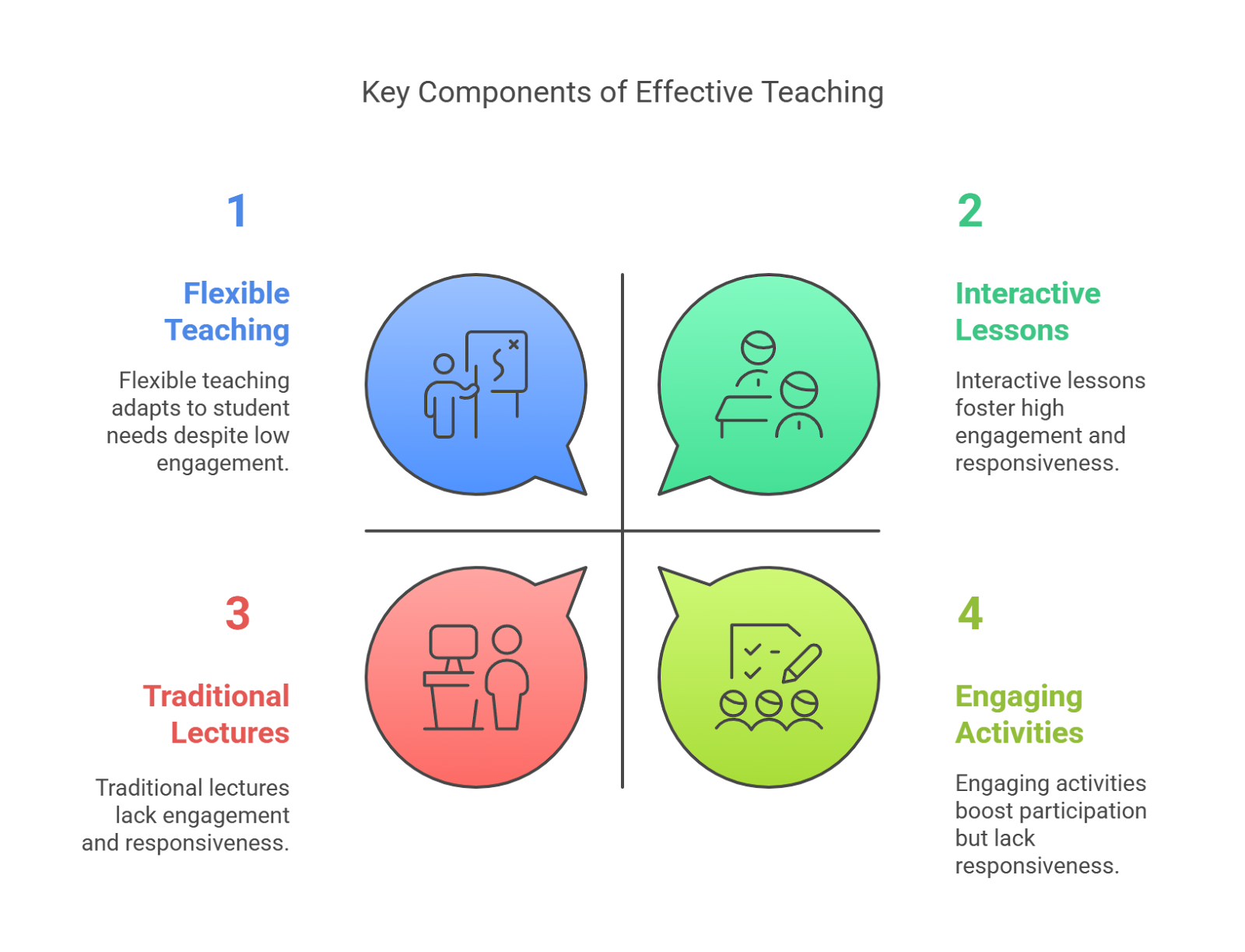
This is where teaching comes alive, engaging students and bringing lessons to life. Domain 3 is the heart of the classroom.
- What It Covers: Communicating clear goals, asking thought-provoking questions, designing interactive activities, checking understanding, and adapting to student needs.
- Stat Alert: A 2022 study in the International Journal of Educational Research Excellence found that when teachers use effective questioning techniques, students’ critical thinking scores soared-jumping from 54% to an impressive 88%.
Example: In a Texas high school, a history teacher noticed students struggling with primary sources. She shifted to a group discussion, asking, “What does this document reveal about the era?” The activity clarified concepts, and observation data praised her responsiveness. Though hypothetical, this example highlights how thoughtful questioning and adaptable teaching can truly bring history to life.
Domain 4: Professional Responsibilities
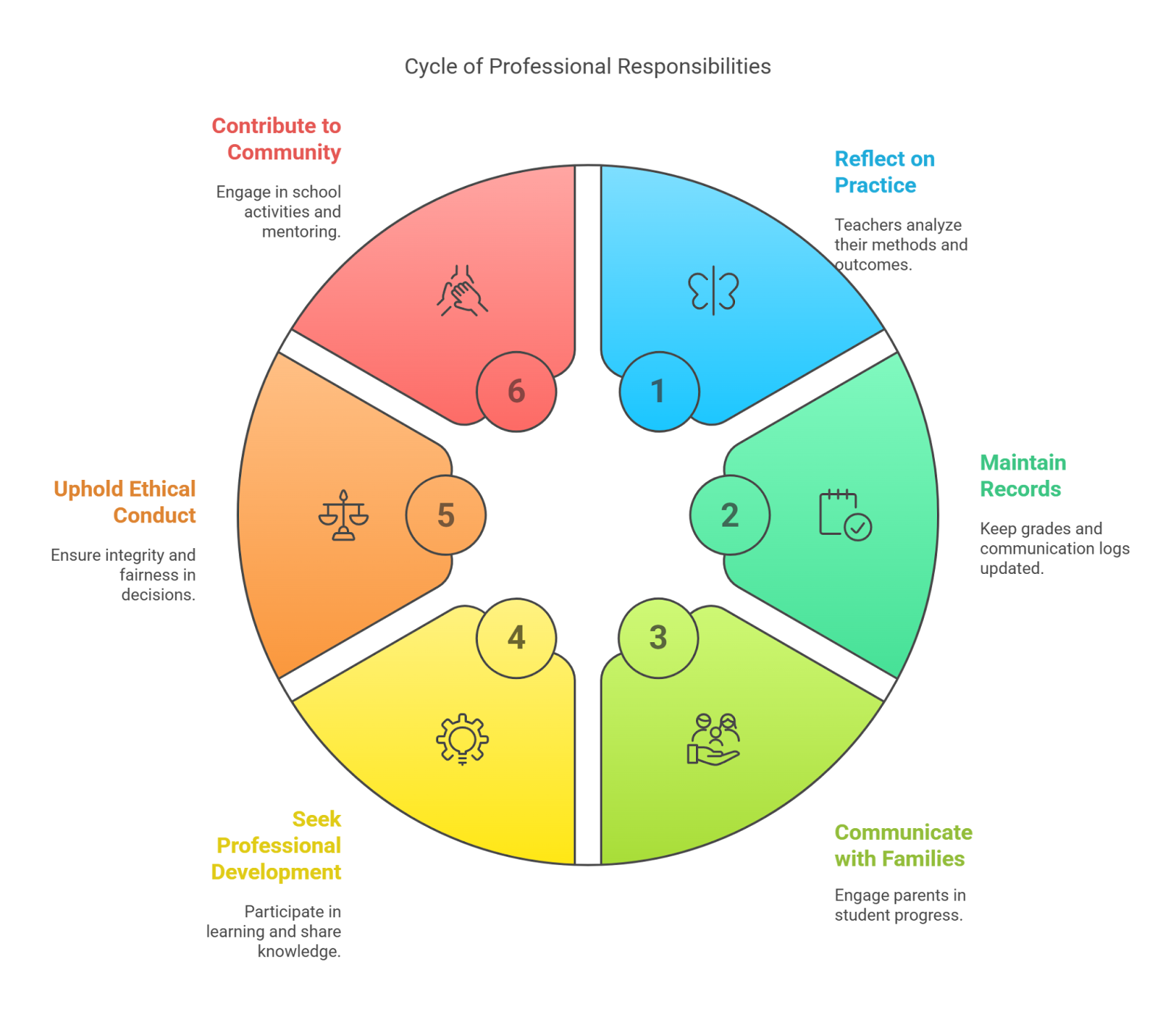
Teaching doesn’t stop when students leave. Domain 4 celebrates the behind-the-scenes work that strengthens school communities.
- What It Covers: Reflecting on practice, keeping accurate records, communicating with families, pursuing professional learning, acting ethically, and contributing to the school.
- Real Impact: Teachers who engage in PLCs often find the support and inspiration they need to stick with teaching longer, because collaboration makes all the difference.
General Insight: Schools with active PLCs often see teachers sharing strategies that improve classroom outcomes, as evaluation data frequently shows.
Implementing the Danielson Rubric in Your School
Rolling out a new framework can feel like learning a new dance, exciting but a bit tricky. Usually, there’s excitement, confusion, and if you’re not careful, a few missing screws that can make the whole thing wobble. But when the Danielson Framework for Teaching is implemented, it becomes a powerful professional development tool that actually lifts instructional quality and teacher morale.
Here’s how to make it work:
Training and Preparation for Teachers
Nobody loves a surprise evaluation, and your teachers are not left out. However, training turns anxiety into confidence.
- What Works: Host workshops with real classroom videos to unpack domains. Then, practice scoring lessons together to align expectations. Finally, encourage peer observations to share ideas.
- Pro Tip: Tools from Education Walkthrough offer templates to practice scoring, making the rubric feel practical.
Teachers who receive proper training tend to view evaluations more positively, recognizing them as valuable tools for growth and improvement.
Reducing Anxiety and Building Buy-In
Evaluations can feel like a spotlight. So, what then can you do? Reframe the rubric as a partner, not a judge.
- How: Share stories of teachers who improved with feedback. Clarify that “Proficient” is strong, and “Distinguished” is a goal, not a mandate.
- Insight: Focusing on growth rather than punishment tends to boost teacher morale and creates a more positive school environment.
Why does trust matter? Because a culture of growth starts with believing the system is fair.
The Role of Administrators in Implementation
Effective leadership is key to creating a culture where the framework’s principles are embraced by everyone. Leaders can start by modeling practices such as reflective feedback to demonstrate that the process is collaborative and supportive.
- Steps: To get started, set clear expectations with school-specific examples. Next, offer efficient observation tools. Finally, create feedback loops where teachers can voice concerns.
- Example: A principal in Oregon used the rubric to reflect on her coaching, sharing insights with staff. Teachers valued the transparency, and trust in the process grew.
When leaders take these steps, the question becomes: How might your school’s culture transform if trust and transparency were at the heart of every conversation?
Evaluating Teacher Performance with the Danielson Rubric
Evaluations don’t have to be a tightrope walk. The Danielson rubric makes them fair, focused, and growth-driven. Here’s how it works.
Steps for Conducting Classroom Observations and Collecting Evidences
Observations should feel collaborative, not like a pop quiz. Consider:
- Pre-Conference: Discuss lesson goals and student needs.
- Observation: Collect specific evidence such as student questions and teacher prompts, using the rubric’s lens.
- Post-Conference: Reflect together, tying evidence to components.
Research from 2023 shows that structured classroom observations paired with targeted feedback significantly boost student engagement and reduce disruptive behavior.
Using the Rubric as Both a Formative and Summative Assessment Tool
The rubric’s power lies in its flexibility, allowing it to support multiple purposes seamlessly:
- Formative: Use it for quick walkthroughs or peer reviews to provide focused, actionable feedback-such as, “Try incorporating more open-ended questions in 3b” to deepen student engagement.
- Summative: Gather evidence throughout the year to inform a comprehensive year-end rating, ranging from Unsatisfactory to Distinguished.
This approach ensures feedback drives improvement, not just judgment.
Ensuring Fairness and Consistency Through Evaluator Training and Calibration
Ever worry one observer’s “Proficient” is another’s “Basic”? Training fixes that.
- How: Run workshops to score sample lessons. Also hold quarterly calibration sessions to align judgments.
- Result: Consistent evaluations build trust, ensuring every teacher gets a fair shot.
Interpreting Evaluation Results
Data without action is just numbers. The Danielson Framework turns scores into stepping stones. Here’s how:
Translating Rubric Scores into Actionable Feedback
Great feedback is specific and forward-looking. Instead of vague comments, it zeroes in on concrete actions and offers clear suggestions for improvement:
- Example: Rather than saying, “Your questioning is weak,” try, “Your questions (3b) tend to be yes/no. Incorporating prompts like ‘Why do you think that?’ can encourage deeper, more thoughtful discussions.”
- Pattern Focus: Highlight recurring challenges with practical solutions, such as, “Your transitions consistently take 5–7 minutes longer than planned. Introducing a timer-based routine could help keep lessons on track.”
- Growth Mindset:Emphasize progress and possibilities by saying, “You’re nearly Proficient in 2a. Let’s explore strategies together to amplify student voice and engagement.”
This approach makes improvement feel doable, not daunting.
Using Data to Identify Growth Priorities
The framework’s data isn’t just for teachers—it’s a goldmine for school-wide growth.
- Trends: When a significant portion of teachers, say, 65%-score at the Basic level in Domain 3c (student engagement), it signals a clear need for targeted professional development to strengthen this critical area.
- Connections: Challenges in one domain often relate to others; for example, difficulties in Domain 2 (classroom environment) frequently connect to issues in Domain 1 (planning and preparation). Addressing both simultaneously ensures a more comprehensive approach to improvement.
- Priorities: Focusing efforts on high-impact components like Domain 3b (questioning techniques) can yield meaningful results, as effective questioning is closely linked to enhanced student outcomes.
A Michigan district used evaluation data to target questioning skills, leading to a 10% rise in student participation.
Encouraging Reflective Practice
The best teachers own their growth. Spark that with reflection.
- Questions: Encourage teachers to consider, “Which component could truly transform my classroom? What kind of support would help me get there?”
- Goals: Help them set clear, actionable targets like, “By May, I aim to advance from Basic to Proficient in Domain 3d by incorporating weekly exit tickets.”
- Outcome: This approach ensures that teachers feel empowered, not judged.
Benefits of Using the Danielson Framework
Choosing the Danielson Framework means embracing a comprehensive, well-rounded approach to teaching that has stood the test of time. Here’s why it continues to be a trusted choice for educators and schools alike:
Clarity
Fundamentally, the framework breaks down excellence into clear, research-backed components that help educators understand exactly what effective teaching looks like. This clarity allows teachers to focus their efforts on what truly matters, that is, planning thoughtfully, creating positive classroom environments, delivering engaging instruction, and fulfilling professional responsibilities.
Growth
Beyond clarity, the framework stimulates genuine growth. By providing a common language and detailed guidance, it encourages teachers to reflect on their practice and continuously improve. This focus on development transforms evaluations from mere judgments into meaningful conversations that inspire change and skill-building.
Trust
Trust is another cornerstone. The Danielson Framework’s transparent rubric demystifies the evaluation process, reducing anxiety and building confidence among educators. When teachers know what to expect and see the process as fair and supportive, they engage more openly and productively.
Actionable Data
Data gathered through the framework isn’t just for compliance, it’s a powerful tool for guiding professional development and resource allocation. Schools can pinpoint strengths and areas for growth, tailoring support to maximize impact and ultimately improve student outcomes.
In short, the Danielson Framework offers an all essential ingredient for elevating teaching and learning in any school.
Criticisms and Controversies Surrounding the Rubric
No framework is flawless. Let’s tackle the critiques head-on.
- Subjectivity: Human judgment naturally varies, but this can be balanced with rigorous training and joint observations to ensure consistency.
- Time Demands: Evaluations can take hours of effort, however, streamlined tools can significantly reduce this burden.
- Punitive Use: In some schools, evaluations are misused as a “gotcha” tool, but focusing on growth helps maintain high morale and a positive culture.
- Adaptability: Different contexts, such as urban or special education settings, may need tailored adjustments. The Danielson Group’s 2023 updates address cultural responsiveness to ensure the framework remains relevant and equitable.
With smart implementation, the benefits far outweigh the challenges.
Conclusion
Bringing it all together, we have seen that the Danielson Framework for Teaching isn’t just a set of boxes to check but a catalyst for real change in K-12 schools.
For leaders and educators, this framework provides a clear, research-backed map for what effective teaching looks like, breaking the complex art of instruction into four practical domains.
When used thoughtfully, it transforms teacher evaluation from a source of stress into a springboard for professional growth, and most importantly, student success.
However, the true power of the Danielson Framework comes alive when it’s used as more than an evaluation instrument. Schools that embrace it as a professional learning framework see stronger instructional practice, richer conversations about teaching, and a culture where feedback is welcomed, not feared.
Here’s what to ponder on: what could a clear, growth focused evaluation system do for your school?
Explore the Danielson Framework today and discover how Education Walkthrough can streamline your path to instructional excellence.

![Best Teacher Evaluation Rubric for 2025 [Ultimate Guide]](https://educationwalkthrough.com/wp-content/uploads/2025/08/Best-Teacher-Evaluation-Rubric-for-2025-Ultimate-Guide-300x200.jpg)